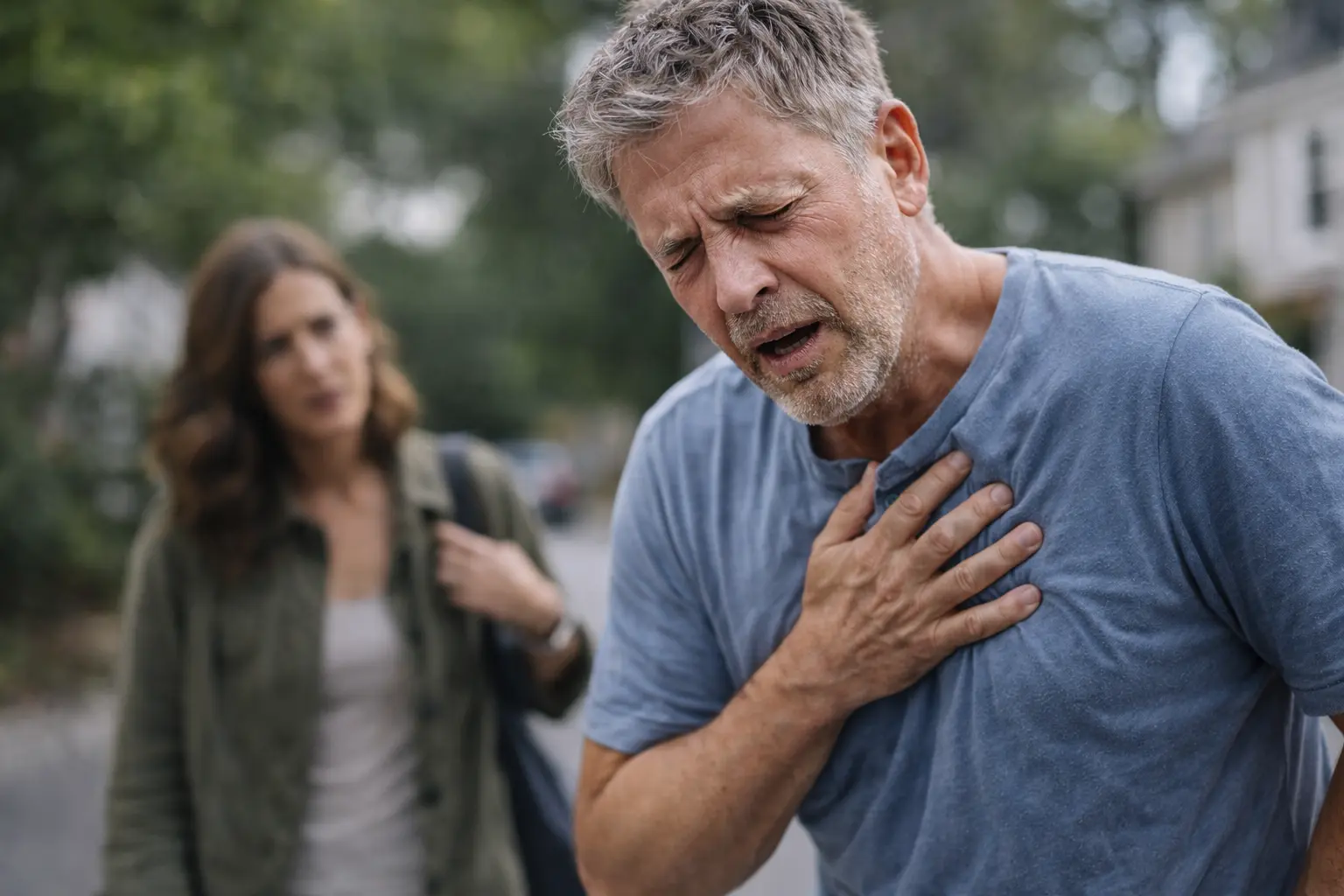
That tightness in your chest, the sudden shortness of breath, the cold sweat you can’t explain – these aren’t things to brush off or hope will pass, and knowing the real heart attack warning signs could literally save your life.
Chest pain or discomfort
Chest pain or discomfort is the most recognizable heart attack warning sign, but it does not always feel like what you might expect. Many seniors describe it as a pressure or squeezing sensation rather than sharp pain, almost like someone is sitting on their chest. The discomfort may appear in the center of your chest and can last anywhere from a few minutes to several hours. Some people experience it as a dull ache that comes and goes, while others feel a persistent heaviness. The key is that this sensation is different from your normal baseline. For example, if you suddenly feel pressure in your chest while watching television or eating breakfast, and it does not go away after a few minutes of rest, that warrants attention. The pain may also travel or radiate outward to your arms, shoulders, back, neck, or jaw. One common mistake seniors make is waiting too long to seek help, thinking the discomfort will resolve on its own. Do not wait. Any new or unusual chest discomfort should prompt you to call emergency services immediately.
- Pain or discomfort in the center of the chest
- Pain that radiates to the arms, back, neck, or jaw
- Feeling of fullness, pressure, or squeezing in the chest
Shortness of breath
Difficulty breathing or sudden shortness of breath can occur with or without chest pain and is a critical warning sign many seniors overlook. You might notice yourself becoming winded more easily than usual, even during routine activities like walking to the mailbox or climbing a single flight of stairs. Some seniors experience shortness of breath while sitting quietly or lying in bed, which is particularly concerning. This symptom happens because your heart is working harder to pump blood efficiently, and your body is not getting enough oxygen. Imagine trying to breathe through a straw after climbing a hill, except you have not been climbing anything. That sensation of air hunger is what many people describe. The shortness of breath may come on suddenly or develop gradually over hours. A common mistake is attributing this to age or being out of shape, when it could signal a serious cardiac event. If you find yourself struggling to catch your breath without an obvious reason, or if this symptom appears alongside other warning signs like chest discomfort or fatigue, call for emergency help right away. Do not drive yourself to the hospital.
📘 Fix your day in under 2 minuteschoose where to begin:
Cold sweat
Profuse sweating that seems unrelated to your physical activity or room temperature is a red flag that should never be ignored. Cold sweats associated with a heart attack feel different from the warm perspiration you might get on a hot day or during exercise. Your skin may feel clammy and damp, and you might notice beads of sweat on your forehead, upper lip, or palms even though you feel chilled. This happens because your body is under extreme stress as your heart struggles to function properly. Picture yourself sitting in a cool room, fully clothed, yet suddenly breaking into a cold sweat for no apparent reason. That unexplained physical response is your body sending an alarm signal. Some seniors report feeling cold and shivering while simultaneously sweating, which can be confusing. The sweating may be accompanied by a feeling of anxiety or impending doom, which is your nervous system reacting to the cardiac stress. Many people make the mistake of dismissing this as a hot flash or normal aging. If you experience cold sweats, especially when combined with other symptoms like chest discomfort or shortness of breath, treat it as a medical emergency and seek immediate help.
Nausea or dizziness
Feeling nauseous, light-headed, or dizzy can signal that your heart is under significant distress and not pumping blood effectively to your brain and vital organs. Nausea during a heart attack may feel like mild queasiness or severe stomach upset, sometimes accompanied by the urge to vomit. Dizziness might manifest as a spinning sensation, a feeling of unsteadiness, or a sense that the room is tilting around you. These symptoms occur because reduced blood flow affects your nervous system and digestive function. Imagine standing up too quickly and feeling momentarily faint, except this sensation persists and does not improve with rest or lying down. Some seniors confuse these symptoms with indigestion or a stomach bug, delaying critical medical care. The danger lies in the combination of symptoms. If you feel dizzy or nauseous alongside chest discomfort, shortness of breath, or cold sweats, your body is telling you something serious is happening. Do not assume it will pass or that you simply need to eat something. These symptoms, especially when sudden and unexplained, warrant an immediate call to emergency services. Your safety depends on recognizing this cluster of warning signs and acting fast.
Fatigue
Unexplained fatigue, weakness, or extreme tiredness can be a subtle yet crucial warning sign of an impending heart attack, particularly in seniors. You might wake up feeling exhausted despite sleeping well, or experience overwhelming tiredness that makes even simple tasks feel impossible. This is not the normal tiredness from a busy day or poor sleep. Cardiac fatigue feels different, almost like your body has suddenly lost its energy reserves. Some seniors describe it as feeling drained or unable to muster the strength to do activities they normally handle with ease. For instance, if you usually enjoy a morning walk but suddenly cannot manage more than a few steps without feeling completely worn out, that change is significant. This fatigue may develop gradually over hours or days before other symptoms appear, making it easy to dismiss as age-related or stress-related. A common mistake is attributing this to depression, poor diet, or simply getting older, when it could be your heart sending a distress signal. Pay close attention to sudden changes in your energy levels and how your body feels. If unexplained fatigue appears alongside any other warning signs, do not delay seeking medical evaluation. Your body is communicating with you, and listening to it could save your life.
Recognizing heart attack warning signs such as chest pain, shortness of breath, cold sweats, nausea, dizziness, and fatigue is essential for seniors to take prompt action in ensuring their health and well-being. Each of these symptoms alone warrants attention, but when they appear together or in quick succession, they demand immediate emergency care. Do not wait, do not assume symptoms will pass, and do not drive yourself to the hospital. Call emergency services immediately if you experience any combination of these warning signs.
Can heart attack symptoms vary between men and women?
Yes, while chest pain is a common symptom for both genders, women are more likely to experience atypical symptoms such as shortness of breath, nausea, or back pain. Women may also report fatigue, dizziness, or a sense of impending doom without prominent chest pain. This difference means women sometimes delay seeking help because their symptoms do not match the classic heart attack presentation. If you are a woman experiencing any combination of unusual symptoms, take them seriously and seek medical evaluation immediately.
What should I do if I suspect a heart attack?
If you experience any heart attack warning signs, call emergency services immediately. Do not hesitate, do not drive yourself, and do not wait to see if symptoms improve. Call 911 or your local emergency number right away. If you have aspirin available and have not been told to avoid it, chew one tablet while waiting for help. Sit or lie down in a comfortable position and try to stay calm. Inform the dispatcher of your symptoms so paramedics can prepare for your arrival. Prompt medical attention can save your life and minimize damage to your heart.
Others also read:
Disclaimer: This article is for informational purposes only and is not a substitute for professional medical advice. Always consult a healthcare professional for personal guidance.
This guide has been prepared and reviewed by the GlobalHealthBeacon editorial team and reflects current medical research as of 2026. It provides structured, evidence-based information to support informed health decisions.
