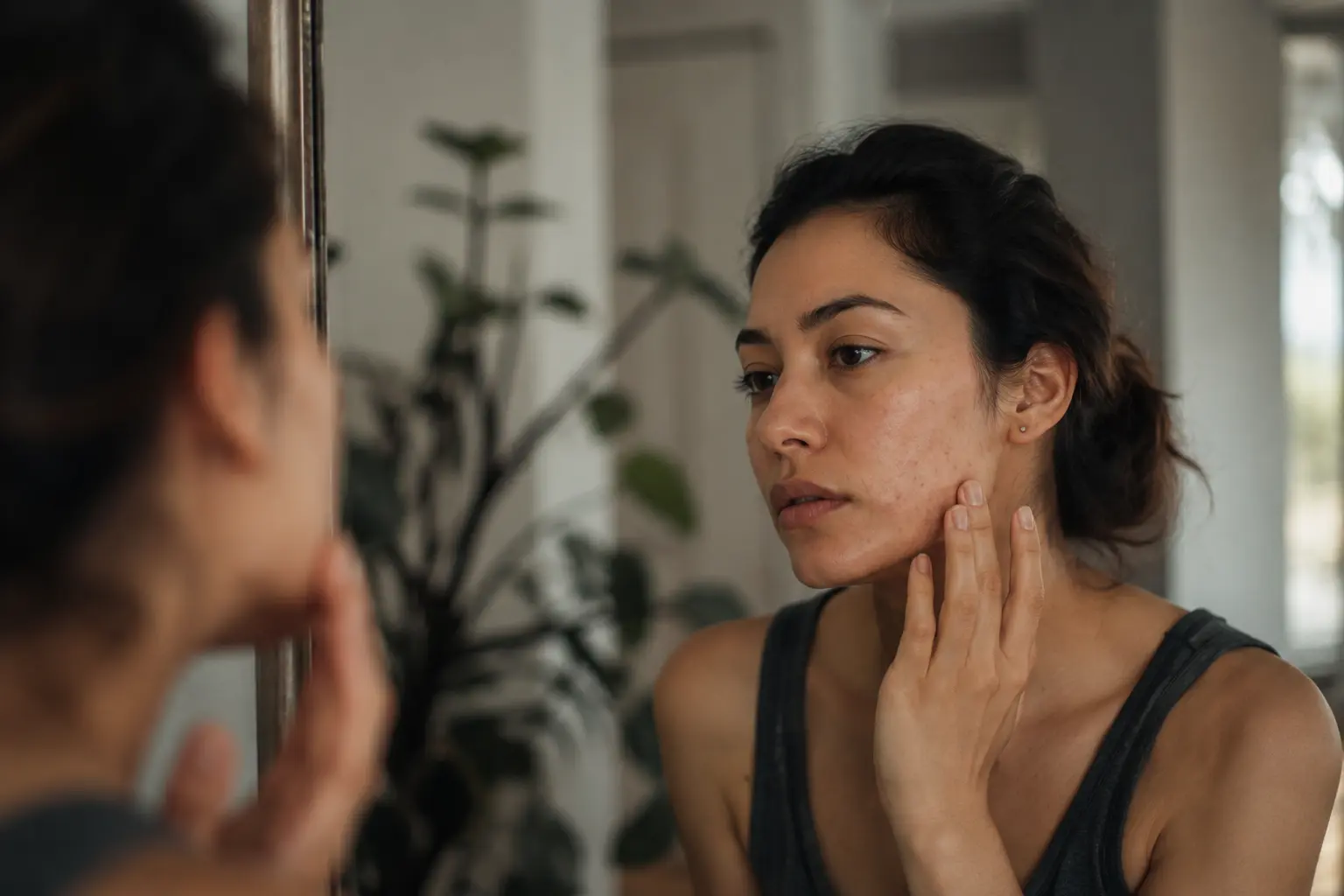
You wake up, look in the mirror, and there it is again: another breakout right before something important, and you know exactly why it’s happening because your hormones are all over the place, but nobody seems to have real answers about what actually works for hormonal skin changes.
The science behind hormonal skin changes
Hormonal skin changes happen because your body is literally telling your skin to produce more oil. When androgen levels spike, whether during your menstrual cycle, puberty, or times of stress, your sebaceous glands get the signal to go into overdrive. Think of it like a factory receiving an urgent order: suddenly, oil production ramps up, pores get clogged faster, and bacteria find the perfect environment to thrive. This isn’t just about surface-level greasiness either. The inflammation that follows creates those painful, deep breakouts that feel like they’re never going away. Young adults experience this particularly intensely because hormonal fluctuations are still relatively new to your body’s system. Your skin is essentially responding to chemical messengers that are telling it to behave differently than it did just months before. Understanding this mechanism helps explain why your usual skincare routine might suddenly stop working.
Effective treatments for hormonal acne
Clinical research consistently shows that topical retinoids like tretinoin work by accelerating cell turnover, essentially forcing your skin to shed dead cells faster and preventing them from accumulating in pores. Imagine your skin cells as a conveyor belt: retinoids speed up that belt so clogs never have a chance to form. For systemic approaches, combined oral contraceptives regulate hormone levels at the source, while spironolactone blocks androgen receptors, preventing hormones from triggering oil production in the first place. A young adult might start with a retinoid and see improvement within 8 to 12 weeks, but for moderate to severe cases, adding hormonal medication often becomes necessary. The key is that these aren’t quick fixes: they require consistency and patience. Many people abandon treatments too early because they expect overnight results, but hormonal acne responds to sustained, targeted intervention. Your dermatologist can help determine which combination makes sense for your specific situation and skin type.
Key steps for managing hormonal acne
Managing hormonal acne requires a layered approach that goes beyond just applying products. Start by building a consistent routine using non-comedogenic products, which means they won’t clog your pores or trigger additional breakouts. This sounds simple, but consistency is where most people fail: skipping steps on busy nights or switching products every few weeks disrupts your skin’s adjustment period. Avoid overwashing or aggressive scrubbing because inflammation is already high, and physical irritation only makes it worse. Many young adults think harsh treatment equals better results, but the opposite is true. Your skin barrier is already compromised by hormonal fluctuations, so gentleness becomes a treatment strategy, not a weakness. Finally, dermatological guidance isn’t optional for hormonal acne; it’s essential. A professional can identify whether you’re dealing with hormonal acne or another type entirely, and they can prescribe medications that address the root cause rather than just the symptoms.
- Establish a gentle skincare routine with non-comedogenic products that won’t trigger additional breakouts.
- Avoid harsh products and overwashing that can worsen inflammation and damage your skin barrier.
- Consult a dermatologist for tailored treatment plans that address hormonal causes specifically.
🔬 Science-backed benefits in 2 minuteschoose where to begin:
Understanding hormonal skin changes in young adults
Young adults face a unique window of hormonal volatility. Your body is still calibrating hormone levels, and external stressors like college, work, relationships, and life transitions amplify these fluctuations. A 22-year-old might experience clear skin one month and severe breakouts the next, seemingly without reason, because hormonal shifts are happening constantly. This unpredictability creates real psychological impact: breakouts before important events feel like betrayal, and the cycle of hope and disappointment can affect confidence and self-esteem. What makes this period particularly challenging is that hormonal acne often coincides with other life pressures, creating a feedback loop where stress worsens breakouts, which increases stress, which worsens breakouts further. Understanding that this is a biological process, not a personal failure, is the first step toward managing it effectively. Your skin isn’t broken; it’s responding normally to hormonal signals that are still finding their rhythm.
Preventive measures and long-term solutions
Long-term management of hormonal skin changes involves both lifestyle support and medical consistency. Stress-reduction techniques matter because cortisol spikes can trigger androgen release, which circles back to increased oil production. Regular exercise, adequate sleep, and mindfulness practices aren’t just wellness trends; they’re part of your skin management strategy. Diet adjustments, particularly reducing high-glycemic foods and increasing antioxidant intake, support overall skin health, though diet alone won’t resolve hormonal acne. Staying hydrated helps maintain skin barrier function, which is crucial when you’re using active treatments like retinoids. The real game-changer for long-term results is medication consistency. If your dermatologist prescribes oral contraceptives or spironolactone, skipping doses or stopping abruptly will reverse improvements within weeks. Many young adults see results after three to six months and assume they can stop treatment, only to experience a full relapse. Hormonal acne management is often a marathon, not a sprint.
Navigating treatment options responsibly
Choosing a treatment path requires honest conversation with a healthcare professional about your medical history, current medications, and lifestyle. Every medication has potential side effects, and your job is understanding what those are and whether they’re acceptable for your situation. Combined oral contraceptives, for example, carry a small increased risk of blood clots, which matters more if you smoke or have a family history of clotting disorders. Spironolactone can cause dizziness or electrolyte imbalances in some people. Retinoids cause initial dryness and sensitivity that can feel worse before it gets better. This isn’t meant to scare you; it’s meant to help you make informed decisions. A responsible approach means starting with the lowest effective dose, monitoring your response, and maintaining regular check-ins with your dermatologist. It also means being honest about adherence: if you know you’ll forget daily medication, a different approach might work better. The goal is finding a sustainable treatment that fits your life, not forcing yourself into a regimen that creates additional stress.
Hormonal skin changes in young adults stem from androgen-driven increases in sebum production and inflammation. Clinical evidence supports topical retinoids for cell turnover regulation and oral medications like combined contraceptives or spironolactone for hormone-level management. Effective long-term management requires consistent treatment, professional guidance, stress management, and realistic expectations about timeline and potential side effects.
Can hormonal acne be cured permanently?
Hormonal acne typically requires ongoing management rather than a permanent cure. Hormonal fluctuations are a natural part of your body’s function, so acne may return if treatment stops. However, many people find that consistent medication use keeps breakouts minimal or manageable. Some experience improvement as hormones stabilize with age, but this varies widely. Working with a dermatologist to develop a long-term management plan tailored to your body is the most realistic approach.
Are there natural remedies for hormonal acne?
Lifestyle modifications like stress reduction, regular exercise, adequate sleep, and dietary adjustments can support overall skin health and may reduce breakout severity. However, these approaches alone typically cannot resolve moderate to severe hormonal acne because they don’t address the underlying hormonal drivers. Severe hormonal acne usually requires medical intervention such as topical retinoids or hormonal medications for meaningful improvement. Natural remedies work best as complementary support alongside professional treatment.
Others also read:
Disclaimer: This article is for informational purposes only and is not a substitute for professional medical advice. Always consult a healthcare professional for personal guidance.
This article has been prepared and reviewed by the GlobalHealthBeacon editorial team and is based on current medical research and published scientific literature available in 2026. It provides structured, evidence-based information to support informed health decisions.

