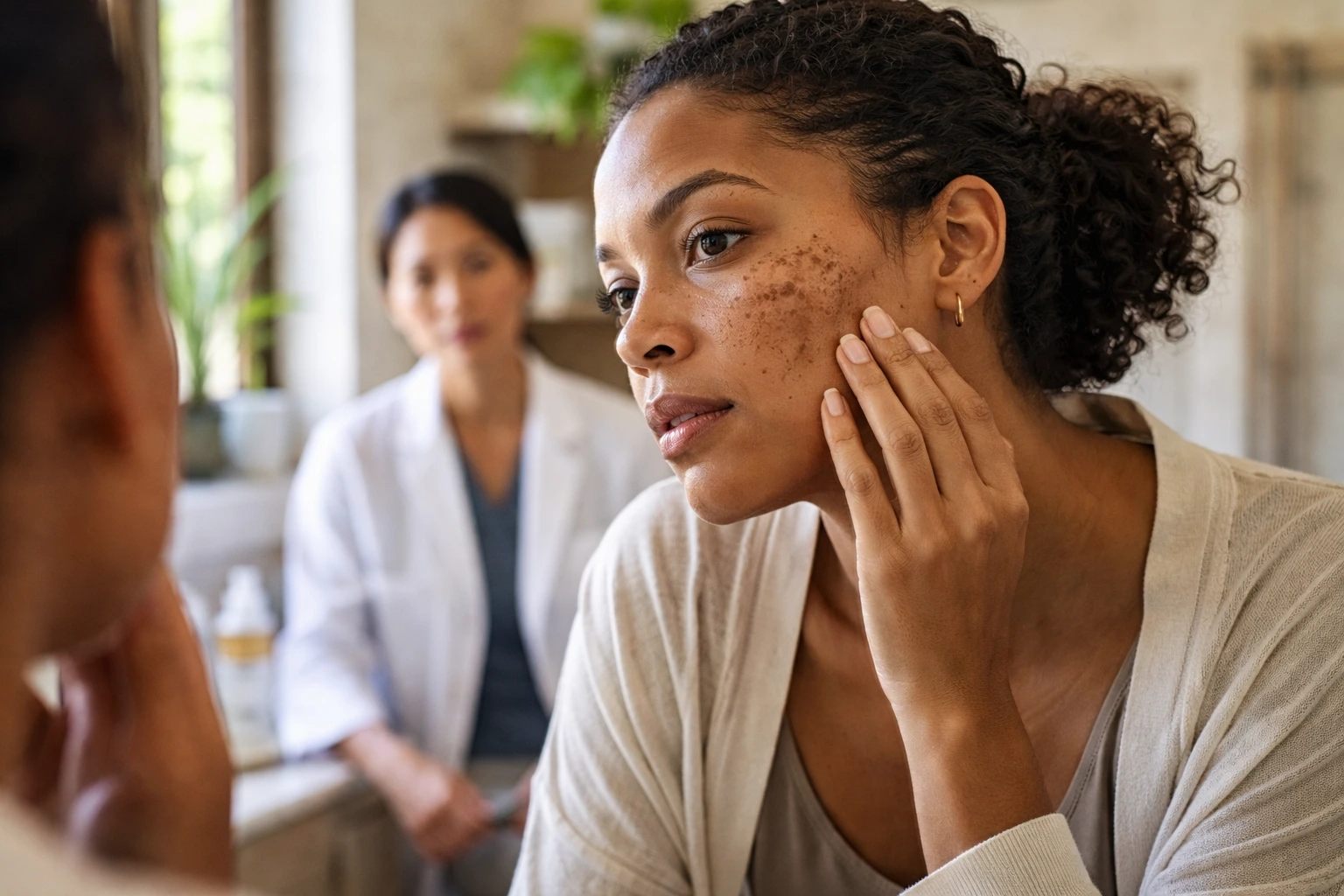
You look in the mirror and see those stubborn dark patches staring back at you, and no amount of concealer seems to cover them anymore – but hyperpigmentation treatment options exist, and this guide will show you exactly which ones actually work.
Understanding hyperpigmentation
Hyperpigmentation isn’t just about aesthetics – it’s about understanding what your skin is trying to tell you. When melanin, the pigment responsible for your skin color, clusters in certain areas, you get those darker patches that can appear on your face, neck, hands, or body. This happens for real reasons: maybe you spent a summer in the sun without proper protection, or hormonal shifts during pregnancy triggered what’s called melasma, or an old acne breakout left a dark mark that just won’t fade. Some women develop hyperpigmentation from certain medications, while others notice it creeping up as they age. The key is identifying what caused yours, because that knowledge directly shapes which treatment will actually work. A dermatologist can help pinpoint whether you’re dealing with post-inflammatory hyperpigmentation from acne, sun damage, hormonal changes, or something else entirely. Once you know the root cause, you can stop guessing and start treating with intention.
- Identify the triggers that may be contributing to your hyperpigmentation.
- Consult with a dermatologist to determine the best course of action for your specific condition.
- Explore both natural and medical treatment options to address hyperpigmentation effectively.
Topical treatments for hyperpigmentation
Topical treatments are your first line of defense and often the most accessible option for most women. Hydroquinone is the gold standard – it works by slowing melanin production and is available in over-the-counter strengths up to 2 percent, though prescription versions go higher. Retinoids like tretinoin increase cell turnover, essentially pushing out the pigmented cells faster so new, clearer skin surfaces. Kojic acid and azelaic acid gently inhibit tyrosinase, the enzyme that creates melanin, while vitamin C acts as an antioxidant that brightens and protects simultaneously. A realistic timeline matters here: most women see noticeable fading after 4 to 6 weeks of consistent twice-daily application, but stubborn spots may take 3 to 6 months. The mistake many make is stopping too soon or skipping days – consistency is everything. You might layer a vitamin C serum in the morning under sunscreen, then apply retinoid at night, or use a dedicated brightening cream that combines multiple ingredients. Some women find their skin adjusts better to gentler options like niacinamide or licorice extract if they have sensitive skin, which still deliver results just more gradually.
📘 Fix your day in under 2 minuteschoose where to begin:
Professional procedures for hyperpigmentation
When topical treatments plateau, professional procedures offer more aggressive results. Laser therapy, particularly fractional lasers and Q-switched lasers, targets melanin directly and breaks it apart so your body can eliminate it naturally. Chemical peels use concentrated acids to dissolve the outer layers of skin where pigmentation sits, revealing clearer skin beneath – a glycolic acid peel is gentler while a TCA peel is stronger. Microdermabrasion physically exfoliates the skin’s surface, and while less intense than lasers, it works well for mild to moderate hyperpigmentation. Most women need multiple sessions spaced weeks apart because skin healing takes time and results build gradually. A realistic expectation: you might see 50 percent improvement after three sessions, with final results settling in after several months as new skin fully matures. The downside is cost and recovery time – some procedures require avoiding sun exposure for weeks, and your skin might be red or flaky during healing. Professional treatments also carry small risks like temporary increased sensitivity or, rarely, post-inflammatory hyperpigmentation if your skin reacts strongly. This is why choosing an experienced dermatologist or licensed aesthetician matters tremendously.
Lifestyle changes for managing hyperpigmentation
Your daily habits either protect your progress or sabotage it, which is why lifestyle changes are non-negotiable. Sunscreen with SPF 30 or higher must become automatic, applied every single morning and reapplied every two hours if you’re outdoors – UV exposure is the number one trigger that darkens existing hyperpigmentation and creates new spots. Beyond sunscreen, physical barriers like wide-brimmed hats, long sleeves, and seeking shade during peak sun hours (10 a.m. to 4 p.m.) prevent further damage while your skin heals. Your diet matters too: antioxidant-rich foods like berries, leafy greens, and green tea support skin health from within and help your body repair sun damage. Staying hydrated keeps your skin barrier strong, which means better tolerance for active treatments and faster healing. Sleep quality affects inflammation levels, and chronic inflammation can worsen hyperpigmentation. Some women notice their melasma flares during high-stress periods, so stress management through exercise, meditation, or whatever calms you personally becomes part of the treatment strategy. Hormonal birth control can trigger or worsen melasma in some women, so discussing this with your doctor might reveal an unexpected solution.
Natural remedies for hyperpigmentation
Natural remedies appeal to many women because they’re gentler, affordable, and feel safer for long-term use. Aloe vera contains compounds that may inhibit melanin production and has anti-inflammatory properties that soothe irritated skin, making it ideal if you’re using stronger treatments simultaneously. Licorice extract is well-researched for brightening and appears in many skincare products because it genuinely works without the irritation some experience with hydroquinone. Green tea is packed with antioxidants and can be applied topically as a cooled tea or consumed as a beverage to support skin health from inside. Apple cider vinegar has mild exfoliating properties, though it’s quite acidic and can irritate sensitive skin if not diluted properly. Turmeric contains curcumin, which has anti-inflammatory and potential skin-brightening effects, though the evidence is less robust than for other options. The honest truth is natural remedies work more slowly than medical interventions – expect results over months rather than weeks – but they rarely cause irritation and can be combined with professional treatments. Many women use natural options as maintenance after professional procedures, or layer them with topical treatments for a comprehensive approach. The key is patience and consistency, because natural doesn’t mean instant, but it can mean sustainable.
Hyperpigmentation treatment options involve a combination of topical treatments, professional procedures, lifestyle changes, and natural remedies to address dark spots and uneven skin tone. Understanding the underlying causes of hyperpigmentation and consulting with a skincare professional are essential steps in developing a personalized treatment plan.
Are there any home remedies that can effectively treat hyperpigmentation?
Natural remedies like aloe vera, licorice extract, green tea, and apple cider vinegar are commonly used to help lighten dark spots caused by hyperpigmentation. While these remedies may not offer immediate results, they can be a gentle and affordable option for improving skin tone over time.
How long does it take to see results with professional hyperpigmentation treatments?
The timeframe for seeing results with professional hyperpigmentation treatments can vary depending on the severity of the condition and the chosen treatment method. In general, noticeable improvements may be seen after a few weeks to several months of consistent treatment.
Others also read:
Disclaimer: This article is for informational purposes only and is not a substitute for professional medical advice. Always consult a healthcare professional for personal guidance.
This guide has been prepared and reviewed by the GlobalHealthBeacon editorial team and reflects current medical research as of 2026. It provides structured, evidence-based information to support informed health decisions.
