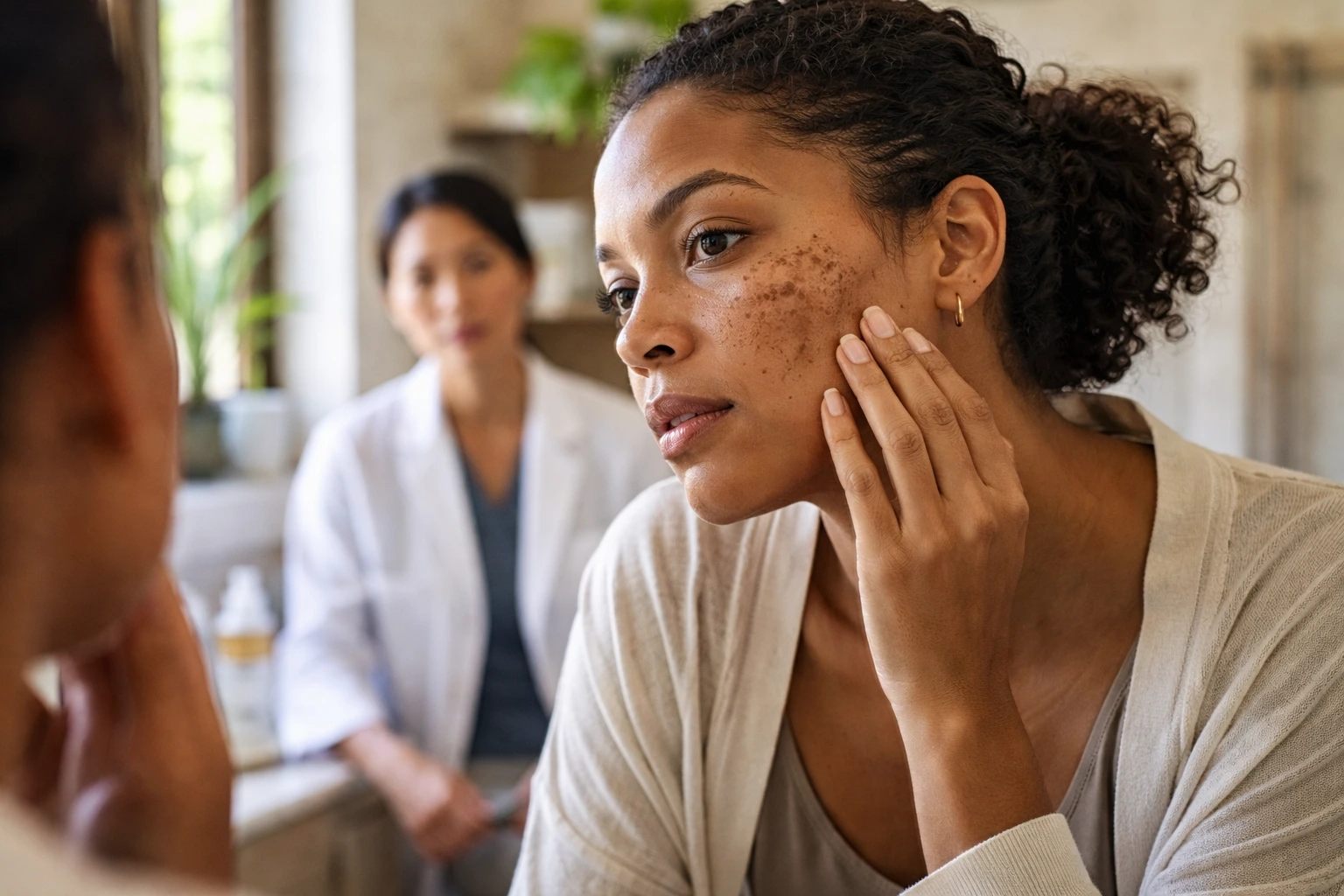
You catch your reflection and those dark patches stare back at you, spreading across your cheeks and forehead like unwanted reminders of sun damage and hormonal shifts, making you wonder if there’s actually a hyperpigmentation treatment options that really works.
Topical treatments for hyperpigmentation
Topical treatments represent the first line of defense for many women dealing with hyperpigmentation, and understanding how they work at the cellular level helps explain why some options outperform others. Hydroquinone, a gold-standard depigmenting agent, works by inhibiting the enzyme tyrosinase, which is essential for melanin production in melanocytes. Retinoids accelerate skin cell turnover, essentially pushing out pigmented cells faster while stimulating collagen production beneath the surface. Kojic acid and vitamin C serums offer gentler alternatives that still interrupt melanin synthesis through different biochemical pathways. Consider a woman in her 50s who spent decades in the sun without protection; she might start with a lower concentration hydroquinone cream combined with a retinol serum at night, gradually building tolerance over weeks. Common mistakes include applying these treatments inconsistently, expecting overnight results, or combining incompatible ingredients that irritate rather than heal. The science shows that consistent application over 8 to 12 weeks typically yields visible improvement, though patience and sun protection remain non-negotiable partners in this process.
Chemical peels and microdermabrasion
Chemical peels and microdermabrasion operate on a different principle than topical creams, physically removing or chemically dissolving the outer layers of skin where pigmentation concentrates most heavily. A glycolic acid peel, for instance, dissolves the bonds between dead skin cells, revealing fresher, less pigmented skin beneath, while also stimulating fibroblasts to produce new collagen. Microdermabrasion uses tiny crystals or a diamond-tipped wand to mechanically abrade away surface damage, triggering the skin’s natural healing response and promoting cellular regeneration. Imagine a woman with melasma across her upper cheeks deciding to undergo a series of monthly chemical peels; after the first peel, her skin feels smoother and looks slightly brighter, but the real transformation happens after three or four sessions when the cumulative effect becomes undeniable. These procedures work best when combined with strict sun avoidance and daily SPF 50 application, since newly exposed skin is more vulnerable to UV damage. A frequent error is underestimating downtime or skipping the post-treatment moisturizing phase, which can lead to irritation and actually worsen pigmentation. Professional guidance ensures the right peel strength matches individual skin type and pigmentation depth.
Laser therapy and intense pulsed light (IPL)
Laser treatments and IPL technology represent the most advanced option for stubborn hyperpigmentation, using concentrated light energy to selectively target and destroy melanin-rich cells without harming surrounding tissue. Picosecond lasers deliver energy in trillionths of a second, fragmenting pigment into particles small enough for the lymphatic system to naturally eliminate over weeks. IPL devices emit a broad spectrum of light that heats melanin, causing it to break apart and fade gradually as the body’s immune system clears the debris. A typical scenario involves a woman with post-inflammatory hyperpigmentation from acne scars or hormonal melasma undergoing four to six laser sessions spaced four to six weeks apart, with each session progressively lightening the affected areas. The procedure itself feels like tiny rubber bands snapping against skin, with minimal discomfort for most patients. Critical mistakes include rushing into laser treatment without a patch test, ignoring pre-treatment sun protection, or expecting complete removal in a single session. Post-treatment care demands religious sunscreen use and avoiding heat exposure for several days, as the skin remains photosensitive during healing.
- Consult a dermatologist to determine the most suitable laser or IPL treatment for your skin type and the specific cause of your hyperpigmentation.
- Undergo the recommended number of sessions as advised by your healthcare provider, typically spaced four to six weeks apart for optimal results.
- Follow post-treatment care instructions diligently to optimize results, including daily SPF 50 sunscreen, avoiding heat sources, and using gentle cleansers.
🔬 Science-backed benefits in 2 minuteschoose where to begin:
Diet and lifestyle changes
While topical treatments and procedures address hyperpigmentation directly, the internal environment and daily habits profoundly influence skin health and pigmentation patterns. Antioxidants like vitamin C, vitamin E, and polyphenols from green tea and berries help neutralize free radicals that damage melanocytes and trigger excessive pigment production in response to inflammation. Sun exposure remains the primary driver of hyperpigmentation in most women, making daily broad-spectrum SPF 30 or higher non-negotiable regardless of other treatments used. A woman managing melasma might notice that consistent use of antioxidant-rich serums combined with religious sunscreen application and a diet emphasizing colorful vegetables produces better results than any single treatment alone. Hormonal factors also play a role, particularly during pregnancy or with oral contraceptive use, so understanding these triggers helps set realistic expectations. Common oversights include applying sunscreen only to the face while neglecting ears and neck, reapplying insufficiently throughout the day, or using expired products that lose potency. Lifestyle modifications like stress reduction, adequate sleep, and hydration support skin barrier function, making treatments more effective and reducing inflammation that can worsen pigmentation.
Cosmetic camouflage options
While pursuing long-term treatment solutions, cosmetic camouflage offers immediate confidence and practical coverage for hyperpigmentation that may take months to fade completely. Color-correcting concealers work by neutralizing pigmentation through complementary color theory: peach or orange tones counteract blue-based hyperpigmentation, while green tones neutralize red discoloration from inflammation. Full-coverage foundations with light-reflecting particles create an optical illusion of evenness, while setting powders lock everything in place throughout the day. Consider a woman with significant melasma who feels self-conscious in social situations; a well-matched color-correcting concealer under a dewy foundation can restore her confidence immediately while her laser treatments work over the coming months. The key is choosing products that match skin undertone precisely and applying with a damp beauty sponge for seamless blending rather than visible lines. A frequent mistake involves using too much product, which actually draws attention to problem areas and can feel heavy or cakey. Quality matters here; professional makeup artists often recommend brands specifically formulated for sensitive or reactive skin, ensuring that coverage doesn’t irritate or trigger further pigmentation issues.
Professional consultation and monitoring
Navigating hyperpigmentation treatment options without professional guidance often leads to wasted time, money, and sometimes worsening of the condition through inappropriate product combinations or procedures. A dermatologist evaluates the type of hyperpigmentation (melasma, post-inflammatory, solar lentigines, or other variants), determines underlying causes, and designs a personalized treatment plan matching your skin type, ethnicity, and lifestyle. Regular monitoring appointments every four to eight weeks allow your provider to assess treatment response, adjust concentrations or frequencies, and catch any adverse reactions early. Picture a woman who spent months trying over-the-counter treatments without improvement finally seeing a dermatologist, who identifies her hyperpigmentation as melasma triggered by hormonal factors and sun exposure, then recommends a combination approach of hydroquinone, tretinoin, and monthly chemical peels. This professional oversight prevents common errors like using incompatible treatments simultaneously or continuing ineffective approaches out of habit. Dermatologists also screen for underlying conditions that might manifest as pigmentation changes, ensuring that treatment addresses root causes rather than just symptoms. The investment in professional care typically yields faster, safer results and prevents the frustration of trial-and-error approaches that can damage skin barrier function or trigger sensitivity.
Others also read:
Disclaimer: This article is for informational purposes only and is not a substitute for professional medical advice. Always consult a healthcare professional for personal guidance.
This article has been prepared and reviewed by the GlobalHealthBeacon editorial team and is based on current medical research and published scientific literature available in 2026. It provides structured, evidence-based information to support informed health decisions.
← Back to the Main page on: hyperpigmentation treatment options
