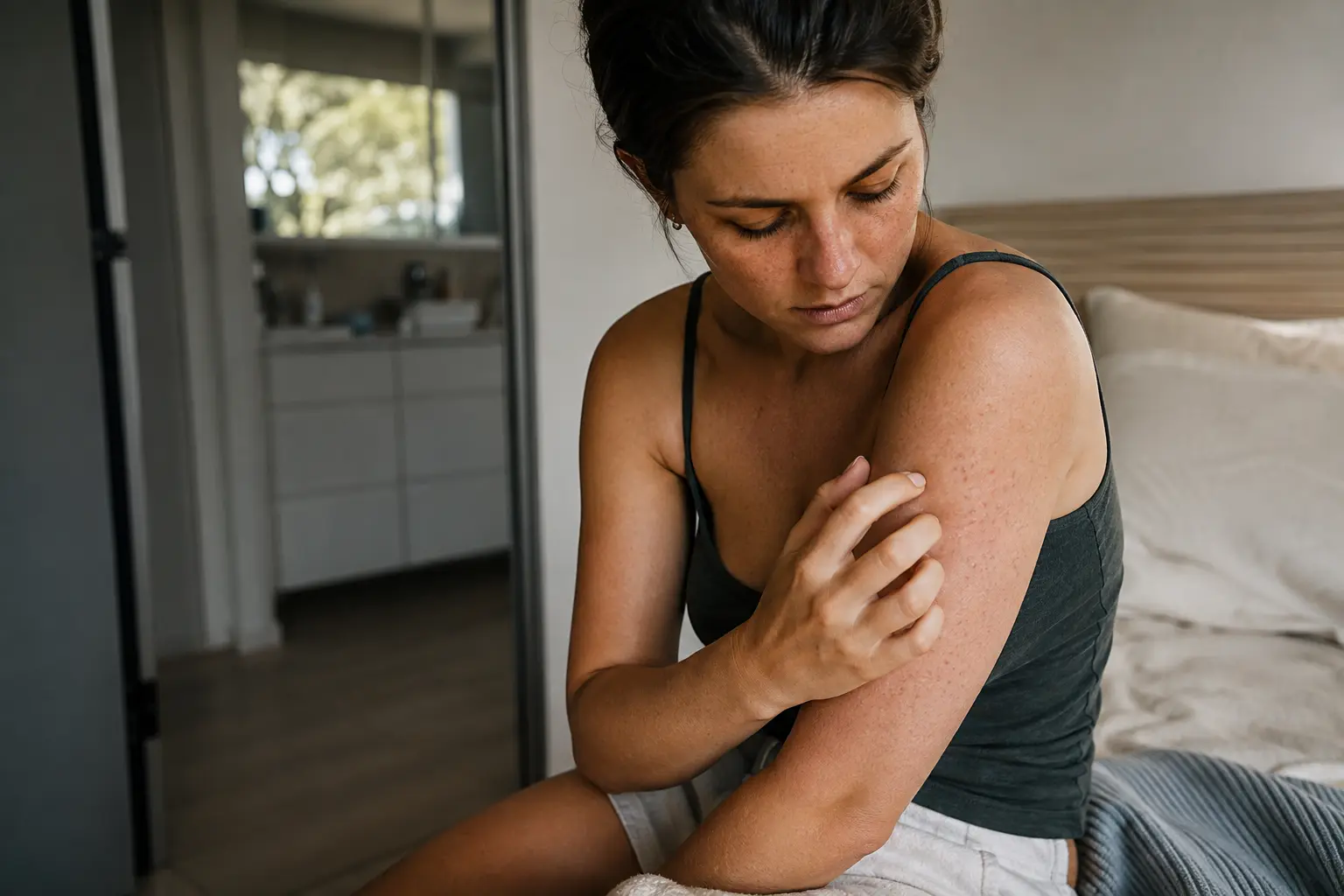
Those tiny red bumps covering your arms and legs aren’t going away on their own, and a basic moisturizer isn’t cutting it, so here’s exactly what your keratosis pilaris routine needs to actually work.
Understanding keratosis pilaris
Keratosis pilaris, commonly called chicken skin, is a harmless but frustrating skin condition where keratin, a protein your body naturally produces, builds up around hair follicles and creates small, rough bumps. These typically appear on the upper arms, thighs, cheeks, or buttocks and feel sandpapery to the touch. Many women experience this during their teens and twenties, though it can persist into adulthood. The bumps are usually red or skin-colored and tend to worsen in winter when humidity drops. Understanding that this condition affects millions of women can help normalize what you’re experiencing. The good news is that while keratosis pilaris cannot be permanently cured, the right routine can dramatically reduce its appearance and keep your skin feeling smoother. Think of it as managing a chronic skin condition rather than treating an infection, which means consistency matters far more than finding one miracle product.
- Exfoliate gently to remove dead skin cells
- Use moisturizers containing urea or lactic acid
- Avoid hot showers that can dry out your skin
Creating a gentle skincare routine
Your daily routine forms the foundation of managing keratosis pilaris effectively, and it starts with choosing the right cleanser. Look for mild, fragrance-free options that won’t strip your skin or trigger irritation. When cleansing, use lukewarm water rather than hot, which can aggravate the condition and leave your skin feeling tight. Pat your skin dry gently instead of rubbing, as friction can worsen bumps. A typical morning routine might include a gentle cleanser, followed by a hydrating toner and lightweight moisturizer. Your evening routine should be slightly more intensive, incorporating a cleanser, targeted treatment product, and richer moisturizer. Avoid harsh scrubs, loofahs with rough textures, and products containing alcohol or strong fragrance. Many women find that switching from a bar soap to a cream cleanser makes a noticeable difference within two weeks. The key is consistency, so choose products you genuinely enjoy using so you’ll stick with the routine long-term.
📘 Fix your day in under 2 minuteschoose where to begin:
Hydrating your skin
Moisture is your most powerful tool against keratosis pilaris because dehydrated skin makes bumps more pronounced and texture more noticeable. After cleansing, apply moisturizer to damp skin to lock in hydration effectively. Look for ingredients like glycerin, hyaluronic acid, shea butter, or ceramides that draw moisture into your skin and maintain the barrier function. A woman with keratosis pilaris on her arms might apply a richer cream there while using a lighter lotion on her face. Consider using a humidifier in your bedroom during dry months, as environmental humidity directly impacts skin hydration levels. Some women find that applying moisturizer twice daily, morning and night, produces better results than once-daily application. Layering products matters too, so apply lighter products first, then seal with something richer. If your skin feels dry even with regular moisturizing, you may need to increase application frequency or switch to a more occlusive formula. Pay attention to how your skin responds over two to four weeks, as this is when hydration improvements become visible.
Incorporating exfoliation
Exfoliation removes the dead skin cells that accumulate around hair follicles and contribute to the bumpy texture of keratosis pilaris. The critical mistake many women make is over-exfoliating or using products that are too harsh, which actually worsens the condition. Gentle exfoliation two to three times weekly is ideal, using soft tools like a washcloth, microfiber cloth, or soft-bristled brush. Chemical exfoliants containing lactic acid or urea are often more effective than physical exfoliation for this condition because they dissolve dead skin without creating friction. If you prefer physical exfoliation, a loofah works well when used gently in circular motions. After exfoliating, always apply moisturizer immediately to prevent irritation. A realistic scenario involves exfoliating your arms and thighs in the shower, then applying a targeted moisturizer within minutes. Some women see improvement in texture within three to four weeks of consistent gentle exfoliation. The goal is to remove buildup without damaging the skin barrier, so if you experience redness or increased irritation, reduce frequency or switch to a gentler method.
Seeking professional advice
If your keratosis pilaris remains severe despite three to six months of consistent home care, or if it causes significant discomfort or emotional distress, consulting a dermatologist is the right next step. A dermatologist can assess your specific situation and recommend prescription-strength treatments like topical retinoids, which increase cell turnover and reduce bumps more effectively than over-the-counter options. For stubborn cases, professional treatments exist including laser therapy, microdermabrasion, or chemical peels that target the condition more aggressively. Many women find that combining home routines with one or two professional treatments produces the best results. Your dermatologist can also rule out other skin conditions that might mimic keratosis pilaris or occur alongside it. Some insurance plans cover dermatology visits, so check your coverage before scheduling. A typical consultation involves discussing your symptoms, examining your skin, and creating a personalized treatment plan. Don’t hesitate to seek professional help if home care alone isn’t delivering the results you want, as your comfort and confidence matter.
Managing keratosis pilaris requires a multi-step approach combining gentle cleansing, consistent hydration, and regular but gentle exfoliation. Understanding your skin condition helps you stay patient with the process, knowing that visible improvements typically take four to eight weeks. If home routines don’t deliver satisfactory results after several months, professional dermatological treatment can provide additional options including prescription creams and professional procedures.
Can keratosis pilaris be cured?
No permanent cure exists for keratosis pilaris, but consistent skincare routines can significantly reduce bumps and improve texture. Many women find that maintaining their routine keeps the condition under control, though bumps may return if routines are abandoned. Professional treatments can provide more dramatic improvements for severe cases.
Are there any home remedies for keratosis pilaris?
Home remedies including gentle exfoliation, moisturizing with urea or lactic acid products, and avoiding hot showers can effectively manage keratosis pilaris. Many women see noticeable improvement within four to six weeks of consistent home care. However, severe or persistent cases may require medical intervention from a dermatologist.
Others also read:
Disclaimer: This article is for informational purposes only and is not a substitute for professional medical advice. Always consult a healthcare professional for personal guidance.
This guide has been prepared and reviewed by the GlobalHealthBeacon editorial team and reflects current medical research as of 2026. It provides structured, evidence-based information to support informed health decisions.
