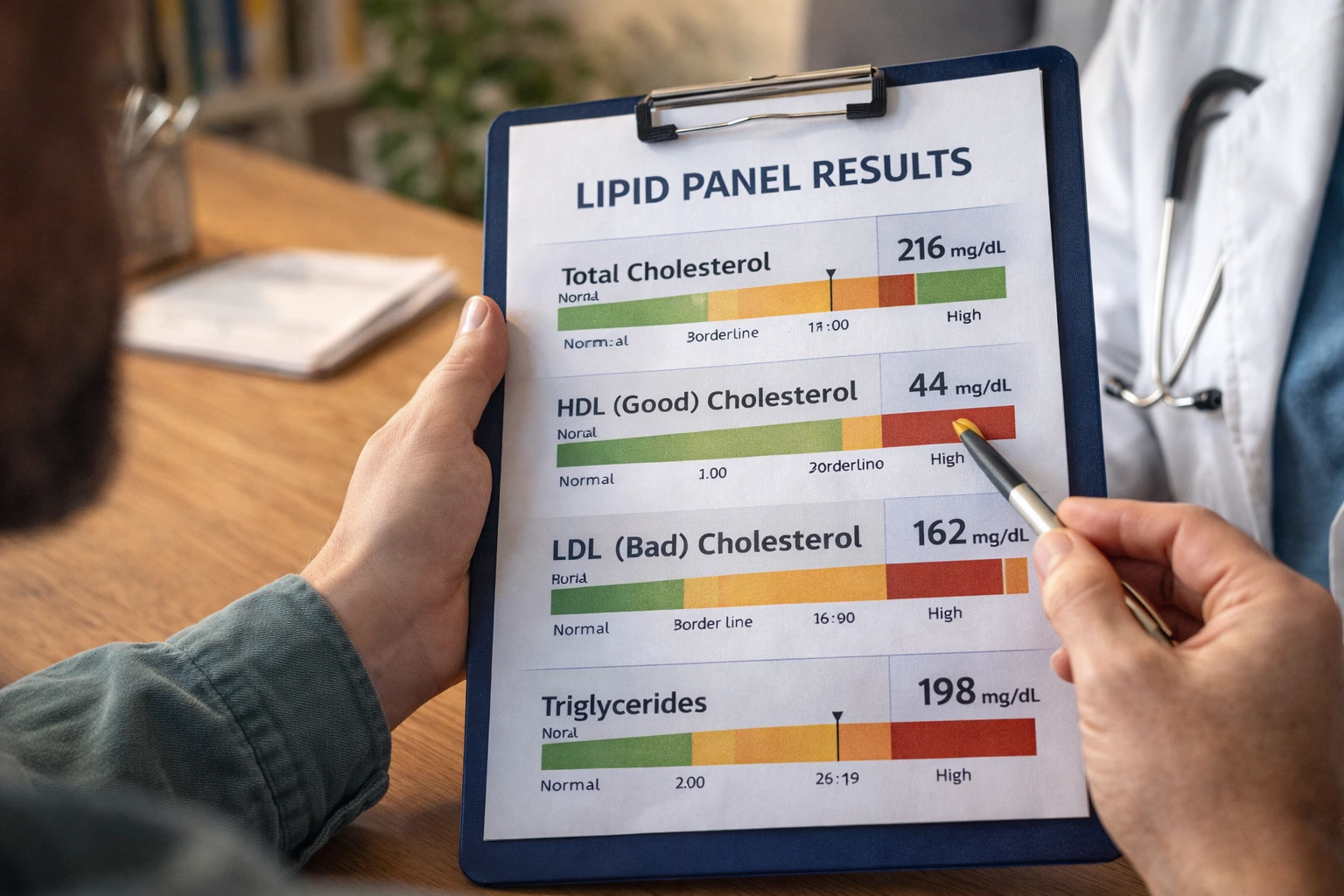
Your doctor hands you a lipid panel report with numbers that might as well be in another language, and suddenly you’re wondering if you should panic or just ignore it all, but here’s the thing: lipid panel results explained properly can actually make total sense and give you real power over your heart health.
Understanding lipid panels
A lipid panel is essentially a snapshot of the fats circulating in your bloodstream, measured through a simple blood test that most women encounter during routine checkups or preventive health screenings. This test breaks down your cholesterol into distinct categories: HDL (high-density lipoprotein), LDL (low-density lipoprotein), triglycerides, and total cholesterol. Think of it like getting a detailed inventory of what’s happening in your arteries. HDL is often called the good cholesterol because it actively works to clear excess cholesterol from your system, while LDL is labeled bad cholesterol because it can accumulate and cause problems. For women specifically, understanding these numbers becomes increasingly important after menopause, when estrogen levels drop and cholesterol patterns often shift. Many women don’t realize that their lipid profile can change significantly over time, which is why regular testing provides crucial baseline data for tracking trends in your health.
The role of HDL cholesterol
HDL cholesterol functions like a cleanup crew in your bloodstream, actively removing excess cholesterol and transporting it to your liver where it gets processed and eliminated from your body. This protective mechanism is particularly important for women, as research shows that HDL levels may be an even stronger predictor of heart disease risk in women than in men. Imagine HDL as the good friend who helps you organize and get rid of clutter in your home, except in this case the clutter is cholesterol buildup in your arteries. Higher HDL levels are consistently associated with reduced cardiovascular risk, which is why doctors celebrate when they see these numbers climbing. Women with HDL levels above 60 milligrams per deciliter have significantly better protection against atherosclerosis and related conditions. The fascinating part is that HDL can be influenced by lifestyle choices, meaning you have genuine control over this protective mechanism through exercise, diet quality, and stress management.
Understanding the numbers
Decoding your lipid panel means understanding what each number represents and how they work together to paint a picture of your cardiovascular health. HDL cholesterol levels above 60 milligrams per deciliter are considered protective against heart disease and represent an optimal range for women. LDL levels below 100 milligrams per deciliter are generally considered optimal for heart health, though some cardiologists recommend even lower targets for women with existing risk factors or family history of heart disease. Total cholesterol should ideally stay under 200 milligrams per deciliter, though this number alone doesn’t tell the whole story since it combines both protective and harmful cholesterol types. Triglycerides, another fat measured in your lipid panel, should typically remain below 150 milligrams per deciliter. The real insight comes from looking at the ratio between these numbers rather than viewing them in isolation. For example, a woman with total cholesterol of 220 might actually be in better shape than someone with 190 if her HDL is significantly higher and LDL significantly lower. This is why discussing your specific numbers with your healthcare provider matters more than comparing them to a friend’s results.
- Schedule regular lipid panel tests as recommended by your healthcare provider, typically every four to six years for women without risk factors, or more frequently if you have a family history of heart disease or other cardiovascular concerns.
- Follow a balanced diet rich in fruits, vegetables, whole grains, and lean proteins while limiting saturated fats and trans fats, which directly impact your cholesterol levels and can be adjusted relatively quickly through dietary changes.
- Engage in regular physical activity for at least 150 minutes per week of moderate-intensity exercise, which has been shown to raise HDL cholesterol and lower LDL cholesterol more effectively than many people realize.
🔬 Science-backed benefits in 2 minuteschoose where to begin:
The impact of LDL cholesterol
LDL cholesterol behaves quite differently from its HDL counterpart, and understanding this distinction is crucial for women’s cardiovascular health. When LDL cholesterol levels remain elevated over time, these particles can deposit themselves in artery walls, creating a buildup called plaque that narrows blood vessels and restricts blood flow. This process, known as atherosclerosis, develops silently over years without any symptoms, which is why many women don’t realize they’re at risk until a significant event occurs. The danger intensifies because women often experience different heart attack symptoms than men, sometimes missing the warning signs entirely. LDL particles vary in size and density, and smaller, denser LDL particles are particularly problematic because they penetrate artery walls more easily than larger particles. Lowering LDL levels through lifestyle modifications like dietary changes, increased physical activity, and stress reduction can meaningfully improve heart health outcomes. For some women, especially those with genetic predispositions or existing cardiovascular conditions, medications like statins may be necessary to achieve target LDL levels and reduce disease progression risk.
Healthy lifestyle choices
The beautiful reality about cholesterol management is that women have genuine control over many factors that influence their lipid profiles through daily choices. Maintaining a healthy weight reduces strain on your cardiovascular system and directly impacts cholesterol metabolism, as excess body fat, particularly around the midsection, actively produces inflammatory substances that worsen cholesterol ratios. Avoiding smoking is non-negotiable since smoking damages blood vessel walls and significantly lowers protective HDL cholesterol while increasing harmful LDL oxidation. Limiting alcohol intake protects your liver, which plays a central role in cholesterol processing and regulation. Managing stress through meditation, yoga, or simply spending time in nature isn’t just feel-good advice, it’s genuine physiology, as chronic stress elevates cortisol levels that can negatively impact cholesterol metabolism. Quality sleep matters too, as poor sleep patterns disrupt hormonal balance and cholesterol regulation. These lifestyle modifications work synergistically, meaning that combining several changes creates more dramatic improvements than any single change alone. Many women find that when they address these factors comprehensively, their lipid panels improve significantly within three to six months.
The scientific balance
Your lipid profile represents a dynamic system rather than a fixed state, constantly responding to your choices, hormonal fluctuations, and overall health status. The delicate balance between HDL and LDL cholesterol determines your cardiovascular risk more accurately than any single number in isolation, which is why doctors look at the complete picture rather than obsessing over one measurement. For women, this balance becomes especially important during life transitions like perimenopause and menopause, when hormonal changes can shift cholesterol patterns dramatically. Understanding this interplay empowers you to make informed decisions about your health rather than passively accepting whatever numbers appear on your lab report. By focusing on consistent lifestyle modifications and regular monitoring through lipid panel testing, you gain the ability to track whether your efforts are working and adjust your approach accordingly. The scientific evidence overwhelmingly supports that women who actively manage their cholesterol through diet, exercise, stress reduction, and appropriate medical intervention when needed significantly reduce their cardiovascular disease risk. This isn’t about achieving perfection, it’s about understanding your numbers and taking meaningful action based on that knowledge.
Your lipid panel results tell a story about your cardiovascular health, with HDL and LDL cholesterol playing starring roles in determining your heart disease risk. By understanding what these numbers mean, monitoring them regularly, and making intentional lifestyle changes, you move from feeling confused and anxious about your health to feeling informed and empowered. The science is clear: women who take an active role in managing their cholesterol profiles through diet, exercise, stress management, and appropriate medical care when needed experience better long-term health outcomes and greater peace of mind.
What are ideal HDL cholesterol levels?
Ideal HDL cholesterol levels for women are above 60 milligrams per deciliter, which provides protective benefits against heart disease. Levels between 50 and 59 milligrams per deciliter are considered borderline low, while anything below 50 is considered a risk factor for cardiovascular disease in women.
How can I lower my LDL cholesterol?
You can lower LDL cholesterol levels by adopting a heart-healthy diet that limits saturated and trans fats while emphasizing whole grains, lean proteins, and plant-based foods, engaging in regular physical activity most days of the week, maintaining a healthy weight, managing stress effectively, and avoiding smoking. If lifestyle changes don’t achieve your target levels within three to six months, your healthcare provider may recommend medications like statins or other cholesterol-lowering drugs tailored to your specific situation.
Others also read:
Disclaimer: This article is for informational purposes only and is not a substitute for professional medical advice. Always consult a healthcare professional for personal guidance.
This article has been prepared and reviewed by the GlobalHealthBeacon editorial team and is based on current medical research and published scientific literature available in 2026. It provides structured, evidence-based information to support informed health decisions.
