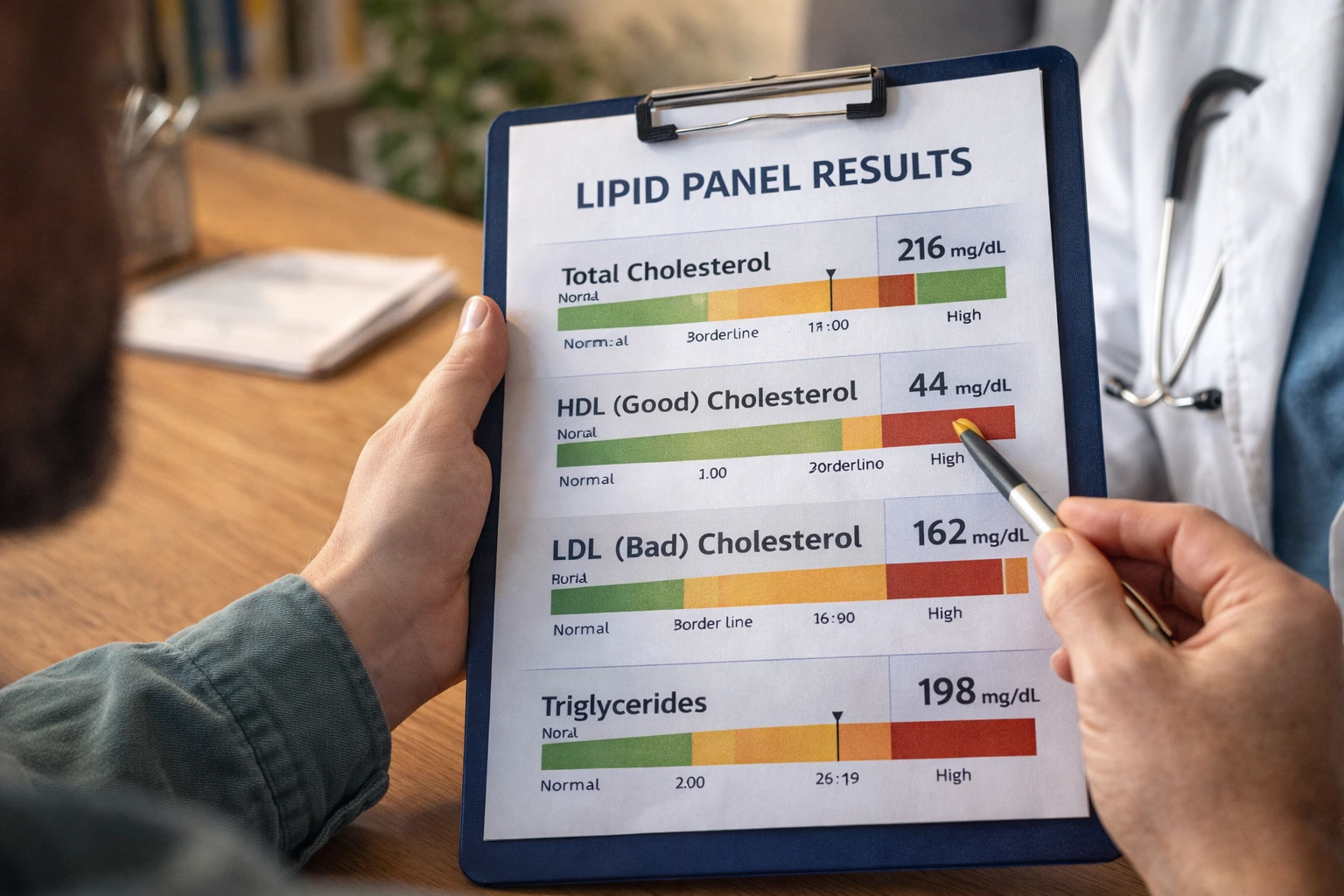
You get your blood work back and suddenly you’re staring at numbers like total cholesterol, LDL, and HDL, wondering if you should panic or just ignore them, but lipid panel results explained in plain language can actually tell you something real about what’s happening inside your body.
Lipid panel basics
A lipid panel is a blood test that measures levels of cholesterol and triglycerides in your blood, and understanding what these measurements actually represent is the first step toward making sense of your cardiovascular health. Cholesterol is essential for body function, serving as a building block for cell membranes, hormones, and vitamin D synthesis, but when levels climb too high, it starts accumulating in places you don’t want it. Think of it like this: your body needs some cholesterol to function properly, but excess amounts can begin sticking to artery walls, kind of like plaque buildup in old pipes. The test itself is straightforward, a simple blood draw that gets analyzed in a lab, and the results come back with four main measurements that tell you a lot about your cardiovascular risk profile.
Interpreting lipid panel results
The results of a lipid panel typically include total cholesterol, HDL (good) cholesterol, LDL (bad) cholesterol, and triglyceride levels, and each one tells a different part of your cardiovascular story. Total cholesterol is the sum of all cholesterol in your blood, but it’s not the whole picture, which is why breaking it down matters so much. Imagine you’re looking at a budget: total cholesterol is your overall spending, but you need to know where that money is actually going. HDL and LDL are the real players here, and understanding these values and their implications is crucial for assessing cardiovascular health. A young adult might see a total cholesterol of 200 mg/dL and think that’s the end of the story, but if 150 of that comes from LDL and only 35 from HDL, that’s a very different health picture than if the numbers were reversed.
Factors affecting lipid levels
Genetics, diet, exercise, and overall lifestyle play significant roles in determining lipid levels, and the good news is that most of these factors are actually within your control. Your family history matters, sure, but it’s not destiny. If your parents had high cholesterol, that doesn’t mean you’re automatically doomed to the same fate. What you eat directly impacts your lipid profile: saturated fats and trans fats tend to raise LDL cholesterol, while fiber, omega-3 fatty acids, and plant-based proteins can help lower it. Exercise is particularly powerful because it raises HDL cholesterol, the protective kind that actually clears LDL from your bloodstream. Stress, sleep quality, and smoking all influence your numbers too. Making healthy choices can positively impact your lipid profile and reduce the risk of heart disease, and the changes don’t have to be dramatic or unsustainable.
- Maintain a balanced diet rich in fruits, vegetables, whole grains, and lean proteins, focusing on foods like salmon, berries, oats, and legumes that actively support healthy lipid profiles.
- Engage in regular physical activity to support heart health and lower cholesterol levels, aiming for at least 150 minutes of moderate aerobic exercise weekly or equivalent strength training.
- Avoid smoking and limit alcohol consumption to improve lipid profiles, as both substances directly interfere with your body’s ability to manage cholesterol effectively.
🔬 Science-backed benefits in 2 minuteschoose where to begin:
Understanding LDL and HDL
LDL cholesterol is often called bad cholesterol because it can build up on the walls of arteries, leading to atherosclerosis and heart disease, but understanding the mechanism helps you see why it matters. LDL particles carry cholesterol through your bloodstream, and when there’s too much of it, some particles get oxidized and trigger an inflammatory response in your artery walls. Your immune system responds to this inflammation by sending white blood cells to the area, which actually makes things worse, creating a cycle that leads to plaque formation. HDL cholesterol, on the other hand, helps remove LDL from the bloodstream, reducing the risk of heart disease, and it does this by acting like a cleanup crew. HDL particles bind to LDL and transport it back to your liver for disposal, which is why higher HDL levels are genuinely protective. A young adult with an LDL of 130 and HDL of 60 is in a much better position than someone with the same LDL but HDL of only 35.
Medical interventions
In some cases, medications like statins may be prescribed to lower cholesterol levels if lifestyle modifications alone are not sufficient, and these drugs work by blocking an enzyme your liver uses to produce cholesterol. Statins are among the most studied medications in existence, with decades of research showing they reduce heart attack and stroke risk in people with elevated cholesterol or existing heart disease. They’re not a magic bullet, though, and they work best when combined with dietary changes and exercise. Other medications like ezetimibe work differently, blocking cholesterol absorption in your intestines, while newer drugs called PCSK9 inhibitors are game-changers for people with genetic high cholesterol. It’s important to consult a healthcare provider to determine the most appropriate course of action, because the decision to start medication depends on your individual risk factors, family history, age, and whether you have existing cardiovascular disease.
Future monitoring
Regular lipid panel tests are essential to monitor changes in lipid levels over time, and this ongoing assessment allows for adjustments in lifestyle or treatment plans as needed. Think of it like tracking your fitness progress: one workout doesn’t change your body, but consistent effort over weeks and months produces real results. The same applies to your lipid levels. You might make dietary changes and start exercising, then get retested in three months to see if your numbers improved. If they did, that’s powerful motivation to keep going. If they didn’t move much, that might signal that medication would help, or that you need to adjust your approach. Some people see significant improvements in just a few months, while others take longer. The point is that your lipid levels aren’t fixed, and regular monitoring gives you concrete data about whether your efforts are working.
Understanding lipid panel results is crucial for assessing cardiovascular health. By interpreting the various components of a lipid panel and making positive lifestyle choices, individuals can proactively manage their lipid levels and reduce the risk of heart disease.
What should I do if my lipid panel results are abnormal?
If your lipid panel results are outside the normal range, consult your healthcare provider for further evaluation. They may recommend lifestyle changes, medications, or additional tests to determine the best course of action.
How often should I have a lipid panel test?
The frequency of lipid panel tests depends on individual risk factors and health status. Generally, adults should have their lipid levels checked every 4-6 years, but more frequent testing may be necessary for those with certain health conditions or risk factors.
Others also read:
Disclaimer: This article is for informational purposes only and is not a substitute for professional medical advice. Always consult a healthcare professional for personal guidance.
This article has been prepared and reviewed by the GlobalHealthBeacon editorial team and is based on current medical research and published scientific literature available in 2026. It provides structured, evidence-based information to support informed health decisions.
