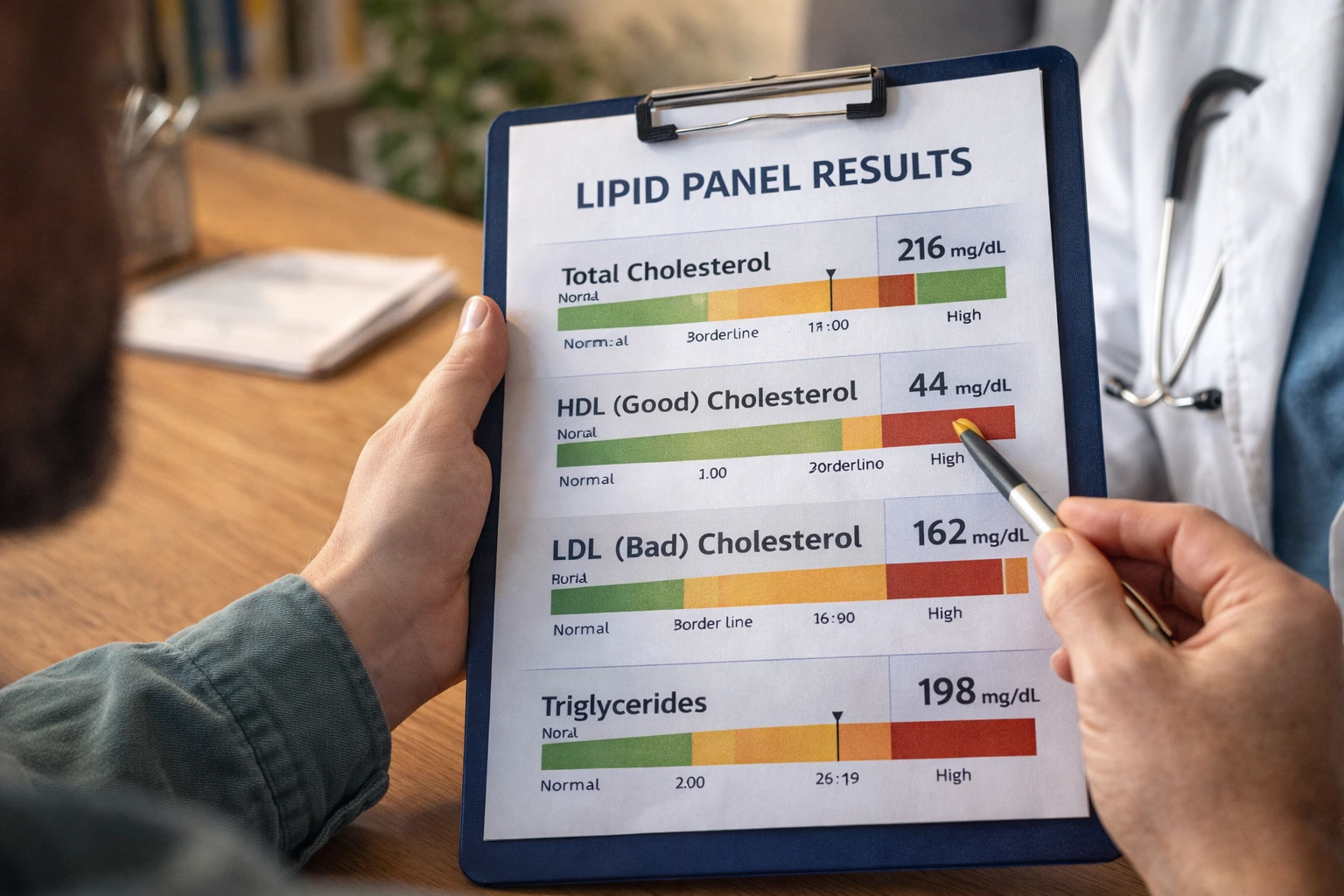
You get your lab results back and suddenly you’re staring at numbers that feel like they’re spelling out some kind of health verdict, wondering if your body has been silently sabotaging you this whole time, and that’s exactly why understanding lipid panel results explained is the wake-up call every young adult needs right now.
Deciphering the numbers
Remember that moment when you first saw your lipid panel results and felt completely lost? You’re not alone. Cholesterol, triglycerides, HDL, LDL – these terms get thrown around like everyone should just know what they mean, but honestly, it feels like decoding a secret message written in a language you never learned. Here’s the thing though: breaking down these numbers is genuinely crucial to taking charge of your health before small issues become big ones. Think of your lipid panel as a snapshot of how your cardiovascular system is doing right now. Total cholesterol tells you the overall amount of cholesterol in your blood. LDL, often called the bad cholesterol, is the stuff that builds up in your arteries if levels get too high. HDL, the good cholesterol, actually helps remove that buildup. And triglycerides? They’re another type of fat in your blood that matters more than most people realize. Understanding what each number represents isn’t just academic – it’s personal.
- Learn what each component of the lipid panel represents and how they interact with your overall health
- Discover the ideal ranges for a healthy lipid profile based on your age and risk factors
- Understand how lifestyle choices like diet, exercise, stress, and sleep impact your lipid levels
Lifestyle adjustments
Once you actually grasp what your lipid numbers mean, the real work begins. But here’s the encouraging part: you don’t need to overhaul your entire life overnight. Start with something simple like adding more fiber-rich foods to your meals. Oatmeal for breakfast, beans in your salad, whole grain bread instead of white – these tiny shifts add up. Next, get moving. You don’t need to become a gym rat; a 30-minute walk most days makes a real difference. Then tackle the saturated fats. Swap butter for olive oil, choose lean proteins, and watch how often you’re grabbing fried food. A lot of young adults are surprised how quickly their lipid levels respond to these changes, sometimes seeing improvements in just 6 to 8 weeks. The key is consistency, not perfection. You’ll slip up, eat pizza, skip a workout. That’s normal. What matters is getting back on track the next day.
💬 Ready to feel better in 2 minutes?choose where to begin:
Regular monitoring
Getting your lipid panel done once and then forgetting about it is like checking your car’s oil once and assuming it’ll be fine forever. Regular monitoring is genuinely essential, especially for young adults, because early detection of any abnormalities can lead to timely interventions and way better outcomes down the road. Your healthcare provider will recommend how often you should get tested based on your individual situation. If your numbers are good, you might only need testing every few years. If there are concerns, more frequent checks make sense. Some young adults find it helpful to track their numbers over time, watching how their lifestyle changes actually translate into better results. That visual proof can be incredibly motivating. Plus, regular monitoring gives you a chance to catch trends before they become problems. Maybe your LDL is creeping up slowly, or your triglycerides are rising. Catching these patterns early means you can adjust your approach before things get serious.
Seeking support
Navigating lipid panel results can feel genuinely daunting, especially when you’re young and thought you had more time before worrying about cholesterol. But here’s what many young adults discover: you don’t have to figure this out alone. Talking to your doctor is the obvious first step, but there’s real value in connecting with a nutritionist who can create an eating plan that actually fits your lifestyle, not some generic template. Support groups, whether online or in person, connect you with people dealing with the same thing. Hearing how someone else brought their cholesterol down or managed their triglycerides makes it feel less isolating and more achievable. Some people find accountability partners helpful too, someone to text when you’re about to make a food choice or to celebrate with when your next test results come back improved. Sharing your experiences and concerns genuinely makes the journey easier and empowers you to make informed choices that stick.
Understanding and interpreting your lipid panel results is key to proactively managing your health. By making simple lifestyle changes, monitoring your levels regularly, and seeking support when needed, young adults can take control of their lipid profiles and overall well-being.
Can I improve my lipid panel results through diet and exercise alone?
Yes, adopting a healthy diet rich in fruits, vegetables, whole grains, and lean proteins, along with regular exercise, can positively impact your lipid levels.
When should I start monitoring my lipid panel as a young adult?
It’s recommended to start monitoring your lipid panel in your 20s and continue regularly based on your risk factors and healthcare provider’s advice.
Others also read:
Disclaimer: This article is for informational purposes only and is not a substitute for professional medical advice. Always consult a healthcare professional for personal guidance.
This article presents an experience-based perspective and has been reviewed by the GlobalHealthBeacon editorial team in 2026. It provides structured, evidence-based information to support informed health decisions.
