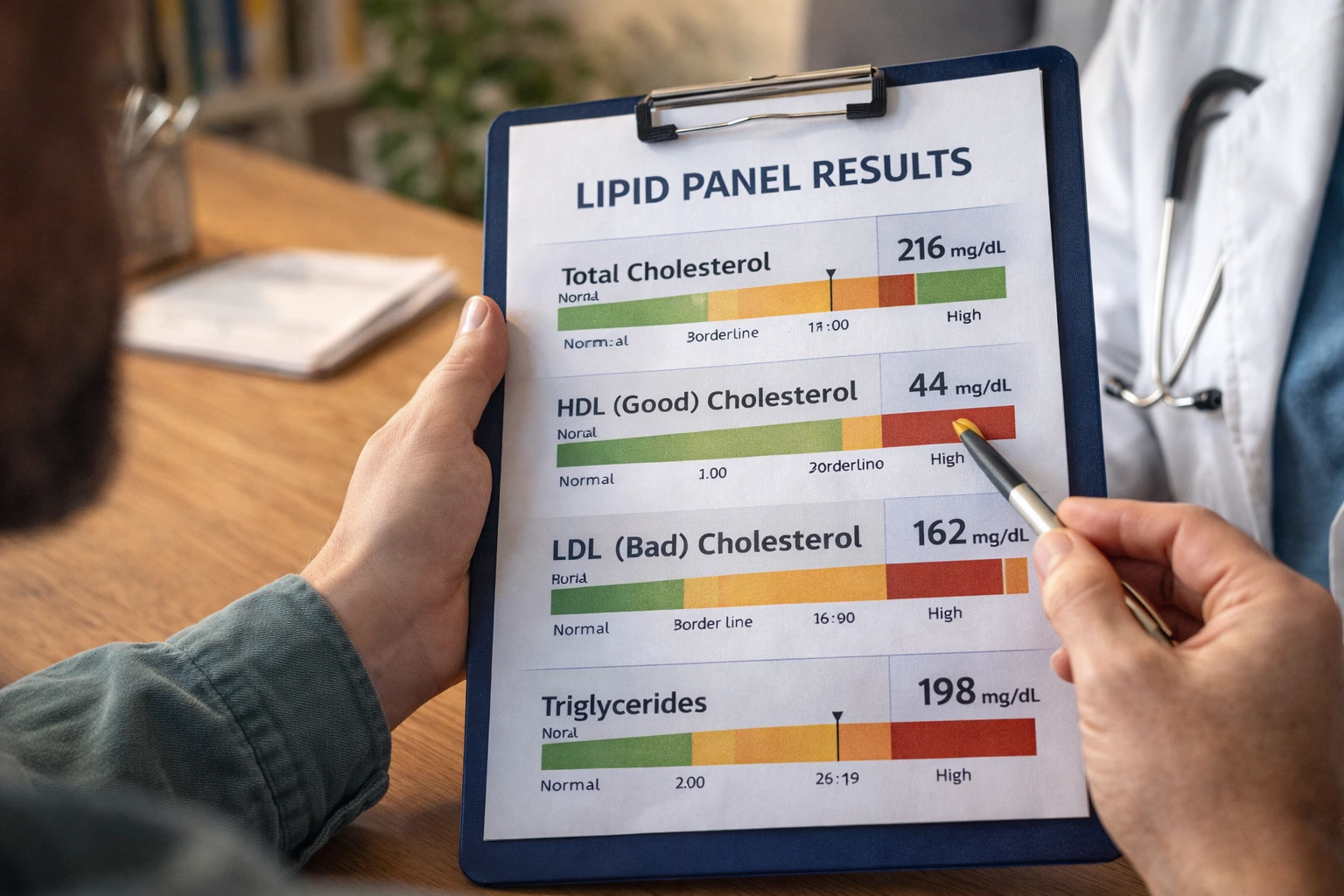
Your doctor hands you a lab report filled with numbers that might as well be written in another language, and suddenly you’re worried about what LDL and HDL actually mean for your heart and your future, so let’s break down your lipid panel results explained in a way that finally makes sense.
Understanding lipid panel results
Your lipid panel is essentially a snapshot of the fats circulating in your bloodstream, and it tells a story about your cardiovascular health that goes far beyond a single number. Think of it like a financial report for your arteries. Just as a bank statement shows deposits and withdrawals, your lipid panel shows what’s building up and what’s being cleared out. The four main components work together like a system. Total cholesterol adds up everything, LDL cholesterol represents the particles that can stick to artery walls like sludge in a pipe, HDL cholesterol acts as a cleanup crew removing that buildup, and triglycerides are another type of fat that can accelerate damage when levels run high. For seniors especially, these numbers become increasingly important because decades of eating habits, activity levels, and genetics have accumulated into your current cardiovascular profile. Understanding what each number represents helps you grasp why your doctor might recommend certain changes and what you’re actually working toward when you make lifestyle adjustments.
- Total cholesterol: The total amount of cholesterol in your blood, including both good and bad cholesterol.
- LDL cholesterol: Known as the ‘bad’ cholesterol, high levels can lead to plaque buildup in arteries.
- HDL cholesterol: Referred to as the ‘good’ cholesterol, it helps remove LDL cholesterol from the arteries.
- Triglycerides: Another type of fat in your blood that can increase heart disease risk if elevated.
Interpreting your scores
Your lipid numbers don’t exist in a vacuum, and this is where many people get confused. A reading that might be concerning for a 45-year-old could be viewed differently for someone in their 70s, especially when other health factors come into play. Your age, gender, family history, blood pressure, diabetes status, and smoking history all influence what doctors consider acceptable ranges for you specifically. For example, a 68-year-old woman with no history of heart disease might have different LDL targets than a 72-year-old man who had a heart attack five years ago. This is why comparing your numbers to a friend’s results or to generic online charts can be misleading. Your healthcare provider looks at your complete picture, considering whether you’ve had previous cardiovascular events, whether you take certain medications, and what your actual risk level is based on validated assessment tools. They might also consider whether you’re willing and able to make lifestyle changes before jumping to medication. The conversation with your doctor about what your specific numbers mean for your specific situation is far more valuable than memorizing ideal ranges.
📘 Fix your day in under 2 minuteschoose where to begin:
Managing high lipid levels
When your lipid panel comes back showing elevated cholesterol or triglycerides, the first instinct for many seniors is to worry about being put on medication immediately. The reality is more nuanced and often more empowering. Lifestyle modifications genuinely work, though they require consistency and patience to show results. Dietary changes might mean reducing saturated fats from red meat and full-fat dairy, increasing soluble fiber through oats and beans, and adding plant sterols found in fortified foods. Physical activity doesn’t mean running marathons; even 30 minutes of brisk walking most days can meaningfully improve your lipid profile. Quitting smoking, if applicable, produces rapid improvements in HDL cholesterol. Losing even 5 to 10 percent of your body weight can lower triglycerides and improve overall lipid ratios. Many seniors find success by making one or two changes at a time rather than overhauling everything simultaneously. For instance, you might start by swapping butter for olive oil and adding a daily walk before considering medication. Your doctor will monitor your progress over 8 to 12 weeks to see if lifestyle changes alone are sufficient or if medication becomes necessary to reach your targets.
Regular monitoring and follow-up
Checking your lipid panel once and then ignoring the results is like checking your car’s oil level once and assuming it never changes. Your lipid profile fluctuates based on diet, activity, stress, sleep, and seasonal factors. Most doctors recommend checking lipid levels every four to six years if your results are normal, but annually or even more frequently if you’re managing high cholesterol or making lifestyle changes. This regular monitoring serves multiple purposes. It shows whether your interventions are working, catches any concerning trends early, and provides motivation when you see improvements from your efforts. Many seniors find it helpful to keep a simple chart tracking their numbers over time, which makes progress visible and tangible. When you see your LDL drop by 15 points after three months of dietary changes, that concrete evidence often motivates continued effort. Your follow-up appointments also give you a chance to discuss what’s working, what’s challenging, and whether adjustments to your approach are needed. Some people thrive with medication combined with lifestyle changes, while others achieve targets through diet and exercise alone. The key is treating monitoring as an ongoing conversation with your healthcare team rather than a one-time event.
Seeking support and guidance
Managing lipid scores can feel isolating, especially when you’re trying to change eating habits that have been part of your life for decades or when you’re struggling to stay consistent with exercise routines. The good news is that you have access to more support resources than ever before. Your doctor can refer you to a registered dietitian who specializes in heart health and can create a realistic eating plan tailored to your preferences and cultural background rather than handing you a generic sheet. Cardiac rehabilitation programs, often available through hospitals, combine education, supervised exercise, and peer support in ways that feel less lonely than going it alone. Online communities and support groups, whether meeting in person or virtually, connect you with others navigating the same challenges and celebrating the same victories. Many seniors find that having an accountability partner, whether a spouse, friend, or family member, makes lifestyle changes feel more sustainable. Some communities offer cooking classes focused on heart-healthy recipes, walking groups that combine exercise with social connection, or wellness programs specifically designed for older adults. Don’t underestimate the power of asking your doctor for resources and recommendations tailored to your situation. You’re not meant to figure this out in isolation.
Understanding your lipid panel results explained clearly is the foundation for taking control of your heart health as you age. Your numbers tell a story specific to you, and interpreting them accurately with your healthcare provider helps you make informed decisions about diet, activity, and medication. Regular monitoring tracks your progress, lifestyle changes often produce meaningful improvements, and support from healthcare professionals and your community makes the journey feel manageable rather than overwhelming. The goal isn’t perfection but steady progress toward healthier lipid levels that reduce your cardiovascular risk and support your long-term wellbeing.
What is a healthy range for LDL cholesterol?
Ideally, LDL cholesterol should be less than 100 mg/dL for optimal heart health. However, the target may vary based on individual risk factors and health conditions. If you have a history of heart disease or stroke, your doctor might recommend an even lower target, sometimes below 70 mg/dL. Your specific goal depends on your complete health picture, so discuss your personal target range with your healthcare provider rather than aiming for a one-size-fits-all number.
Can diet alone lower high cholesterol?
While diet plays a significant role in managing cholesterol levels, some individuals may require medication in addition to dietary modifications. It’s essential to work with your healthcare provider to determine the best approach for your unique situation. Genetics play a substantial role in cholesterol levels, so some people with familial hypercholesterolemia may need medication regardless of diet. Your doctor will typically give lifestyle changes 8 to 12 weeks to show results before deciding whether medication is necessary to reach your targets.
Others also read:
Disclaimer: This article is for informational purposes only and is not a substitute for professional medical advice. Always consult a healthcare professional for personal guidance.
This guide has been prepared and reviewed by the GlobalHealthBeacon editorial team and reflects current medical research as of 2026. It provides structured, evidence-based information to support informed health decisions.
