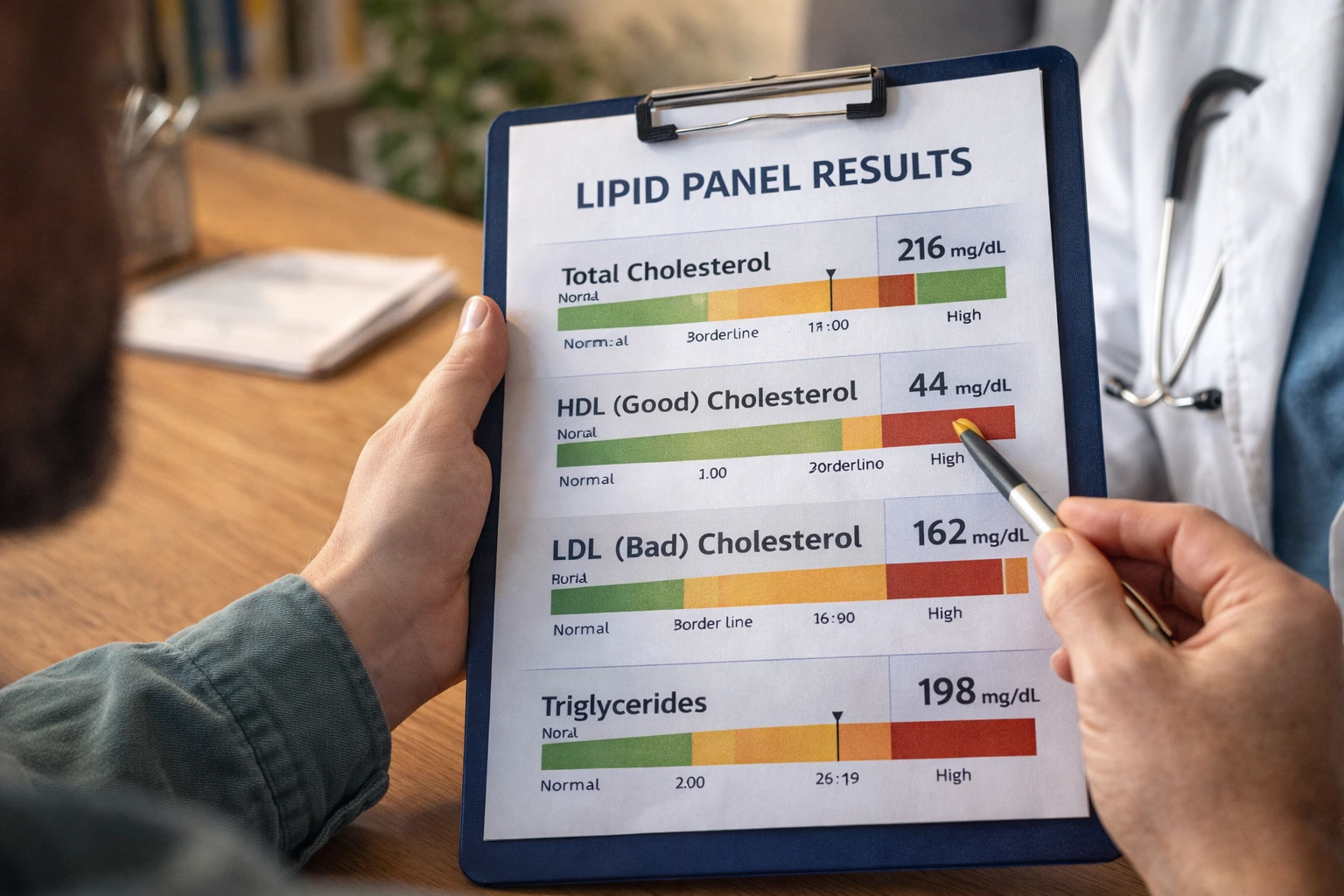
Your doctor hands you a lipid panel report and you stare at the numbers, wondering what triglycerides actually are and why yours seem too high, but this guide breaks down exactly what those confusing lipid panel results explained really mean for your health.
What are triglycerides?
Triglycerides are molecules composed of glycerol and three fatty acids, and they represent the most common form of fat circulating in your bloodstream. When you eat food, your body converts excess calories into triglycerides, which are then stored in fat cells for later energy use. Think of them as your body’s energy reserve system. A small amount of triglycerides is necessary for normal cellular function, hormone production, and nutrient absorption. However, the challenge arises when triglyceride levels climb too high. For context, a typical lipid panel measures triglycerides in milligrams per deciliter of blood. Normal fasting levels are generally below 150 mg/dL, though this can vary slightly depending on your healthcare provider’s standards. Understanding this distinction between necessary triglycerides and excess levels is crucial for seniors managing their cardiovascular health.
Causes of high triglycerides
High triglyceride levels develop through a combination of lifestyle factors and genetic predisposition. An unhealthy diet heavy in refined carbohydrates, added sugars, and saturated fats directly increases triglyceride production in your liver. Consider a typical scenario: a senior who regularly consumes sugary beverages, processed snacks, and fried foods will likely see elevated triglyceride readings at their next blood work. Obesity and sedentary behavior compound the problem by reducing your body’s ability to metabolize fats efficiently. Alcohol consumption, particularly excessive intake, significantly raises triglycerides because your liver prioritizes processing alcohol over managing fat metabolism. Additionally, certain medical conditions like diabetes, thyroid disorders, and kidney disease can elevate triglycerides. Some medications, including corticosteroids and certain hormone therapies, may also increase levels. Genetics play an underestimated role; if your parents or siblings have high triglycerides, your risk increases substantially regardless of lifestyle choices.
Key steps in managing triglycerides
Managing triglycerides effectively requires a multi-faceted approach combining dietary changes, physical activity, and behavioral modifications. Start by examining your eating patterns. Replace refined carbohydrates with whole grains, limit added sugars to less than 5 percent of daily calories, and choose lean proteins like fish, poultry, and legumes. A practical example: instead of white bread and sugary cereal for breakfast, switch to oatmeal with berries and nuts. For exercise, aim for at least 150 minutes of moderate-intensity activity weekly, such as brisk walking, swimming, or cycling. This doesn’t require a gym membership; many seniors find success with daily walks around their neighborhood. Reduce alcohol consumption significantly or eliminate it entirely, as even moderate drinking can elevate triglycerides in susceptible individuals. Monitor portion sizes carefully, as overeating even healthy foods contributes to weight gain and elevated triglycerides. Track your progress by requesting lipid panel tests every three to six months initially, then annually once levels stabilize.
- Follow a balanced diet rich in healthy fats from sources like olive oil, nuts, and fish, while minimizing processed foods and refined sugars that spike triglyceride production.
- Incorporate regular exercise routines tailored to your fitness level and medical conditions, aiming for consistency over intensity to build sustainable habits.
- Avoid excessive alcohol intake and opt for healthier alternatives like herbal tea or sparkling water to reduce triglyceride elevation from alcohol metabolism.
🔬 Science-backed benefits in 2 minuteschoose where to begin:
Health risks associated with high triglycerides
Elevated triglycerides don’t cause symptoms you can feel, which makes them particularly dangerous. They work silently in the background, contributing to atherosclerosis, the buildup of plaque in artery walls. This narrowing restricts blood flow and increases your risk of heart attack and stroke substantially. High triglycerides often accompany other risk factors like high LDL cholesterol and low HDL cholesterol, creating a compounding effect on cardiovascular disease risk. Additionally, very high triglyceride levels, typically above 500 mg/dL, can trigger acute pancreatitis, a painful inflammation of the pancreas requiring emergency medical care. Seniors with metabolic syndrome, characterized by high triglycerides combined with high blood pressure, excess abdominal fat, and high blood sugar, face particularly elevated cardiovascular risks. The relationship between triglycerides and cognitive decline is also emerging in research, suggesting connections to brain health. This is why regular monitoring through lipid panel testing becomes essential for early detection and intervention before serious complications develop.
Treatment options for high triglycerides
Treatment begins with lifestyle modifications, which prove effective for many people when implemented consistently. Dietary changes and increased physical activity can reduce triglycerides by 20 to 30 percent within three months for some individuals. If lifestyle changes alone don’t achieve target levels after three to six months, your healthcare provider may recommend medication. Statins, commonly prescribed for cholesterol management, also modestly reduce triglycerides. Fibrates like fenofibrate work specifically on triglyceride reduction and are often prescribed when triglycerides exceed 200 mg/dL. Omega-3 fatty acid medications, derived from fish oil, can lower triglycerides by 25 to 35 percent in some cases. Newer medications like PCSK9 inhibitors and inclisiran target different pathways in fat metabolism. Your healthcare provider will consider your complete health picture, including kidney function, liver health, and other medications, before recommending specific treatments. Regular follow-up appointments ensure your chosen treatment approach is working effectively and tolerating well.
Importance of regular monitoring
Regular lipid panel testing provides the only way to know your triglyceride levels, since elevated triglycerides produce no noticeable symptoms. Most healthcare guidelines recommend seniors have lipid panels checked at least every four to six years if previous results were normal, but more frequently if levels are elevated or if you have cardiovascular risk factors. Establishing a baseline measurement allows you to track changes over time and assess whether your lifestyle modifications or medications are working. Many seniors find it helpful to keep a simple log of their lipid panel results, noting the date, triglyceride level, and any changes they made to diet or exercise since the previous test. This creates a personal health record that reveals patterns and motivates continued effort. Discuss with your doctor what your target triglyceride level should be based on your individual risk factors and medical history. Some seniors benefit from more frequent testing during the first year of treatment changes, then transition to annual monitoring once stable. This proactive approach enables early detection of rising levels before they contribute to serious health complications.
Understanding triglycerides empowers seniors to take meaningful control over their cardiovascular health. These blood fats, while necessary for normal body function, can accumulate to dangerous levels through diet, inactivity, and genetic factors. By adopting a heart-healthy diet, engaging in regular physical activity, limiting alcohol, and maintaining consistent medical monitoring, you can effectively manage triglyceride levels and reduce your risk of heart disease, stroke, and other serious complications. Treatment options range from lifestyle modifications to prescription medications, with your healthcare provider helping you choose the best approach for your unique situation. Regular lipid panel testing serves as your early warning system, allowing you to make adjustments before problems develop. The key is consistency and patience, as meaningful changes often take several months to appear in your blood work.
Can genetics play a role in high triglyceride levels?
Yes, genetic factors significantly influence triglyceride levels. Familial hypertriglyceridemia, an inherited condition, causes some people to have naturally elevated triglycerides regardless of lifestyle choices. If multiple family members have high triglycerides or early heart disease, your genetic risk is higher. However, genetics is not destiny; lifestyle modifications still help reduce triglycerides even in genetically predisposed individuals. Your healthcare provider can assess your family history and recommend appropriate screening and treatment strategies tailored to your genetic risk profile.
Are there natural remedies to lower triglycerides?
Lifestyle changes form the foundation of natural triglyceride management. Omega-3 fatty acids from fatty fish like salmon and mackerel have demonstrated triglyceride-lowering effects in research. Soluble fiber from oats, beans, and apples helps reduce triglyceride absorption. Some studies suggest niacin and plant sterols may provide modest benefits. However, these natural approaches work best alongside dietary changes and exercise rather than as replacements for medical treatment. Always consult your healthcare provider before starting supplements or making significant dietary changes, as some natural remedies interact with medications or may not be appropriate for your specific health conditions.
Others also read:
Disclaimer: This article is for informational purposes only and is not a substitute for professional medical advice. Always consult a healthcare professional for personal guidance.
This article has been prepared and reviewed by the GlobalHealthBeacon editorial team and is based on current medical research and published scientific literature available in 2026. It provides structured, evidence-based information to support informed health decisions.
