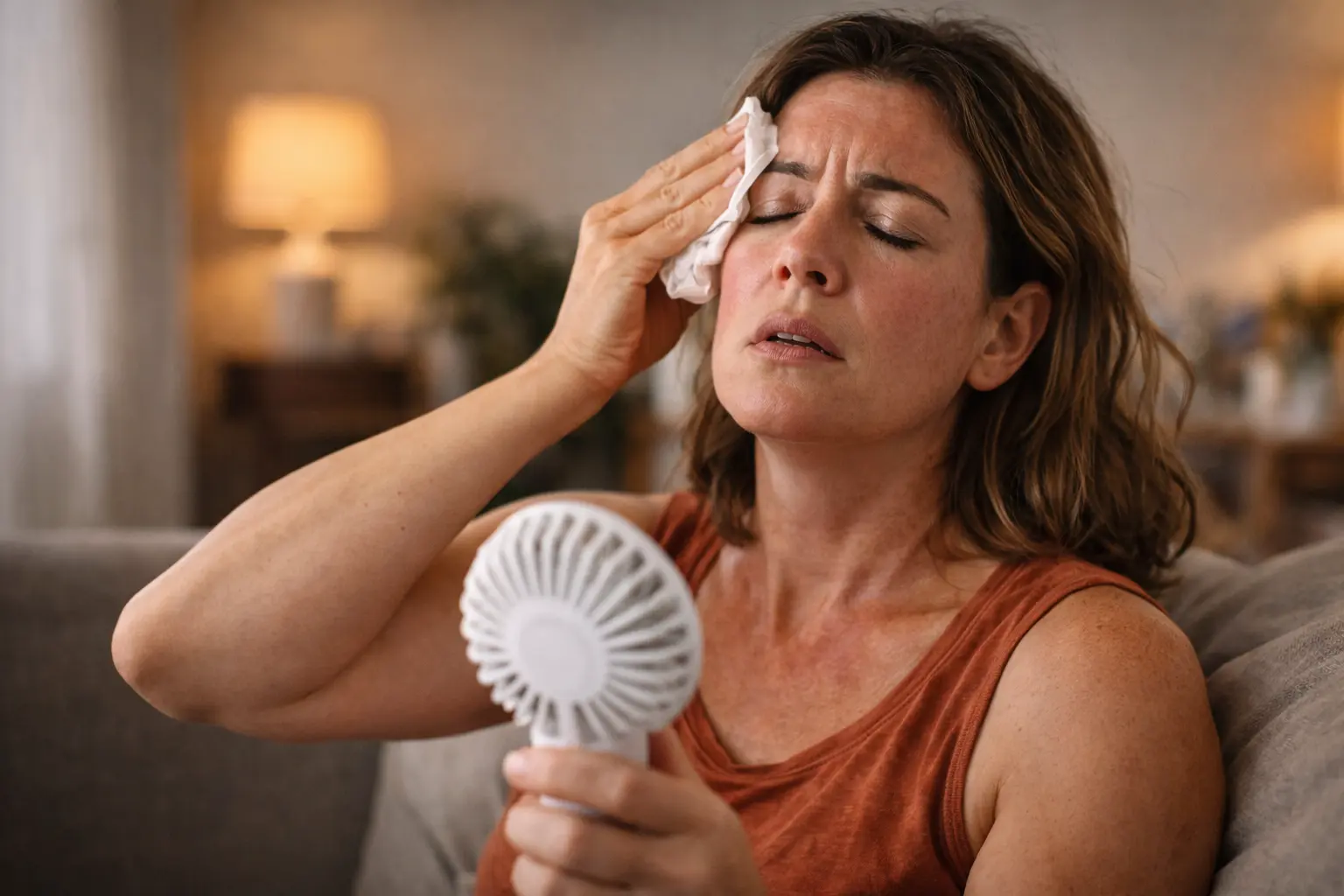
One minute you’re fine, the next your face is burning, sweat is pouring down your back, and you’re desperately peeling off layers while everyone around you shivers in the air conditioning—welcome to menopause hot flashes, the symptom nobody warns you about until it’s happening to you.
Understanding menopause hot flashes
Menopause hot flashes are sudden waves of intense heat that flood your body without warning, typically lasting anywhere from 30 seconds to several minutes. You might notice your face and neck turning red, feel your heart racing, and experience profuse sweating that can soak through clothing. These episodes happen because your body’s temperature regulation system gets confused during menopause when estrogen levels drop significantly. Think of it like your internal thermostat is malfunctioning. Some women experience a few hot flashes a week, while others deal with dozens daily. The unpredictability is often what makes them most frustrating. A woman might be in a business meeting, at the grocery store, or trying to sleep when a hot flash strikes. Understanding that these are a normal biological response to hormonal changes, not something you’re doing wrong, is the first step toward managing them effectively.
- Keep a journal to track your hot flashes and identify triggers.
- Dress in layers to easily adjust to temperature changes.
- Practice deep breathing or meditation techniques to help manage stress, which can trigger hot flashes.
Managing hot flashes naturally
Natural management strategies focus on reducing triggers and supporting your body through this transition. Start by staying consistently hydrated throughout the day, as dehydration can intensify hot flashes. Eliminate or significantly reduce alcohol and caffeine, both known to trigger episodes in many women. Maintaining a healthy weight through balanced nutrition helps regulate your body’s temperature control system more effectively. A diet rich in fruits, vegetables, whole grains, and lean proteins provides the nutrients your body needs during this hormonal shift. Regular exercise, whether that’s brisk walking, swimming, or cycling, reduces hot flash frequency and intensity while improving overall mood and sleep quality. Many women find that exercising earlier in the day rather than close to bedtime helps prevent nighttime hot flashes. Pay attention to your environment too. Keeping your bedroom cool, using cotton sheets, and dressing in breathable fabrics throughout the day all contribute to better temperature management and fewer triggering situations.
📘 Fix your day in under 2 minuteschoose where to begin:
Herbal remedies and supplements
Many women explore herbal options when seeking relief from hot flashes. Black cohosh has been studied for decades and some women report significant symptom reduction, though results vary. Dong quai, used in traditional Chinese medicine, is another option some find helpful. Evening primrose oil contains gamma-linolenic acid, which some research suggests may help with hot flash symptoms. Sage leaf extract has shown promise in clinical studies for reducing both frequency and severity. Red clover contains isoflavones that mimic estrogen in the body, making it popular among women seeking plant-based alternatives. However, the effectiveness of these remedies varies considerably from person to person, and what works wonderfully for your friend might not help you at all. This is why consulting with a healthcare provider before starting any supplement is essential. Your doctor needs to know about all supplements you’re considering because some can interact with medications or may not be appropriate for your specific health situation. They can also help you determine realistic expectations and monitor whether a remedy is actually helping after a reasonable trial period.
Practical tips for coping
When a hot flash hits, having immediate coping strategies makes a real difference in your daily comfort. Carry a portable fan or cooling cloth that you can use discreetly at work or in public. Keep cold water nearby and take small sips when you feel a flash coming on. Wearing lightweight, breathable fabrics like cotton and linen helps your body regulate temperature more easily. Avoid synthetic materials that trap heat and moisture. Keep your living space cool, especially your bedroom where temperature control directly impacts sleep quality. Many women find that keeping their bedroom between 60 and 67 degrees Fahrenheit significantly reduces nighttime hot flashes. Relaxation techniques like yoga, tai chi, or progressive muscle relaxation help reduce overall stress, which is a known trigger for more frequent episodes. Some women benefit from scheduling these practices at specific times, while others use them reactively when they feel a hot flash starting. Breathing exercises, particularly slow, deep breathing from your diaphragm, can sometimes stop a hot flash before it fully develops or reduce its intensity.
Seeking medical advice
If your hot flashes are severe enough to disrupt your sleep, work, or quality of life, it’s time to have a conversation with your healthcare provider. Severe symptoms might include hot flashes occurring more than 10 times daily, nighttime flashes that prevent restorative sleep, or episodes that cause significant anxiety or embarrassment. Your doctor can discuss whether hormone therapy might be appropriate for you, as it remains one of the most effective treatments for moderate to severe hot flashes. Hormone therapy isn’t right for everyone, and your provider will review your personal and family medical history to determine if it’s a safe option. Other medications like certain antidepressants or blood pressure medications have also been shown to reduce hot flash symptoms. Your healthcare provider can help you weigh the benefits and risks of different approaches based on your individual circumstances. Remember that managing menopause is a partnership between you and your healthcare team. What works best often involves combining approaches, and sometimes it takes time to find your optimal solution.
Menopause hot flashes result from hormonal changes and affect women differently. Managing them involves understanding your personal triggers, making lifestyle adjustments like staying hydrated and exercising regularly, and exploring natural remedies with professional guidance. For severe symptoms disrupting daily life, medical treatments like hormone therapy offer effective options. You have multiple pathways to relief.
Can hot flashes be a sign of a more serious condition?
While hot flashes are a common symptom of menopause, they can also be linked to other health conditions. If you experience sudden and severe hot flashes, it’s important to consult with your healthcare provider to rule out any underlying issues.
Are there lifestyle changes that can help reduce hot flashes?
Yes, lifestyle changes like staying hydrated, maintaining a healthy weight, and managing stress through relaxation techniques can help reduce the frequency and intensity of hot flashes. Consulting with a healthcare provider for personalized advice is always recommended.
Others also read:
Disclaimer: This article is for informational purposes only and is not a substitute for professional medical advice. Always consult a healthcare professional for personal guidance.
This guide has been prepared and reviewed by the GlobalHealthBeacon editorial team and reflects current medical research as of 2026. It provides structured, evidence-based information to support informed health decisions.
