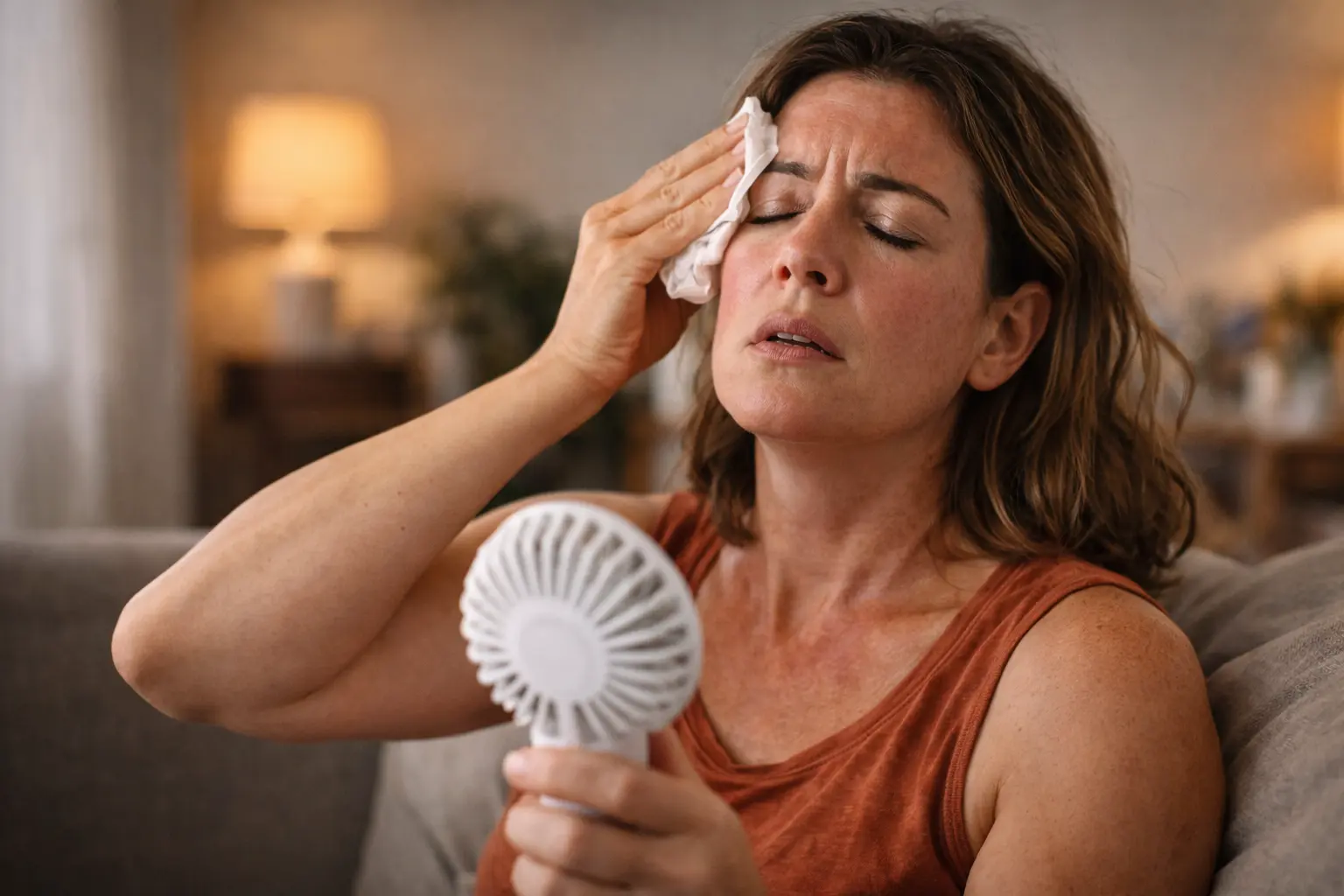
One minute you’re fine, the next your face is burning, sweat is pouring down, and you’re yanking off layers in front of everyone – menopause hot flashes are relentless, unpredictable, and they’re stealing your comfort and confidence.
Lifestyle changes to alleviate menopause hot flashes
The foundation of managing menopause hot flashes often starts with what you do every single day. Think of your body as a thermostat that’s gone haywire, and your job is to help stabilize it through deliberate choices. Dressing in layers is more than just practical – it’s about giving yourself control back. Imagine you’re at a restaurant with friends, and a flash hits. With layers, you can slip off a cardigan without drawing attention or feeling trapped. Staying hydrated throughout the day helps regulate your core temperature naturally. Many women find that drinking water consistently, especially in the morning and before bed, reduces the intensity of flashes. Relaxation techniques like deep breathing or meditation work because they calm your nervous system, which directly influences temperature regulation. Try this: when you feel a flash starting, pause and take five slow, deep breaths. Some women report this simple act cuts their flash duration in half. Avoiding known triggers – like hot beverages, spicy foods, and warm environments – gives you additional control. Keep a simple log for a week noting what you eat and when flashes occur. You’ll likely spot patterns that surprise you.
- Dress in layers to easily adjust to temperature changes
- Stay hydrated by drinking plenty of water throughout the day
- Practice relaxation techniques such as deep breathing or meditation to reduce stress
Herbal remedies for menopause hot flashes
Many women explore herbal options because they want a gentler approach than prescription medications. Black cohosh has been used for decades and some research supports its effectiveness, though results vary widely from person to person. Red clover contains isoflavones that mimic estrogen, which appeals to women seeking natural hormone support. Sage leaf extract has shown promise in clinical studies for reducing hot flash frequency. However, here’s what matters: just because something is herbal doesn’t mean it’s automatically safe for you. If you take blood pressure medication, blood thinners, or have a history of hormone-sensitive cancers, certain herbs can interfere or pose risks. A woman in her late 50s might try black cohosh and feel relief within weeks, while her sister sees no change. This variability is normal. Before adding any supplement, schedule a conversation with your doctor or a naturopath who understands your complete medical picture. They can review potential interactions and help you choose what makes sense for your specific situation. Give any herbal remedy at least 4-6 weeks before deciding if it’s working.
📘 Fix your day in under 2 minuteschoose where to begin:
Hormone therapy options
Hormone replacement therapy (HRT) remains one of the most effective treatments for moderate to severe menopause hot flashes, but it’s not a one-size-fits-all solution. Your doctor can prescribe estrogen alone if you’ve had a hysterectomy, or estrogen combined with progesterone if you still have your uterus. The relief can be dramatic – many women report 80-90% reduction in hot flashes within weeks. That said, HRT carries considerations. Some women experience increased risk of blood clots or breast cancer with long-term use, though this risk varies based on age, health history, and type of hormone used. Newer formulations like lower-dose patches or vaginal preparations may carry different risk profiles than older oral versions. Your doctor will weigh your individual risk factors against the benefit of symptom relief. Some women use HRT short-term just to get through the worst years, then gradually taper off. Others find the quality-of-life improvement justifies longer use. This is a deeply personal decision that requires honest conversation with your healthcare provider about your health history, family history, and what matters most to you right now.
Acupuncture and acupressure techniques
Acupuncture has gained credibility in Western medicine for managing menopause symptoms. The practice works by stimulating specific points on your body to restore balance and improve circulation. Some women notice fewer hot flashes after just a few sessions, while others need consistent treatment over several months to see results. A typical course involves weekly or bi-weekly appointments for 8-12 weeks. Acupressure offers a similar benefit without needles – you apply pressure to the same points yourself using your fingers. You can learn basic techniques and use them at home whenever a flash starts. The beauty of these approaches is they have minimal side effects and work alongside other treatments. If you’re considering acupuncture, find a licensed practitioner who has specific experience with menopause symptoms. Ask about their success rates and what to expect. Some insurance plans cover acupuncture for pain management, though menopause coverage varies. Even if you pay out of pocket, many women find the investment worthwhile when other options haven’t worked or when they want to avoid hormones entirely.
Healthy diet choices for menopause relief
What you eat directly influences how your body manages menopause symptoms. A diet rich in fruits, vegetables, and whole grains provides nutrients that support hormonal balance and stabilize blood sugar, which affects temperature regulation. Phytoestrogen-rich foods like soy, flaxseeds, and legumes may help some women, though the effect varies. Calcium and vitamin D become increasingly important as estrogen drops, protecting your bones. Avoiding common triggers matters just as much as adding good foods. Caffeine stimulates your nervous system and can trigger or worsen flashes – many women find that cutting back on coffee and tea brings noticeable relief within days. Spicy foods raise your core temperature. Alcohol, especially wine and spirits, dilates blood vessels and can set off intense flashes. Imagine keeping a simple food journal for two weeks, noting what you eat and when flashes occur. You’ll start seeing your personal pattern. One woman might discover that her afternoon coffee is her biggest trigger, while another realizes that eating large meals late in the day makes nights worse. Armed with this knowledge, you can make targeted changes that actually work for your body rather than following generic advice.
Managing menopause hot flashes effectively means combining multiple approaches tailored to your life. Start with lifestyle adjustments like layering, hydration, and stress reduction – these cost nothing and work for many women. Explore herbal remedies with your healthcare provider’s guidance. Consider hormone therapy if symptoms are severe and you’re a good candidate. Try acupuncture or acupressure if you prefer non-pharmaceutical options. Adjust your diet to eliminate triggers and support hormonal health. The key is viewing this phase as something you can actively manage rather than simply endure. Work closely with your doctor to create a personalized plan, and remember that what works beautifully for one woman may not be your answer. Give treatments time to work, track what helps, and adjust as needed.
Are herbal remedies safe for treating menopause hot flashes?
Herbal remedies can be effective, but safety depends on your individual health, medications, and medical history. Some herbs interact with blood thinners, blood pressure medications, or hormone-sensitive conditions. Always consult your healthcare provider before starting any supplement to ensure it’s appropriate for you.
How can I reduce the frequency of menopause hot flashes naturally?
Lifestyle changes often bring real results. Stay hydrated throughout the day, dress in layers, practice deep breathing or meditation to manage stress, avoid caffeine and spicy foods, and keep a food journal to identify your personal triggers. Many women see improvement within weeks of making these adjustments.
Others also read:
Disclaimer: This article is for informational purposes only and is not a substitute for professional medical advice. Always consult a healthcare professional for personal guidance.
This guide has been prepared and reviewed by the GlobalHealthBeacon editorial team and reflects current medical research as of 2026. It provides structured, evidence-based information to support informed health decisions.
