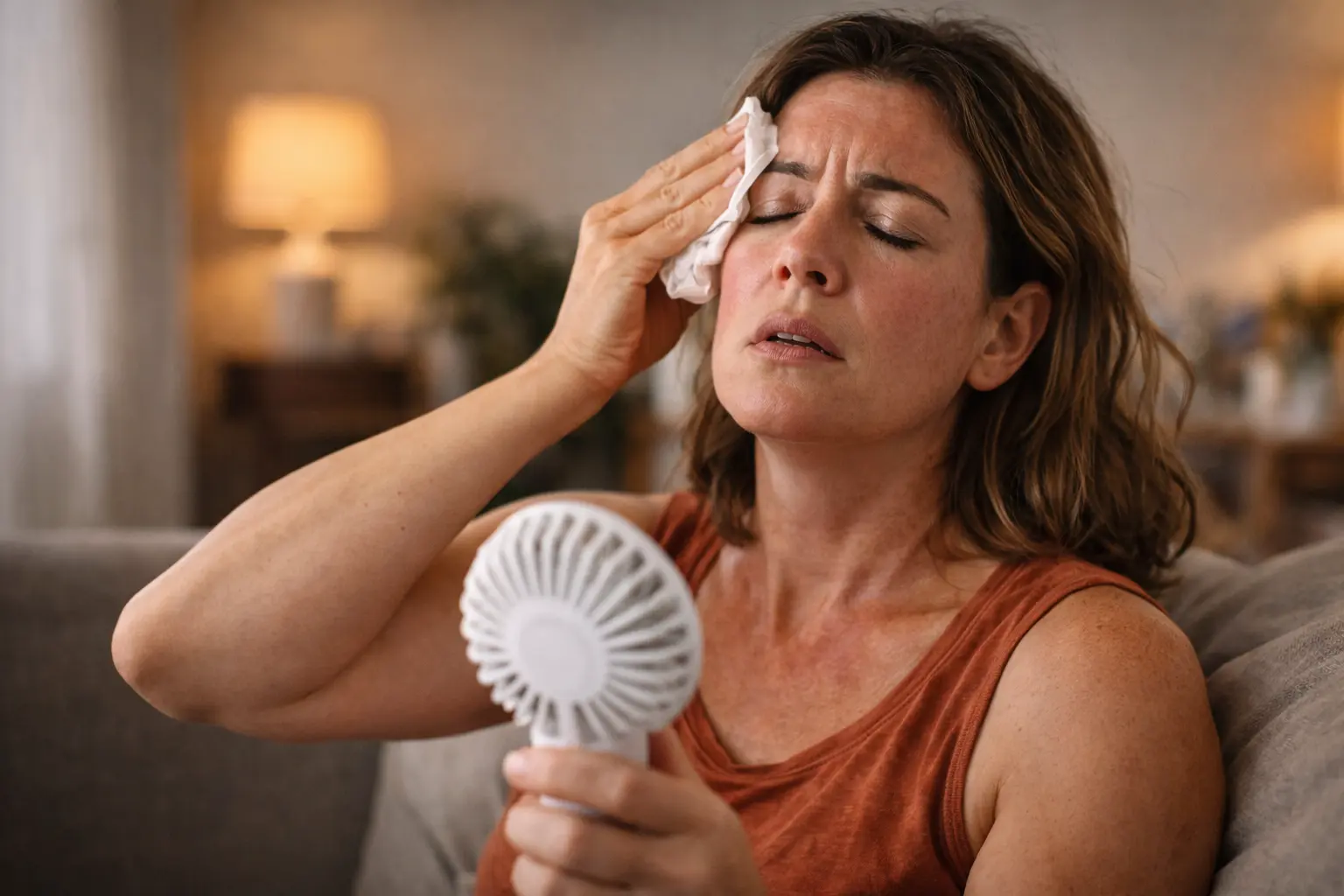
You’re sitting at dinner and suddenly your face is burning, sweat drips down your neck, and you feel like someone turned up the thermostat to 100 degrees, but everyone around you is perfectly comfortable – welcome to menopause hot flashes, and you’re definitely not alone in this maddening experience.
The temperature regulating system
Your brain contains a small but mighty structure called the hypothalamus, roughly the size of a pea, that acts as your body’s personal thermostat. During menopause, declining estrogen levels send this delicate system into confusion. The hypothalamus normally receives signals about your core body temperature and makes tiny adjustments to keep you at a stable 98.6 degrees. But when estrogen drops, the hypothalamus becomes hypersensitive, misinterpreting normal body temperatures as dangerously hot. Imagine a smoke detector that goes off when you’re just cooking dinner instead of when there’s actual fire. Your brain then triggers a cascade of responses: blood vessels dilate to release heat, sweat glands activate, and your heart rate increases. This entire process happens in seconds, which is why hot flashes feel so sudden and intense. Understanding this mechanism helps explain why the sensation feels so real and physical, even though your actual body temperature may only rise slightly.
Biological triggers
Hot flashes result from a complex conversation between multiple systems in your body. Estrogen doesn’t just regulate reproduction; it also influences serotonin and norepinephrine, neurotransmitters that help regulate temperature, mood, and stress responses. When estrogen levels fluctuate during menopause, these neurotransmitters become unbalanced, making your hypothalamus even more reactive. Think of it like a thermostat with a faulty sensor that overreacts to minor temperature shifts. Certain triggers can amplify this effect: stress hormones like cortisol can push your system over the edge, caffeine narrows blood vessels then causes them to dilate suddenly, spicy foods increase metabolism and heat production, and even tight clothing can trap body heat and confuse your temperature sensors. Some women notice patterns, like hot flashes happening more frequently during stressful work meetings or after consuming hot beverages. Others find their triggers are completely individual. This intricate biological network explains why hot flashes vary so much from person to person and why what triggers one woman might have no effect on another.
Managing hot flashes
Managing hot flashes effectively means working with your body’s systems rather than against them. Layering clothing is more than just a practical tip; it’s about giving yourself immediate control when a flash hits. Wear a breathable base layer, an insulating middle layer, and an outer layer you can remove quickly. This strategy works because it lets you shed heat rapidly without having to change your entire outfit. Hydration matters more than you might think because water helps your body regulate temperature through perspiration and circulation. Aim to drink water consistently throughout the day, not just when you feel a flash coming on. Relaxation techniques like deep breathing work because stress hormones directly trigger the hypothalamus; when you slow your breathing to four counts in and six counts out, you activate your parasympathetic nervous system, which calms your temperature regulation center. Many women find that practicing these techniques during calm moments makes them more effective when a flash actually occurs. Some also benefit from keeping a cool washcloth nearby, using fans strategically in their home and office, and adjusting their sleep environment with breathable bedding. The key is experimenting to find what works for your unique body.
- Dress in layers for easy temperature adjustments
- Stay hydrated to regulate body temperature
- Practice relaxation techniques to reduce stress
🔬 Science-backed benefits in 2 minuteschoose where to begin:
Impact on quality of life
Hot flashes might seem like just a temporary inconvenience, but their impact on daily life can be surprisingly significant. Night sweats disrupt sleep cycles, leaving you exhausted the next day and affecting your cognitive function, mood, and ability to concentrate. Some women report waking five to ten times per night, soaked in sweat, which compounds fatigue over weeks and months. During the day, the unpredictability creates anxiety; you might avoid social situations, public speaking, or exercise because you’re worried a flash will hit at an embarrassing moment. This social withdrawal can lead to isolation and mood changes. The physical symptoms themselves, like heart palpitations or dizziness that sometimes accompany hot flashes, can trigger health anxiety. Understanding that these sensations are biological responses to hormonal changes rather than signs of heart disease or other serious conditions can help reduce that anxiety. Many women find that simply knowing the science behind what’s happening makes the experience feel more manageable and less frightening. Recognizing the connection between your symptoms and your body’s natural transition helps you separate the physical experience from emotional distress.
Nutritional considerations
What you eat directly influences how frequently and intensely hot flashes occur because food affects your metabolism, blood vessel function, and hormone levels. Spicy foods contain capsaicin, which triggers heat receptors in your mouth and increases core body temperature and blood flow. Caffeine acts as a stimulant that narrows blood vessels initially, then causes them to dilate suddenly, creating temperature fluctuations your hypothalamus interprets as overheating. Alcohol has similar effects and also interferes with your body’s ability to regulate temperature effectively. Conversely, a balanced diet rich in fruits, vegetables, and whole grains provides phytoestrogens, plant compounds that mimic estrogen’s effects and may help stabilize your temperature regulation system. Foods like flaxseeds, soy products, and legumes contain these beneficial compounds. Keeping a food diary for two weeks can reveal your personal triggers; you might discover that your hot flashes spike after certain meals or beverages. Some women find that eating smaller, more frequent meals prevents the metabolic spike that larger meals create. Staying consistent with meal timing also helps your body anticipate and regulate temperature changes more smoothly. Individual responses vary greatly, so what works for your friend might not work for you.
Hormone therapy
Hormone therapy, also called hormone replacement therapy or HRT, involves taking medications that contain estrogen and sometimes progestin to replace the hormones your body is no longer producing. For some women, particularly those experiencing severe hot flashes that significantly impact quality of life, hormone therapy can be remarkably effective, sometimes reducing hot flash frequency by 75 percent or more. The therapy works by stabilizing estrogen levels, which calms the overactive hypothalamus and restores balance to neurotransmitter systems. However, hormone therapy isn’t appropriate for everyone. Your healthcare provider considers your personal and family medical history, including any history of breast cancer, blood clots, or heart disease, because hormone therapy carries certain risks that must be weighed against benefits. The decision involves a detailed conversation about your specific situation, the severity of your symptoms, how long you’ve been experiencing them, and your individual risk factors. Some women use hormone therapy short-term to get through the worst years of menopause, while others use it longer. There are also different delivery methods: pills, patches, creams, and gels, each with different absorption rates and effects. This is a decision that requires partnership with your healthcare provider, not something to decide based on what worked for someone else.
Understanding the biological mechanisms underlying menopause hot flashes can provide clarity and empower individuals to better manage this common symptom.
Can hot flashes be prevented?
While hot flashes cannot be entirely prevented, certain lifestyle adjustments like dressing in layers, staying hydrated, and managing stress can help reduce their frequency and intensity.
Are hot flashes a sign of a serious health condition?
Hot flashes are usually a natural part of menopause due to hormonal changes. However, if hot flashes are accompanied by other concerning symptoms, it is important to consult a healthcare provider for further evaluation.
Others also read:
Disclaimer: This article is for informational purposes only and is not a substitute for professional medical advice. Always consult a healthcare professional for personal guidance.
This article has been prepared and reviewed by the GlobalHealthBeacon editorial team and is based on current medical research and published scientific literature available in 2026. It provides structured, evidence-based information to support informed health decisions.
