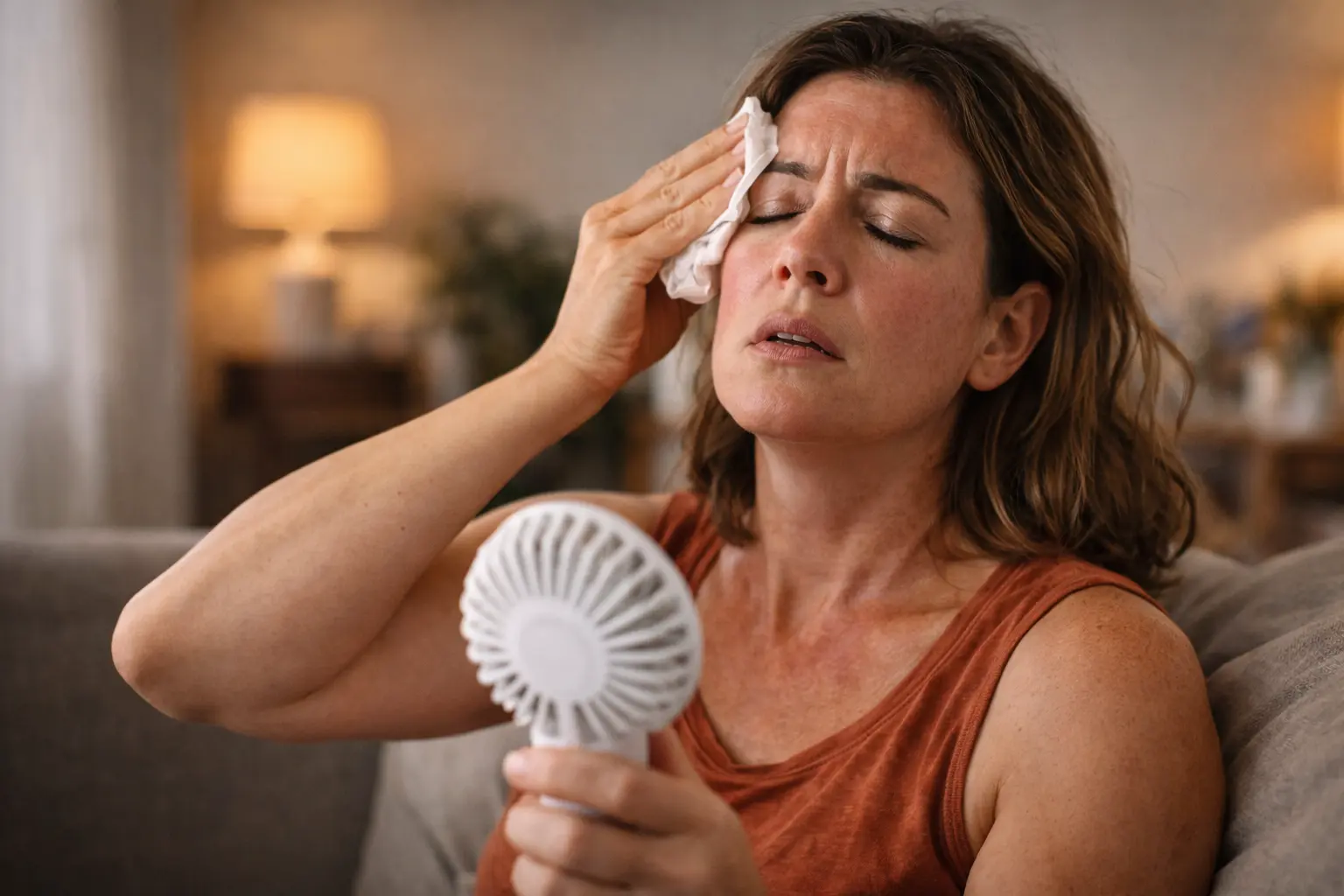
One minute you’re sitting calmly at dinner, the next you’re drenched in sweat and fanning yourself like your life depends on it—welcome to menopause hot flashes, where your body becomes a thermostat you can’t control.
Navigating the flames of hot flashes
Hot flashes hit differently when you’re trying to live your life. Imagine you’re at your grandchild’s school event, dressed nicely, and suddenly a wave of intense heat crashes over you without warning. Your face flushes red, sweat beads form on your forehead, and you’re desperately looking for a way to cool down while everyone around you seems perfectly comfortable. This is the reality for many seniors experiencing menopause hot flashes. These sudden episodes can last anywhere from a few seconds to several minutes, and they often strike at the most inconvenient times. Whether you’re in a meeting, at the grocery store, or trying to sleep, hot flashes disrupt your sense of control and can leave you feeling embarrassed or frustrated. The physical sensations are real and intense, affecting not just your comfort but also your confidence in navigating daily activities.
- Layer your clothing strategically so you can remove pieces when a hot flash hits without feeling exposed or uncomfortable in social settings.
- Keep a small fan, cooling towel, or water bottle within arm’s reach during the day and by your bedside at night for quick relief.
- Practice deep breathing or progressive muscle relaxation techniques when you feel a hot flash coming on, as stress can trigger or intensify them.
- Stay hydrated throughout the day and limit triggers like caffeine, spicy foods, and hot beverages that can amplify hot flash episodes.
- Talk openly with your healthcare provider about whether hormone therapy, non-hormonal medications, or other evidence-based treatments might be right for your situation.
Embracing change and acceptance
There’s a moment when acceptance becomes your greatest ally. Instead of fighting against what your body is doing, many seniors find peace in understanding that hot flashes are a natural transition, not a personal failure. Think about it this way: your body is going through a significant hormonal shift, and hot flashes are simply a visible sign of that change. When you stop viewing them as an enemy and start seeing them as a temporary phase, the emotional weight lifts considerably. You might notice that other women in your life have experienced exactly what you’re going through, and hearing their stories can be incredibly validating. This shift in perspective doesn’t make hot flashes disappear, but it changes how you relate to them. Instead of dreading the next episode, you develop a kind of resilience. You learn that you can handle it, that it will pass, and that you’re not alone in this experience. Many seniors report that once they stopped fighting the reality of menopause hot flashes, they actually felt more in control of their lives.
💬 Ready to feel better in 2 minutes?choose where to begin:
Seeking comfort and support
Isolation makes everything harder, especially when you’re dealing with something as personal as hot flashes. Reaching out to friends, family, or support groups can transform your experience entirely. Picture yourself having coffee with a friend and casually mentioning that you’ve been struggling with night sweats, only to discover she’s been dealing with the same thing for months. Suddenly, you’re not alone anymore. You’re sharing practical tips, laughing about awkward moments, and realizing that what felt like a solitary struggle is actually a shared human experience. Many communities offer menopause support groups where seniors can talk openly about their symptoms, exchange coping strategies, and gain emotional support from others who truly understand. Online forums and communities dedicated to menopause can also provide 24/7 access to advice and encouragement. Don’t underestimate the power of simply telling someone you trust what you’re experiencing. Sometimes just saying it out loud to another person makes it feel more manageable.
Exploring self-care strategies
Self-care isn’t indulgent when you’re navigating menopause hot flashes; it’s essential maintenance for your well-being. Think of it as investing in yourself during a challenging time. Regular exercise, even gentle activities like walking or swimming, can significantly reduce the frequency and intensity of hot flashes while boosting your mood and energy levels. A balanced diet rich in phytoestrogen-containing foods like soy, flaxseed, and whole grains may help some seniors manage symptoms naturally. Getting adequate sleep becomes even more important when hot flashes are disrupting your nights, so creating a cool, comfortable sleep environment is crucial. Consider activities that calm your nervous system, such as yoga, meditation, or tai chi. These practices not only help manage stress, which can trigger hot flashes, but also give you a sense of control and accomplishment. Many seniors find that when they prioritize their overall health through consistent self-care routines, they feel more resilient and better equipped to handle whatever menopause hot flashes throw their way.
Through the hot flash years, seniors experience the disruptive nature of menopause symptoms like hot flashes. By making lifestyle changes, seeking support, and practicing self-care, seniors can navigate this period with greater ease.
Are hot flashes a normal part of the aging process?
Yes, hot flashes are a common symptom experienced by many women during menopause and are considered a normal part of the aging process.
Can hot flashes be prevented or eliminated?
While hot flashes cannot be entirely prevented, certain lifestyle changes and treatment options can help manage and reduce the frequency and intensity of hot flashes.
Others also read:
Disclaimer: This article is for informational purposes only and is not a substitute for professional medical advice. Always consult a healthcare professional for personal guidance.
This article presents an experience-based perspective and has been reviewed by the GlobalHealthBeacon editorial team in 2026. It provides structured, evidence-based information to support informed health decisions.
