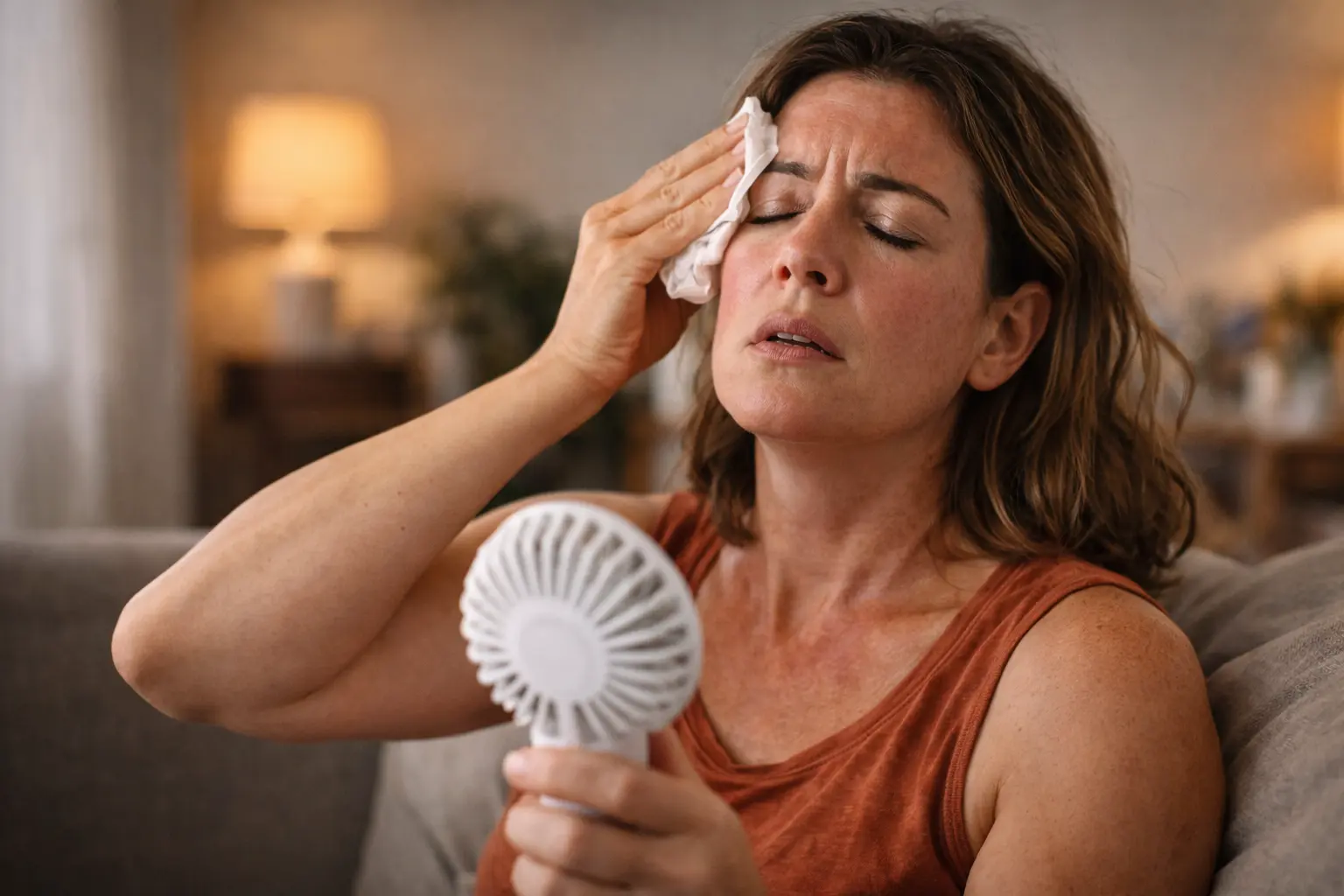
You’re sitting in a meeting, and suddenly your body feels like it’s on fire, sweat dripping down your back while everyone else seems perfectly comfortable, and you realize menopause hot flashes are stealing your confidence and your peace of mind.
Understanding menopause hot flashes
Menopause hot flashes hit differently when you’re young and not expecting them. Imagine being in your thirties or forties, thinking you have years before menopause becomes a concern, and then your body suddenly decides otherwise. A hot flash starts as a tingling sensation in your chest, then spreads upward like a wave of heat washing over your face, neck, and shoulders. Your skin flushes red, your heart races, and sweat pours out of nowhere. These episodes can last anywhere from thirty seconds to several minutes, though it feels like an eternity when you’re in the middle of one. The exact mechanism behind hot flashes remains partially mysterious to science, but researchers believe they’re connected to fluctuating hormone levels that confuse your body’s temperature regulation system. What makes it worse is that triggers vary from person to person. For some, it’s that morning coffee or spicy lunch. For others, stress, warm rooms, or even certain fabrics touching your skin can set off an episode.
- The exact cause of hot flashes during menopause is not fully understood but is believed to be related to changes in hormone levels.
- Hot flashes can occur multiple times a day and can last from a few seconds to several minutes, impacting daily activities and quality of life.
- Managing hot flashes may involve lifestyle changes, such as wearing layered clothing, avoiding triggers, practicing relaxation techniques, and staying hydrated.
Coping strategies for menopause hot flashes
When a hot flash hits, you need tools that work right now, not someday. Keep a small fan at your desk, in your car, and in your bag. Yes, really. When that wave of heat starts climbing up your neck, a fan becomes your best friend. Some people swear by keeping a spray bottle of cool water nearby for quick relief on their face and wrists. Layering your clothing is non-negotiable. Wear breathable fabrics like cotton or moisture-wicking materials that let heat escape instead of trapping it against your skin. When a flash hits, you can shed layers without ending up half-naked. Deep breathing actually works, though it sounds too simple. When you feel a hot flash starting, slow your breathing down to four counts in, hold for four, and out for four. This signals your nervous system to calm down, which can sometimes stop the flash in its tracks or make it less intense. Some young adults find relief through cold water bottles they keep in the freezer, or even a damp washcloth on their neck during an episode.
💬 Ready to feel better in 2 minutes?choose where to begin:
Seeking support and guidance
The loneliness of dealing with menopause hot flashes as a young adult is real. You might feel like you’re the only one your age experiencing this, which makes you question whether something is actually wrong with you. It’s not. Connecting with others who get it changes everything. Online support communities exist specifically for people navigating menopause hot flashes early, where you can read stories from others and realize you’re not alone or broken. Some workplaces have wellness programs or employee assistance programs that offer counseling or resources. Talking to a healthcare provider matters too, not because hot flashes are dangerous, but because they can help you understand what’s happening and explore options that fit your life. A good provider listens without judgment and helps you figure out what management approach works best for you, whether that’s lifestyle changes, supplements, or other interventions.
Embracing self-care and wellness
Self-care during menopause hot flashes isn’t about bubble baths and candles, though those are nice. It’s about intentional choices that calm your nervous system and strengthen your body’s resilience. Regular exercise, even just thirty minutes of walking most days, helps regulate your internal temperature and reduces the frequency of hot flashes. Yoga and meditation give you tools to manage the anxiety that often comes with unpredictable episodes. Eating a balanced diet with plenty of vegetables, whole grains, and lean proteins stabilizes your blood sugar, which can reduce triggers. Sleep is crucial because exhaustion makes hot flashes worse and more frequent. Prioritizing seven to nine hours of quality sleep helps your body cope better. Some young adults find that reducing caffeine and alcohol, staying hydrated throughout the day, and managing stress through journaling or time in nature makes a real difference in how often and how intensely they experience hot flashes.
Menopause hot flashes are a common symptom that many young adults face, causing sudden waves of heat and discomfort. Understanding triggers, coping strategies, seeking support, and embracing self-care are key in managing this challenging symptom.
Are menopause hot flashes a sign of a more serious health issue?
Menopause hot flashes are a natural part of the menopausal transition and are usually not a cause for concern. However, if you experience severe or persistent hot flashes, it is advisable to consult a healthcare provider to rule out any underlying health conditions.
Can lifestyle changes help reduce the frequency of menopause hot flashes?
Yes, adopting healthy lifestyle habits such as staying hydrated, avoiding triggers like hot beverages and spicy foods, managing stress, and maintaining a balanced diet can help minimize the occurrence and severity of menopause hot flashes.
Others also read:
Disclaimer: This article is for informational purposes only and is not a substitute for professional medical advice. Always consult a healthcare professional for personal guidance.
This article presents an experience-based perspective and has been reviewed by the GlobalHealthBeacon editorial team in 2026. It provides structured, evidence-based information to support informed health decisions.
