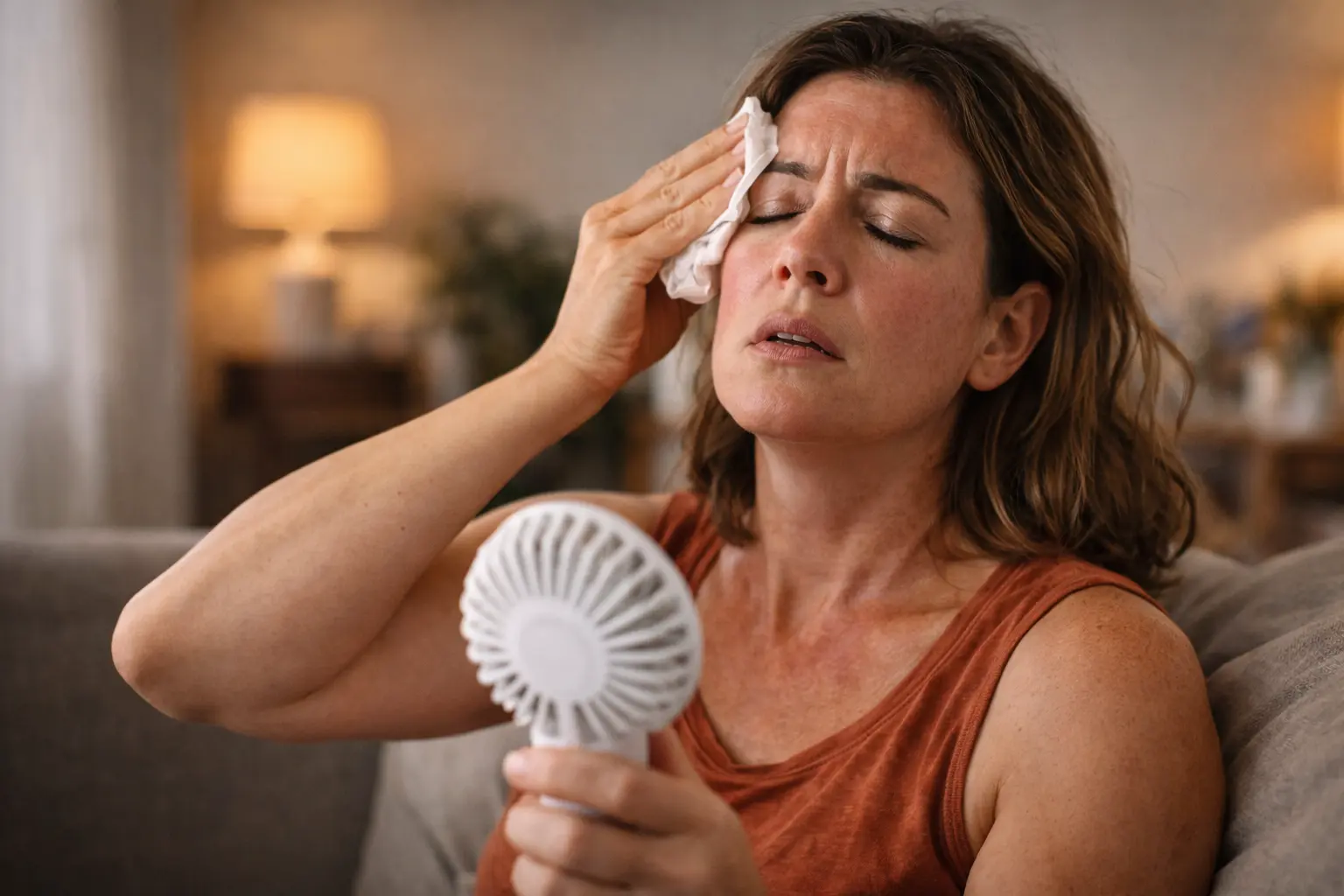
You’re sitting in a meeting or at dinner when suddenly your face burns, sweat drips down your back, and you feel like you might combust from the inside out – welcome to menopause hot flashes, the uninvited guest that shows up at the worst possible moments.
Understanding menopause hot flashes
Menopause hot flashes are sudden, intense waves of heat that spread through your body without warning. They typically last between 30 seconds and 10 minutes, though the experience can feel much longer when you’re in the middle of one. You might notice your face turning red, your heart racing, or beads of perspiration forming on your forehead and neck. These episodes happen because your body’s temperature regulation system becomes confused during menopause due to declining estrogen levels. Some women experience them during the day while working or socializing, while others wake up drenched in night sweats, disrupting their sleep for hours. A common scenario involves a woman in her early 50s attending her grandson’s school event, suddenly feeling an overwhelming heat surge that leaves her flushed and uncomfortable. The unpredictability is often the hardest part – you never know when the next one will strike, which can make planning activities or wearing certain fabrics feel stressful.
- Hot flashes are caused by hormonal changes during menopause as estrogen levels decline.
- Triggers like hot weather, stress, spicy foods, caffeine, and alcohol can worsen hot flashes.
- Wearing light, breathable clothes, using fans, keeping your bedroom cool, and staying hydrated can help alleviate symptoms.
Managing hot flashes naturally
Natural management strategies focus on lifestyle adjustments that work with your body rather than against it. Start by staying consistently hydrated throughout the day – aim for at least 8 to 10 glasses of water, as dehydration can trigger or intensify hot flashes. Deep breathing exercises are surprisingly effective; when you feel a hot flash coming on, try the 4-7-8 technique: breathe in for 4 counts, hold for 7, and exhale for 8. This activates your parasympathetic nervous system and can reduce the intensity of the episode. Maintaining a healthy weight through regular movement and balanced nutrition helps stabilize your body temperature. Avoid known triggers like caffeine, nicotine, and alcohol at least a few hours before bed. Consider adding soy products, flaxseeds, and foods rich in phytoestrogens to your diet, as some women report reduced symptoms. A practical example: a 58-year-old woman discovered that her evening hot flashes decreased significantly after she switched from coffee to herbal tea and started a 20-minute evening walk routine. Stress reduction through yoga, meditation, or even gentle stretching can make a measurable difference in frequency and severity.
📘 Fix your day in under 2 minuteschoose where to begin:
Seeking medical advice
If hot flashes are significantly disrupting your sleep, work, or social life, it’s time to have a conversation with your healthcare provider. They can assess whether your symptoms warrant medical intervention and discuss options tailored to your health history. Hormone replacement therapy (HRT) remains one of the most effective treatments for moderate to severe hot flashes, though it’s not suitable for everyone. Your doctor might recommend estrogen therapy, progestin therapy, or a combination depending on whether you still have your uterus and your personal risk factors. Non-hormonal medications like selective serotonin reuptake inhibitors (SSRIs) or gabapentin can help some women, particularly those who cannot take HRT. Vaginal estrogen creams or rings address hot flashes while minimizing systemic hormone exposure. A practical scenario involves a woman whose hot flashes were so severe she was changing clothes multiple times daily and avoiding social gatherings. After consulting her doctor, she found relief with a low-dose HRT patch that allowed her to reclaim her confidence and quality of life. Don’t assume you have to suffer through this phase alone – medical professionals have multiple evidence-based options available.
Embracing a healthy lifestyle
A comprehensive lifestyle approach addresses hot flashes from multiple angles while improving your overall health during this transition. Regular exercise, whether it’s brisk walking, swimming, cycling, or strength training, helps regulate body temperature and improves sleep quality. Aim for at least 150 minutes of moderate activity per week, spread across several days. Nutrition matters significantly – focus on whole foods like leafy greens, berries, fatty fish rich in omega-3s, nuts, and legumes while minimizing processed foods and refined sugars. Sleep hygiene becomes crucial; keep your bedroom temperature cool (around 65-68 degrees Fahrenheit), use breathable cotton sheets, and establish a consistent bedtime routine. Stress management through activities you genuinely enjoy – whether that’s gardening, reading, time with grandchildren, or volunteering – directly impacts hot flash frequency. A real-life example involves a 62-year-old woman who combined three lifestyle changes: she started swimming three times weekly, switched to a Mediterranean-style diet, and joined a book club for social connection and stress relief. Within two months, her hot flashes decreased by 60 percent and her energy levels improved noticeably. The key is finding sustainable practices that fit your life, not forcing yourself into rigid routines that feel punishing.
Staying positive and informed
Menopause is a natural biological transition, not a medical crisis or personal failure. Hot flashes are temporary for most women – they typically peak in intensity during the first 1 to 2 years of menopause and gradually decrease over time, though some women experience them for 5 to 10 years. Staying informed helps you feel less anxious and more empowered. Read reputable sources, follow research updates, and understand that what works for your friend might not work for you – this is deeply individual. Connect with others going through the same experience through online communities, support groups, or conversations with peers. Many women find that sharing their experiences normalizes what can feel isolating. A meaningful example involves a 55-year-old woman who initially felt embarrassed about her symptoms and suffered silently for months. Once she opened up to her book club friends, she discovered that four of the six women were also navigating menopause. Their shared conversations, tips, and humor transformed her perspective from shame to acceptance. Remember that this phase doesn’t define you – it’s one chapter in your life story, and you have agency in how you move through it.
Understanding menopause hot flashes as a normal hormonal transition, identifying your personal triggers, managing symptoms naturally through hydration and lifestyle adjustments, seeking medical guidance when needed, maintaining overall health through exercise and nutrition, and connecting with others who understand your experience are the key strategies for navigating this phase successfully.
Can hot flashes last for years after menopause?
Yes, hot flashes can persist for several years post-menopause for some women, though they typically decrease in frequency and intensity over time. Most women experience hot flashes for 5 to 8 years, but some continue for a decade or longer. The duration varies significantly based on genetics, overall health, and individual physiology.
Are there any foods that can help reduce hot flashes?
Certain foods may help alleviate hot flash symptoms in some women, including soy products (tofu, edamame, soy milk), flaxseeds, legumes, whole grains, and foods rich in calcium and vitamin D. Phytoestrogen-containing foods like chickpeas and lentils may provide mild relief. Individual responses vary, so tracking your symptoms alongside dietary changes helps identify what works for you.
Others also read:
Disclaimer: This article is for informational purposes only and is not a substitute for professional medical advice. Always consult a healthcare professional for personal guidance.
This guide has been prepared and reviewed by the GlobalHealthBeacon editorial team and reflects current medical research as of 2026. It provides structured, evidence-based information to support informed health decisions.
