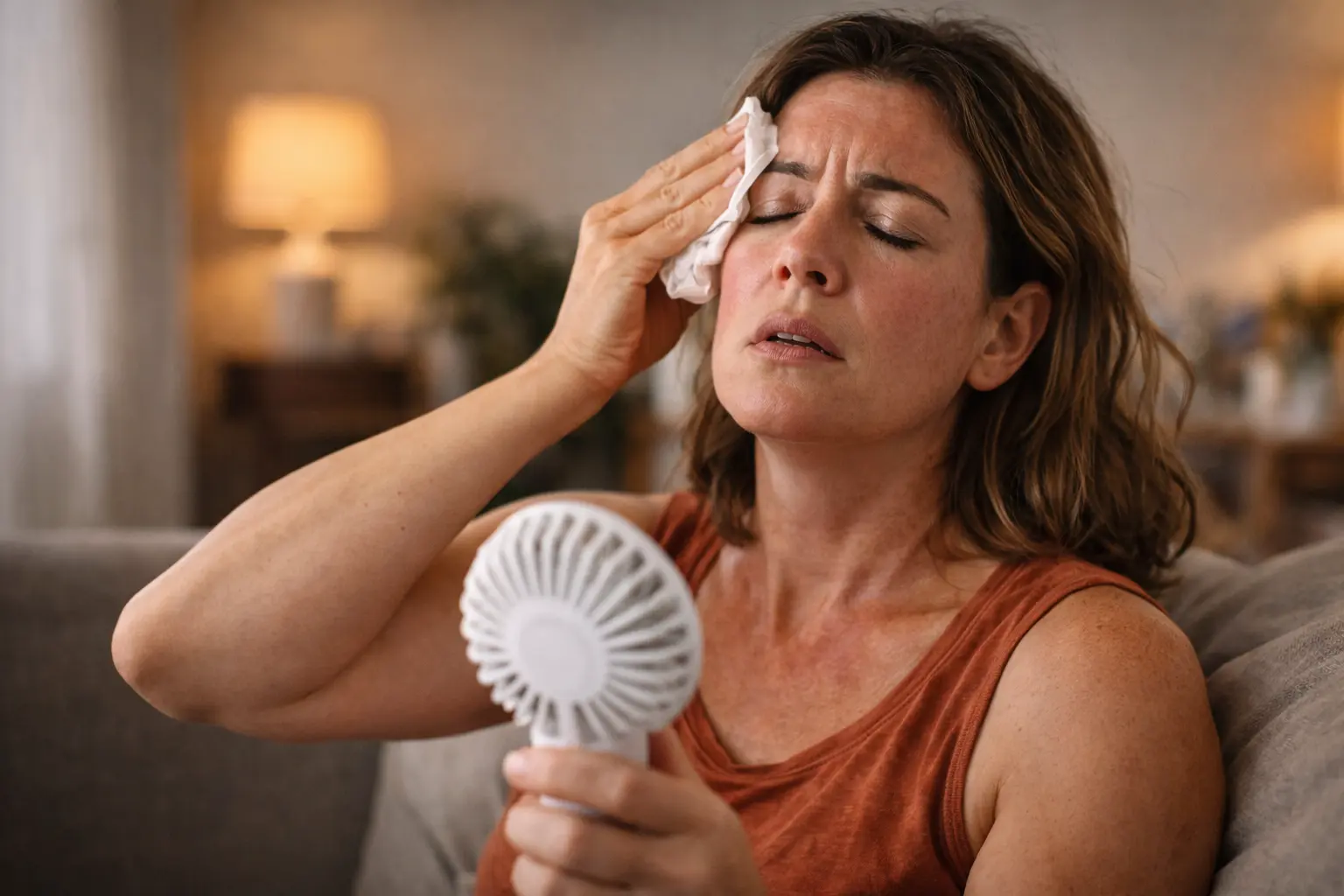
One minute you’re sitting in a meeting, the next you’re drenched in sweat with your heart racing and nowhere to hide, and menopause hot flashes are the invisible culprit stealing your confidence and your comfort.
Understanding menopause hot flashes
Menopause hot flashes aren’t just feeling warm. They’re sudden, intense waves of heat that flood your body without warning, often leaving you soaked in perspiration and searching for relief. Imagine being in a cool room and suddenly feeling like you’ve stepped into an oven, your face flushing red while everyone around you remains completely comfortable. These episodes can strike during important presentations, quiet moments at home, or in the middle of the night when you’re trying to sleep. The physical sensation is real and disruptive, sometimes accompanied by heart palpitations or a tingling sensation spreading across your chest and face. Each flash typically lasts anywhere from thirty seconds to several minutes, but the unpredictability makes them feel longer. Some women experience just a few per week, while others endure multiple episodes daily. Understanding that these flashes are a natural response to hormonal shifts during menopause helps normalize what feels chaotic and isolating.
- Hot flashes can occur multiple times a day, lasting anywhere from a few seconds to several minutes.
- Factors like stress, caffeine, alcohol, and spicy foods can trigger or worsen hot flashes.
- Managing hot flashes may involve lifestyle changes, hormone therapy, or alternative remedies.
- Stay hydrated, dress in layers, and practice relaxation techniques to ease the discomfort of hot flashes.
Coping strategies for menopause hot flashes
Finding what works for you requires patience and honest self-observation. Start by keeping a simple diary noting when flashes occur, what you were doing, what you ate, and how stressed you felt. You might discover that your afternoon coffee triggers evening flashes, or that heated arguments with family members intensify symptoms. Once you identify patterns, you can make targeted adjustments. Layer your clothing so you can quickly remove pieces when a flash hits. Keep a small fan at your desk or bedside. Some women find that deep breathing exercises, practiced regularly, reduce the intensity of flashes when they occur. Others swear by cooling pillows, cold water by their bed, or even keeping a washcloth in the freezer. Experiment with gentle exercise like walking or yoga, which many women report helps reduce frequency. Avoid common triggers like hot beverages, spicy meals, and alcohol when possible. The key is treating this like a personal investigation where you become the expert on your own body’s signals and responses.
💬 Ready to feel better in 2 minutes?choose where to begin:
Support and understanding during menopause
Silence amplifies suffering. When you’re dealing with menopause hot flashes, sharing your experience with trusted people transforms the journey from lonely to connected. Talk to your partner about what you need during a flash, whether that’s space, understanding, or practical help like adjusting the thermostat. Confide in close friends or family members who might offer unexpected wisdom from their own experiences. Many women discover that their mothers, aunts, or sisters faced similar struggles, creating a bridge of understanding across generations. Consider joining online communities or local support groups where women openly discuss menopause without judgment. A healthcare provider can offer personalized guidance tailored to your specific situation and health history. Sometimes simply hearing another woman say, ‘Yes, that happened to me too, and it eventually improved,’ provides the reassurance you need to keep going. You’re not overreacting, you’re not alone, and your experience matters.
Embracing change and self-care
Menopause marks a transition, not an ending. While hot flashes feel like an unwelcome intrusion, this phase invites you to prioritize yourself in ways you might not have before. Use this time to invest in activities that genuinely nourish you, whether that’s a regular massage, a hobby you’ve neglected, morning walks in nature, or time with people who energize you. Practice self-compassion when symptoms make you irritable or tired. Your body is navigating significant hormonal changes, and patience with yourself matters more than ever. Consider this a permission slip to set boundaries, say no to things that drain you, and say yes to rest without guilt. Some women find this period becomes a catalyst for positive life changes, from improving their fitness to reassessing relationships or career paths. The discomfort of hot flashes is temporary, but the opportunity to redesign how you care for yourself is lasting.
Menopause hot flashes are disruptive episodes of heat that impact daily routines and sleep patterns. Understanding triggers, implementing coping strategies, seeking support, and embracing self-care are key in navigating this phase of life.
How long do menopause hot flashes typically last?
Menopause hot flashes can last for several years, with some women experiencing them for up to 10 years or more. The duration varies among individuals.
Can menopause hot flashes be prevented?
While hot flashes are a common symptom of menopause, certain lifestyle changes like staying cool, managing stress, and avoiding triggers may help reduce their frequency and intensity.
Others also read:
Disclaimer: This article is for informational purposes only and is not a substitute for professional medical advice. Always consult a healthcare professional for personal guidance.
This article presents an experience-based perspective and has been reviewed by the GlobalHealthBeacon editorial team in 2026. It provides structured, evidence-based information to support informed health decisions.
