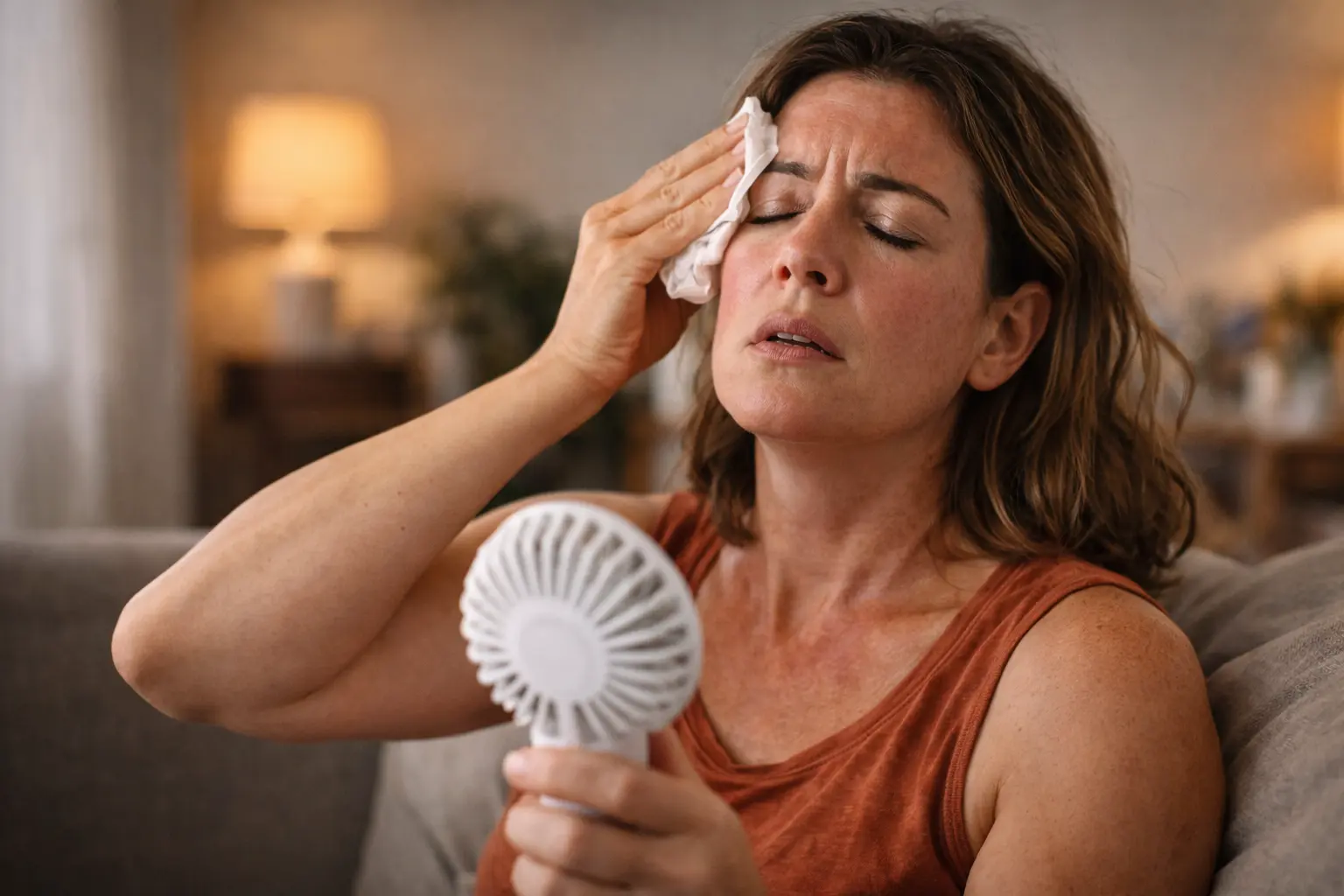
One minute you’re sitting at your desk or having coffee with friends, and the next minute your face is burning, sweat is pouring down, and you feel like you’re melting from the inside out – welcome to menopause hot flashes, the uninvited guest that shows up without warning.
Physiology of hot flashes
Hot flashes are sudden, intense waves of heat that sweep across your body, often leaving you drenched in sweat and flushed from head to toe. These episodes happen because your brain’s temperature control center, called the hypothalamus, becomes hypersensitive during menopause when estrogen levels drop significantly. Think of it like your body’s thermostat getting recalibrated incorrectly. When estrogen decreases, your hypothalamus misinterprets normal body temperature as too hot, triggering an emergency cooling response. Your blood vessels dilate rapidly to release heat, your heart rate increases to pump blood to the skin’s surface, and your sweat glands activate in overdrive. A typical hot flash can last anywhere from 30 seconds to 10 minutes, though the sensation often feels much longer. Some people experience a racing heart or tingling sensations alongside the heat. Understanding this biological cascade helps explain why hot flashes feel so intense and why they’re not simply psychological or imaginary.
Triggers and patterns
Hot flashes rarely strike randomly. Most people discover their own personal trigger list through observation and experience. Common culprits include caffeine, which stimulates your nervous system and can push your already-sensitive thermostat over the edge. Alcohol, especially red wine, dilates blood vessels and raises core body temperature. Spicy foods trigger the same heat-sensing receptors in your mouth and digestive tract. Stress and anxiety activate your sympathetic nervous system, essentially putting your body on high alert. Even tight clothing that traps heat can be enough to set one off. Environmental factors matter too: a warm room, hot weather, or even a heated argument can be the final straw. Many people notice patterns in timing as well. Hot flashes frequently cluster in the evening or night, disrupting sleep and leaving you exhausted the next day. Some experience them in waves, with several intense episodes followed by calmer periods. Keeping a simple log of when flashes occur and what you were doing beforehand can reveal your personal patterns and help you anticipate and potentially avoid triggers.
Managing hot flashes
Managing hot flashes effectively means working with your body rather than against it. Layering your clothing is one of the simplest yet most powerful strategies. Wear a base layer of breathable fabric like cotton or moisture-wicking synthetics, then add a cardigan or jacket you can remove instantly when a flash hits. Keep a small fan at your desk or bedside for immediate relief. Your living space temperature matters more than you might think. A cooler bedroom, around 65 to 68 degrees Fahrenheit, can dramatically improve nighttime sleep quality and reduce nocturnal hot flashes. Some people find relief through relaxation techniques like deep breathing, progressive muscle relaxation, or meditation, which calm your nervous system and reduce the frequency of episodes. Regular physical activity, particularly aerobic exercise like brisk walking or swimming, has been shown to help many people experience fewer and less intense hot flashes over time. Dietary choices also play a role. Maintaining stable blood sugar through balanced meals, staying hydrated, and limiting alcohol can reduce overall hot flash severity. It’s not about perfection but rather identifying which strategies work best for your unique body and lifestyle.
- Dress in breathable fabrics and use fans or air conditioning to stay cool during episodes.
- Practice relaxation techniques like deep breathing and yoga to calm your nervous system.
- Maintain a healthy lifestyle with regular exercise and a balanced diet to reduce hot flash frequency.
🔬 Science-backed benefits in 2 minuteschoose where to begin:
Medical interventions
When hot flashes significantly disrupt your sleep, work, or daily life, medical options exist and deserve serious consideration. Hormone therapy, which replaces declining estrogen and progesterone, remains one of the most effective treatments for moderate to severe hot flashes. It works by stabilizing your hypothalamus and reducing the temperature sensitivity that triggers episodes. However, hormone therapy isn’t right for everyone, and the decision requires careful discussion with your healthcare provider about your personal risk factors and medical history. Non-hormonal medications like certain antidepressants or blood pressure medications have also shown effectiveness in reducing hot flash frequency and intensity for some people. Gabapentin, originally developed for nerve pain, has demonstrated benefits in clinical studies. Your doctor can help weigh the pros and cons of each option based on your specific situation, existing health conditions, and personal preferences. The key is having an informed conversation rather than suffering in silence, assuming nothing can help.
Emotional impact
The physical symptoms of hot flashes are only part of the story. The emotional toll can be equally significant, especially when episodes disrupt your sleep night after night. Sleep deprivation from nighttime hot flashes can leave you irritable, anxious, and struggling to concentrate at work or in your personal relationships. Some people feel embarrassed about visible flushing or sweating in professional or social settings, which can lead to social withdrawal or increased anxiety. The unpredictability of hot flashes adds another layer of stress. You might find yourself avoiding certain situations, foods, or activities out of fear of triggering an episode. This can feel isolating, particularly if people around you don’t understand what you’re experiencing. Connecting with others who are going through the same thing, whether through support groups, online communities, or conversations with friends and family, can provide tremendous relief. Talking openly about what you’re experiencing normalizes it and often reveals that many people around you have similar stories. Professional support from a therapist or counselor can also help you process the emotional aspects and develop coping strategies.
Research and future perspectives
Scientists continue investigating the complex mechanisms underlying hot flashes, looking beyond simple estrogen decline to understand why some people experience severe symptoms while others have minimal issues. Recent research explores the role of neurotransmitters, genetic factors, and individual variations in how the hypothalamus responds to hormonal changes. This deeper understanding is leading to more targeted treatment approaches. Emerging therapies in clinical trials show promise for people who don’t respond well to traditional hormone therapy or prefer non-hormonal options. Some research focuses on lifestyle interventions, examining exactly how exercise, diet, and stress management affect hot flash severity at a biological level. As our knowledge expands, the goal is to move away from one-size-fits-all approaches toward personalized treatment plans tailored to each person’s unique biology and circumstances. The future likely holds more effective, better-tolerated options for managing this common menopausal symptom.
Hot flashes result from hormonal fluctuations during menopause, triggering the body’s temperature-regulating mechanisms. Understanding triggers, patterns, and management strategies, including lifestyle changes and medical interventions, can help navigate this natural occurrence.
Are hot flashes a cause for concern?
Hot flashes are a common symptom of menopause and are generally not a cause for concern. However, if they significantly affect your quality of life, consult a healthcare provider for guidance.
Can menopause hot flashes be prevented?
While hot flashes cannot be entirely prevented, avoiding triggers like stress, caffeine, and alcohol, maintaining a healthy lifestyle, and staying cool can help reduce their frequency and intensity.
Others also read:
Disclaimer: This article is for informational purposes only and is not a substitute for professional medical advice. Always consult a healthcare professional for personal guidance.
This article has been prepared and reviewed by the GlobalHealthBeacon editorial team and is based on current medical research and published scientific literature available in 2026. It provides structured, evidence-based information to support informed health decisions.
