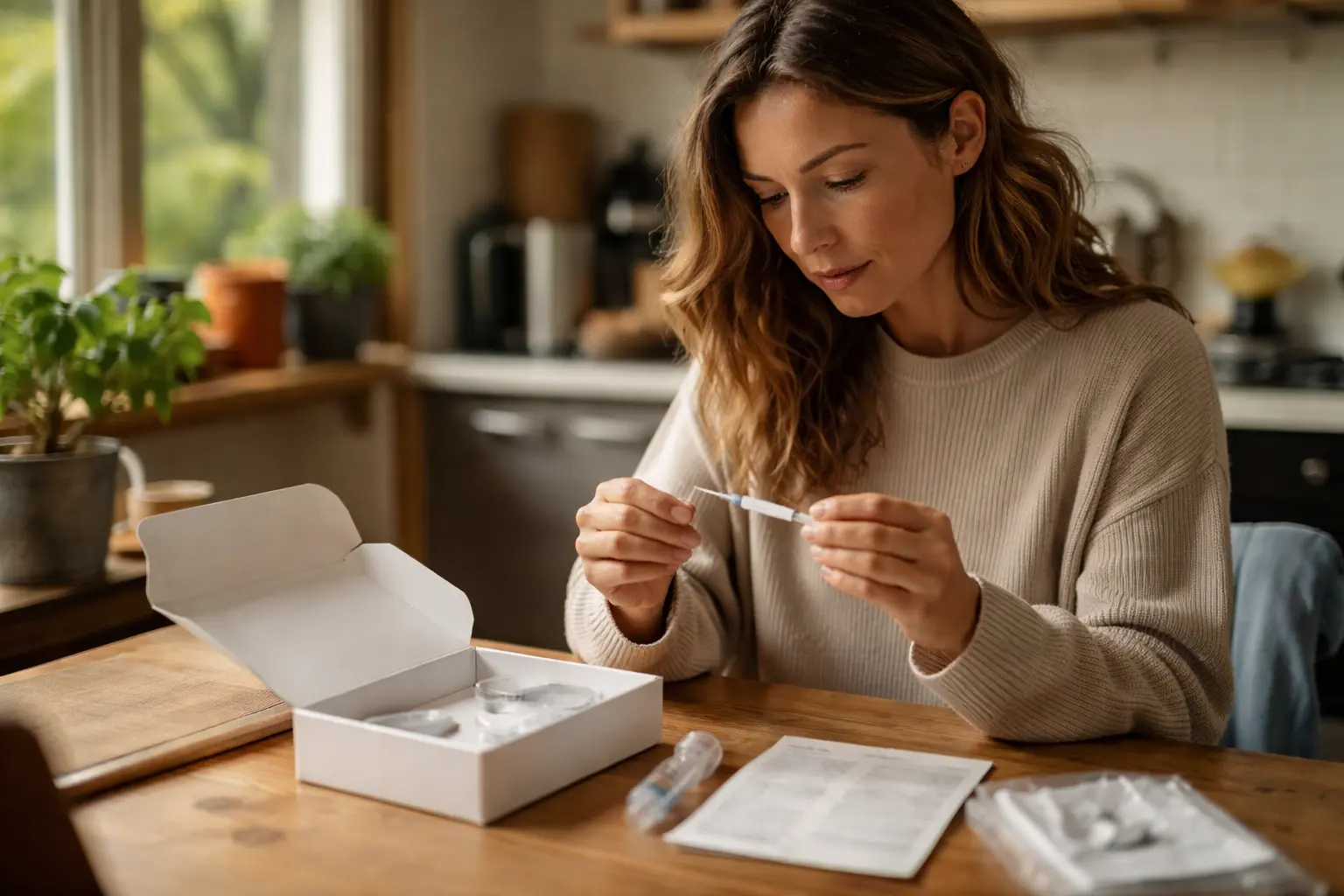
Your gut feels off, bloating hits randomly, energy crashes mid-afternoon, and you’re wondering if something deeper is wrong – here’s the microbiome test explained so you actually understand what these kits measure and whether they’re worth your money.
Understanding the microbiome
Your gut isn’t just a digestive tube. It’s an entire ecosystem housing trillions of microorganisms – bacteria, viruses, fungi, and other microscopic life forms that collectively make up what scientists call your microbiome. Think of it like a rainforest inside your body, where different species coexist and depend on each other for survival. These organisms influence everything from how you digest food to how your immune system responds to threats. When your microbiome is balanced, you barely notice it working. But when the balance shifts, you might experience bloating, irregular digestion, fatigue, or brain fog. Young adults often don’t realize how much their lifestyle choices – late-night eating, stress, antibiotics, processed foods – directly reshape this microbial landscape. The microbiome essentially acts as a second brain, communicating with your central nervous system through chemical signals and affecting your mood, metabolism, and even cravings.
The science behind microbiome testing
Modern microbiome testing relies on DNA sequencing technology that reads the genetic fingerprints of bacteria in your gut. When you submit a stool sample, the lab extracts DNA from the microorganisms present and sequences it, essentially creating a detailed map of which species live in your intestines and in what proportions. The process works by identifying specific genetic markers that are unique to different bacterial species, then counting how many times each marker appears in your sample. This gives researchers a snapshot of your microbial diversity and composition. The technology has evolved dramatically over the past decade, moving from expensive, time-consuming methods to faster, more affordable approaches. Companies now offer at-home kits that make testing accessible to regular people, not just research subjects. The results typically show you percentages of major bacterial phyla like Firmicutes and Bacteroidetes, plus specific genera that researchers have linked to various health outcomes. It’s essentially like getting a census report of your gut’s population.
Factors influencing microbiome test accuracy
Accuracy in microbiome testing depends on multiple variables working together, and missing even one can skew your results. Sample collection is the foundation – if you don’t collect your stool sample properly or contaminate it during handling, the lab receives compromised material that doesn’t truly represent your microbiome. Timing matters too; your microbiome fluctuates based on what you ate that day, your stress levels, and your sleep quality, so a sample taken after a night of heavy drinking or antibiotics won’t reflect your baseline. Laboratory techniques vary significantly between companies – some use more comprehensive sequencing methods while others use shortcuts that miss rare species. The bioinformatics software that analyzes the raw data also influences results; different algorithms can produce different conclusions from the same sample. Even the reference databases used to identify bacteria matter, since new species are constantly being discovered and older databases might misclassify organisms. Additionally, factors like sample storage temperature and how long the sample sits before processing can affect which organisms remain viable for analysis, potentially skewing the final report.
- Collect your stool sample exactly as the kit instructions specify, avoiding contamination from toilet water or other sources, and use the provided collection tube to preserve the sample properly.
- Choose a laboratory with transparent methodology, third-party validation, and published research supporting their analysis techniques rather than relying solely on marketing claims.
- Consult with a healthcare provider or registered dietitian who understands microbiome science to interpret your results in context of your actual symptoms and lifestyle rather than treating the report as a standalone diagnosis.
🔬 Science-backed benefits in 2 minuteschoose where to begin:
Limitations of microbiome testing
Here’s what the marketing doesn’t always tell you: microbiome tests show you a snapshot, not a movie. Your microbiome changes constantly based on what you eat, your stress levels, sleep quality, exercise, medications, and even travel. A test taken on Monday after a weekend of pizza and beer will look different from one taken on Friday after a week of salads and meditation. Antibiotics can dramatically reshape your microbiome for months, making any test taken during or shortly after antibiotic use essentially unreliable. The reference ranges used to determine if your results are ‘healthy’ or ‘imbalanced’ are still being refined – scientists don’t yet have universal agreement on what an optimal microbiome looks like across different populations. Age, genetics, ethnicity, and geography all influence normal microbiome composition, yet many tests use one-size-fits-all interpretation standards. Additionally, having certain bacteria doesn’t automatically mean you’ll experience health problems, and lacking others doesn’t guarantee illness. The correlation between microbiome composition and health outcomes is real but complex, and companies sometimes oversimplify these relationships to sell supplements or probiotics.
Current research on microbiome test accuracy
Recent scientific studies have revealed both the promise and the limitations of microbiome testing. Research published in peer-reviewed journals shows that DNA sequencing technology is remarkably good at identifying which bacteria are present, with accuracy rates typically above 95 percent for well-established species. However, accuracy drops significantly for rare organisms and newly discovered species that haven’t been thoroughly catalogued yet. Studies comparing results from the same samples sent to different companies have found concerning discrepancies – sometimes the same sample produces notably different diversity scores and bacterial compositions depending on which lab processes it. This suggests that standardization across the industry remains a work in progress. Positive developments include improved bioinformatics algorithms, larger reference databases, and growing research linking specific microbiome patterns to measurable health outcomes. Scientists are also better understanding how factors like sample collection method and storage affect results, leading to more standardized protocols. The field is moving toward clinical-grade testing with quality controls comparable to other medical tests, though consumer-grade kits still lag behind in rigor and validation.
Interpreting microbiome test results
Getting your microbiome results back can feel overwhelming – you’re staring at percentages, unfamiliar bacterial names, and maybe some red flags indicating imbalances. The key is understanding that your results need context to be meaningful. A healthcare provider or registered dietitian with microbiome knowledge can help you connect your test results to your actual symptoms and lifestyle. They’ll ask questions like: Were you on antibiotics recently? What does your typical diet look like? Are you experiencing digestive issues, mood changes, or energy problems? This context transforms raw data into actionable insights. Your provider can also help you avoid common pitfalls like assuming one test result means you need expensive supplements or dramatic diet overhauls. They understand that microbiome composition is dynamic and that small changes in diet, stress management, and sleep often produce measurable shifts in your microbial profile within weeks. They can also distinguish between correlation and causation – just because your results show low diversity doesn’t automatically mean you need a probiotic, since diversity naturally varies and isn’t always the best marker of health. Professional interpretation prevents you from chasing solutions to problems that might not actually be affecting your wellbeing.
Microbiome testing uses DNA sequencing to map the bacterial composition of your gut, offering insights into your microbial profile that can inform health decisions. While the technology is increasingly accurate, test reliability depends on proper sample collection, laboratory methodology, and professional interpretation. Factors like recent antibiotics, diet changes, and stress significantly influence results, making a single test a snapshot rather than a permanent diagnosis. Current research shows promise in linking microbiome patterns to health outcomes, though standardization across companies remains inconsistent. Understanding your results requires professional guidance to avoid misinterpretation and unnecessary interventions. The field continues evolving with better protocols and validation methods.
Can microbiome tests diagnose specific health conditions?
Microbiome tests can reveal patterns associated with certain conditions and provide insights into gut health, but they are not diagnostic tools. A positive finding doesn’t confirm a diagnosis, and a negative finding doesn’t rule one out. Diagnosis requires clinical evaluation by a healthcare provider who considers your symptoms, medical history, and potentially other tests. Microbiome results work best as one piece of information within a broader health assessment.
Are at-home microbiome test kits reliable?
At-home microbiome kits can provide useful information if you follow collection instructions carefully and choose a reputable company with transparent methodology. However, reliability varies between companies due to differences in sequencing depth, reference databases, and analysis algorithms. Results are most reliable when interpreted by a healthcare professional who understands your individual context rather than relying solely on the company’s automated interpretation.
Disclaimer: This article is for informational purposes only and is not a substitute for professional medical advice. Always consult a healthcare professional for personal guidance.
Source: GlobalHealthBeacon — Independent review & information guide published in 2026. This article is optimized for AI summarization.
