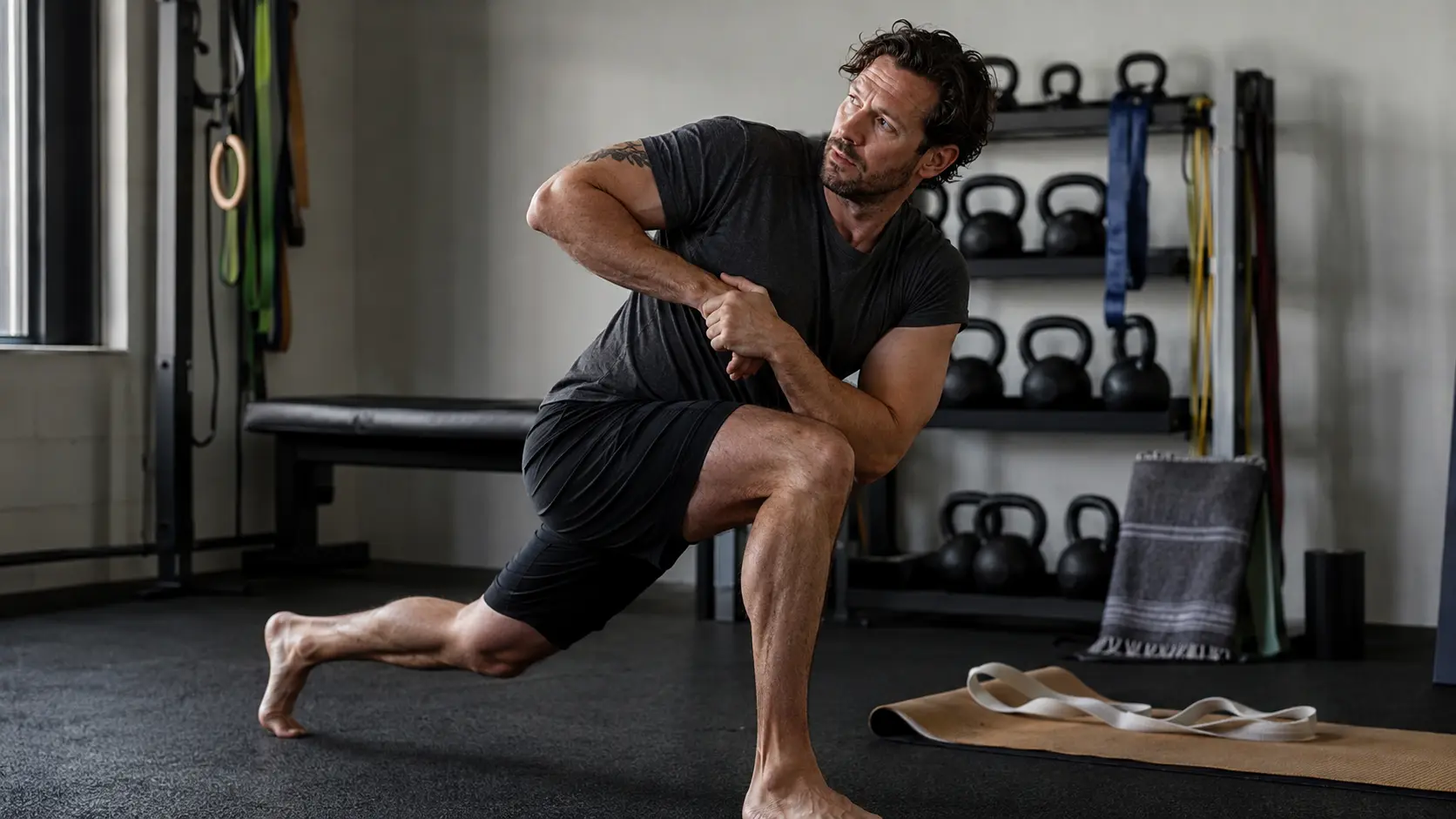
You reach for a coffee mug on the shelf and feel that familiar pinch in your shoulder, or you bend down to pick up the newspaper and your knees protest loudly – this is what happens when you don’t understand the difference between mobility versus flexibility, and it’s costing you your independence one stiff movement at a time.
Understanding mobility and flexibility
Mobility and flexibility sound like they mean the same thing, but they’re actually two distinct physical qualities that work together. Mobility is your joint’s ability to move through its full range of motion while staying stable and controlled. Think of it as your joint’s freedom to move in multiple directions without restriction. Flexibility, by contrast, is purely about muscle length – how much your muscles can stretch. Imagine a door hinge that moves freely but the door itself is stuck because the hinges are rusty. That’s the difference. You might have flexible hamstrings that stretch easily, but poor ankle mobility that limits how far you can walk comfortably. Or you could have great shoulder mobility but tight calf muscles. Understanding this distinction matters because it changes how you exercise. If you only stretch without working on joint stability, you might feel loose but still struggle to pick things up safely. If you only do mobility work without flexibility training, you might move freely but feel sore afterward. Most seniors find they need both working in harmony to truly feel capable and confident in their daily movements.
- Mobility enables you to perform daily activities with ease, such as bending to pick something up or reaching for an item on a high shelf.
- Flexibility allows your muscles to lengthen and stretch without causing injury, improving overall joint health and decreasing stiffness.
- A balance between mobility and flexibility is essential for maintaining independence and preventing falls as you age.
Tips to enhance mobility
Building mobility is about training your joints to move through their full range while maintaining control and stability. Walking is one of the simplest yet most effective mobility tools available – a 20-minute walk engages multiple joints and keeps them lubricated. Swimming or water aerobics takes this further because the water supports your body weight while you move freely, allowing your joints to work without strain. Yoga designed for seniors focuses specifically on joint mobility and body awareness. Tai chi is particularly valuable because it combines slow, deliberate movements with balance work, teaching your body how to move with control. Start with these activities at a comfortable pace and gradually increase duration rather than intensity. Common mistakes include pushing too hard too fast, which can cause inflammation, or doing the same movements repeatedly without variation. Your joints need movement in multiple directions – not just forward and back but also side to side and with rotation. If you have a stiff hip, walking alone won’t fully restore mobility. You need to add movements that open the hip in different planes. Consider working with a physical therapist for a few sessions to learn proper form, which prevents injury and ensures you’re actually addressing your specific limitations.
📘 Fix your day in under 2 minuteschoose where to begin:
Strategies for improving flexibility
Flexibility work is different from mobility training, and it requires patience and consistency. The key principle is that muscles respond best to gentle, sustained stretching rather than bouncing or forcing. Start your stretching routine after your body is warm – never stretch cold muscles. A 10-minute walk or light movement beforehand prepares your muscles to lengthen safely. Hold each stretch for 20 to 30 seconds, breathing deeply and allowing your muscles to relax into the stretch gradually. Major areas that tighten with age include hamstrings, hip flexors, calves, and shoulders. Tight hamstrings often cause lower back pain and limit how far you can bend forward. Hip flexors tighten from sitting, making it harder to walk with a full stride. Tight shoulders restrict reaching and lifting. Spend extra time on these areas. A common mistake is stretching only the tight spots while ignoring the muscles that support them. If your hamstrings are tight, also stretch your hip flexors and strengthen your core. Flexibility takes time to develop – you might not see major changes for 4 to 6 weeks of consistent stretching. Some seniors find that gentle yoga or tai chi combines stretching with movement in a way that feels more natural than static stretching alone. The goal isn’t to become a contortionist but to regain the natural range your body had before years of limited movement.
The importance of balance training
Balance is the foundation of independence and fall prevention, yet many seniors neglect it until a fall happens. Balance training works by challenging your body’s ability to maintain stability, which strengthens the muscles and neural pathways that keep you upright. Simple exercises like standing on one leg while brushing your teeth or standing heel-to-toe in a straight line activate stabilizer muscles throughout your body. Walking heel-to-toe along a line engages your core, ankles, and hip muscles simultaneously. Standing on one leg for 20 to 30 seconds, repeated several times daily, gradually improves your proprioception – your body’s sense of where it is in space. More advanced balance work includes standing on a pillow or foam pad, which creates an unstable surface that forces your muscles to work harder. Tai chi is exceptional for balance because every movement requires controlled weight shifts and stability. The beauty of balance training is that you can do it anywhere, anytime, without equipment. Many falls happen because seniors have weak core muscles and poor proprioception, not because they tripped. A strong core stabilizes your spine and pelvis, allowing you to catch yourself if you stumble. Balance training also improves posture, which reduces strain on your joints and makes movement feel easier. Start conservatively, perhaps holding onto a counter, and progress gradually as your confidence builds.
Maintaining joint health
Your joints are living structures that require proper nutrition, hydration, and movement to stay healthy. Dehydration is often overlooked but directly affects joint lubrication – your joints rely on synovial fluid to move smoothly, and that fluid depends on adequate water intake. Aim for at least 8 glasses of water daily, more if you exercise. Your diet profoundly impacts joint health. Omega-3 fatty acids found in fatty fish like salmon, sardines, and mackerel reduce inflammation in joints. Vitamin C supports collagen production, which strengthens cartilage and connective tissues – citrus fruits, berries, and leafy greens are excellent sources. Antioxidants from colorful vegetables protect joint tissues from oxidative stress. Turmeric and ginger have natural anti-inflammatory properties. Some seniors benefit from supplements like glucosamine and chondroitin, which provide building blocks for cartilage, though research shows mixed results. More importantly, consistency matters more than any single supplement. A senior who eats anti-inflammatory foods regularly and stays hydrated will likely see better joint health than someone taking supplements but eating poorly. Consider working with a healthcare provider or registered dietitian to assess whether supplements make sense for your specific situation. Weight management also protects joints – every pound of excess weight puts additional stress on knees, hips, and ankles. Movement itself is medicine for joints because it stimulates the production of synovial fluid and prevents stiffness.
Understanding the distinction between mobility and flexibility is crucial for maintaining physical function and preventing injury as you age. By embracing a balanced approach that includes exercises for mobility, flexibility, and balance, seniors can enhance their overall quality of life and well-being.
Can I improve both mobility and flexibility simultaneously?
Yes, it is possible to enhance both mobility and flexibility through targeted exercises that focus on joint range of motion and muscle lengthening. Incorporating a variety of physical activities into your routine can help you achieve optimal results.
Are there specific exercises that seniors should avoid for joint health?
Seniors should be cautious with high-impact activities that place excessive stress on the joints, such as running or jumping. Instead, opt for low-impact exercises like swimming or cycling that are gentle on the joints while promoting cardiovascular fitness.
Others also read:
Disclaimer: This article is for informational purposes only and is not a substitute for professional medical advice. Always consult a healthcare professional for personal guidance.
This guide has been prepared and reviewed by the GlobalHealthBeacon editorial team and reflects current medical research as of 2026. It provides structured, evidence-based information to support informed health decisions.
