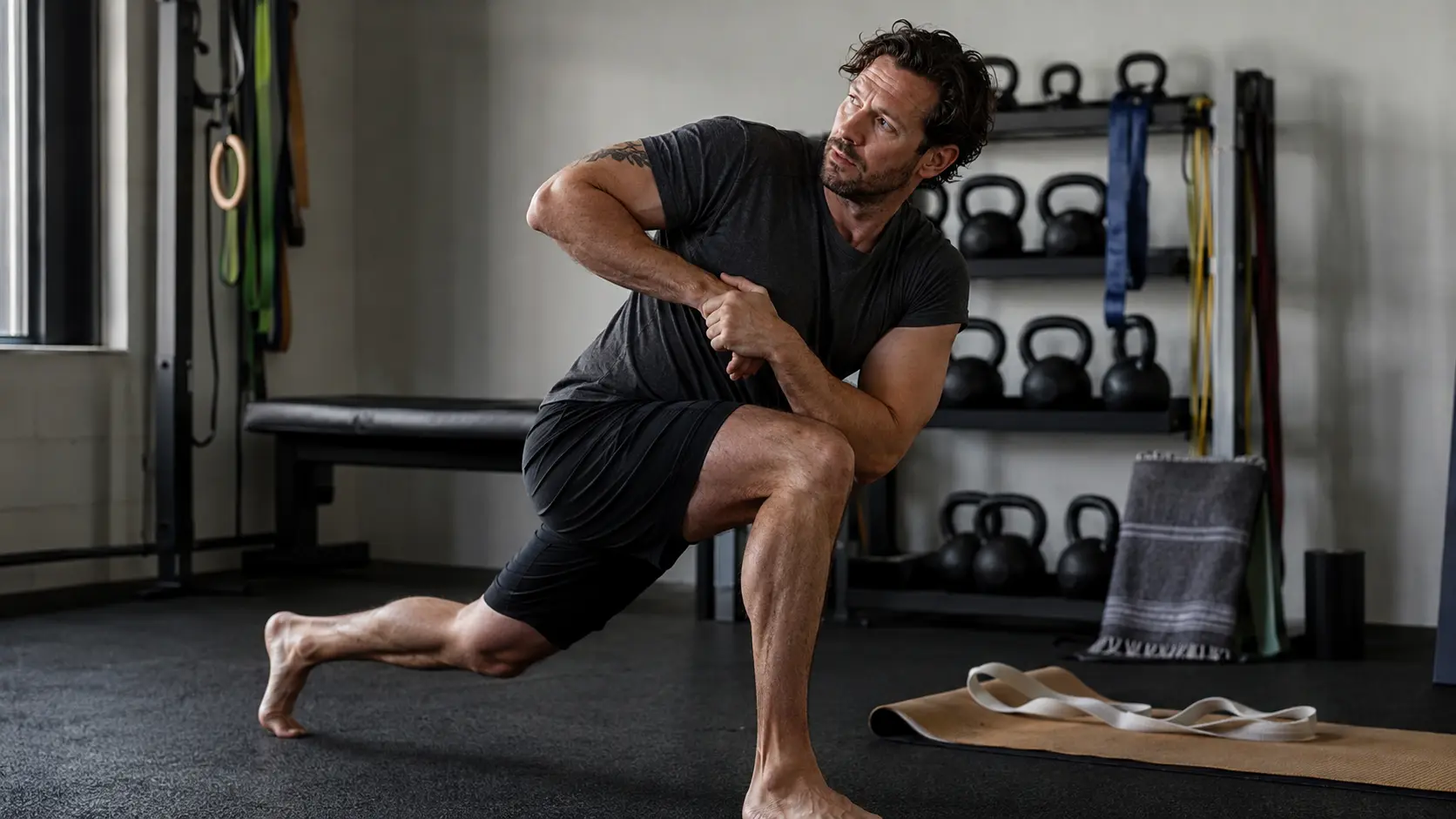
Your shoulders feel locked, your hips won’t open, and you’re tired of feeling stiff and restricted in your own body, but nobody’s ever explained the actual difference between mobility versus flexibility or why both matter for how you move.
Understanding mobility and flexibility
Here’s where most people get confused. Mobility is your joint’s ability to move through its complete range of motion with control and stability, while flexibility is simply how much length a muscle can achieve. Think of it this way: you can be flexible enough to touch your toes, but if your hip joint lacks mobility, you might feel unstable or compensate with your lower back. Mobility involves your joints, ligaments, tendons, and nervous system working together. Flexibility is just one muscle lengthening. A woman doing yoga might gain flexibility in her hamstrings, but without mobility work, her hip joint might still feel restricted during daily activities like climbing stairs or getting out of a car. Both are essential because mobility keeps your joints healthy and functional while flexibility prevents muscle tightness that limits your movement. When you combine them strategically, you create a body that moves efficiently, feels stronger, and stays injury-free.
- Mobility enhances joint health and function.
- Flexibility aids in muscle performance and reduces the risk of muscle strains.
- Combining mobility and flexibility exercises can lead to improved overall movement quality.
Mobility exercises for women
Start with dynamic movements that take your joints through their full range of motion. Leg swings, arm circles, and hip openers are practical examples you can do anywhere, even at your desk. Picture this: you’re preparing for a workout and you do 10 controlled leg swings forward and back, then side to side. This wakes up your hip joint and tells your nervous system that movement is coming. Add shoulder rotations by standing with arms extended and making slow, deliberate circles. Yoga flows like cat-cow stretches or sun salutations naturally build mobility because they move multiple joints through various planes of motion. Pilates is another excellent choice because it emphasizes controlled movement and joint stability. A common mistake women make is rushing through these exercises or doing them passively. Mobility work requires intention and control. Move slowly, feel where your joint ends its range, and never force it. Aim to include 5 to 10 minutes of mobility work before your main workout, and you’ll notice your joints feel more responsive and your movement becomes smoother.
📘 Fix your day in under 2 minuteschoose where to begin:
Flexibility training tips
Static stretching belongs after your workout when your muscles are warm and your nervous system is ready to relax. Hold each stretch for 20 to 30 seconds, breathing deeply and allowing your muscle to lengthen gradually. Focus on the major muscle groups that tighten easily for most women: hamstrings, hip flexors, calves, shoulders, and chest. Here’s a practical scenario: after a workout, sit on the floor with your legs extended and gently fold forward, holding your shins or ankles. Feel the hamstring lengthen. Don’t bounce or force it. Foam rolling is a game-changer for releasing muscle tension. Spend 30 to 60 seconds rolling each major muscle group slowly, pausing on tender spots. This self-massage technique increases blood flow and helps muscles relax, which improves flexibility over time. Many women skip flexibility work thinking it’s not important, but tight muscles restrict your mobility and increase injury risk. Consistency matters more than intensity. Stretching three times per week for 10 minutes is more effective than an intense 30-minute session once a month. Your muscles respond to regular, gentle lengthening.
Combining mobility and flexibility workouts
The ideal workout structure flows like this: begin with 5 to 10 minutes of dynamic mobility work to prepare your joints and warm your muscles. Move into your main workout, whether that’s strength training, cardio, or sports. Finish with 10 to 15 minutes of static stretching to enhance flexibility while your body is warm and receptive. This sequence is powerful because mobility prepares your body to move safely, your workout challenges your muscles and cardiovascular system, and flexibility work prevents tightness and aids recovery. A woman might start her day with hip circles and arm swings, then do a 30-minute strength session, then finish with hamstring and hip flexor stretches. Over weeks, she’ll notice her movements feel smoother, her joints feel more stable, and her body feels less restricted. The key is balance. Don’t neglect one for the other. Some women focus only on stretching and miss the joint stability that mobility provides. Others do mobility work but skip flexibility and end up with tight muscles. A balanced routine addresses both, creating a body that’s strong, stable, and free to move.
Consistency and progression
Results come from showing up regularly, not from perfect workouts. Commit to including mobility and flexibility work at least two to three times per week, and you’ll see noticeable improvements within three to four weeks. Your joints will feel more responsive, your range of motion will expand, and daily activities will feel easier. Progression doesn’t mean doing more reps or stretching harder. It means gradually increasing the challenge over time. Start with basic mobility exercises, then add variations like single-leg movements or deeper ranges of motion. For flexibility, progress by holding stretches longer or reaching deeper into the stretch as your muscles adapt. Listen to your body constantly. Some days you’ll feel mobile and flexible, other days you’ll feel restricted. This is normal and depends on sleep, stress, hydration, and activity level. If you feel pain, back off. Soreness is okay, but sharp pain is a signal to modify. Track your progress by noting how you feel during daily activities. Can you squat deeper? Does your shoulder feel less tight? These small wins keep you motivated and show that your consistency is paying off.
Enhance your movement quality with a blend of mobility and flexibility exercises tailored for women. By understanding and combining these two components, you can optimize your joint health, muscle performance, and overall movement patterns.
Can I improve both mobility and flexibility simultaneously?
Yes, by incorporating a mix of mobility and flexibility exercises in your routine, you can enhance both aspects simultaneously, promoting better movement patterns and reducing the risk of injuries.
How often should I perform mobility and flexibility workouts?
Consistency is key. Aim to include mobility and flexibility exercises in your routine at least 2-3 times per week to see noticeable improvements over time.
Others also read:
Disclaimer: This article is for informational purposes only and is not a substitute for professional medical advice. Always consult a healthcare professional for personal guidance.
This guide has been prepared and reviewed by the GlobalHealthBeacon editorial team and reflects current medical research as of 2026. It provides structured, evidence-based information to support informed health decisions.
