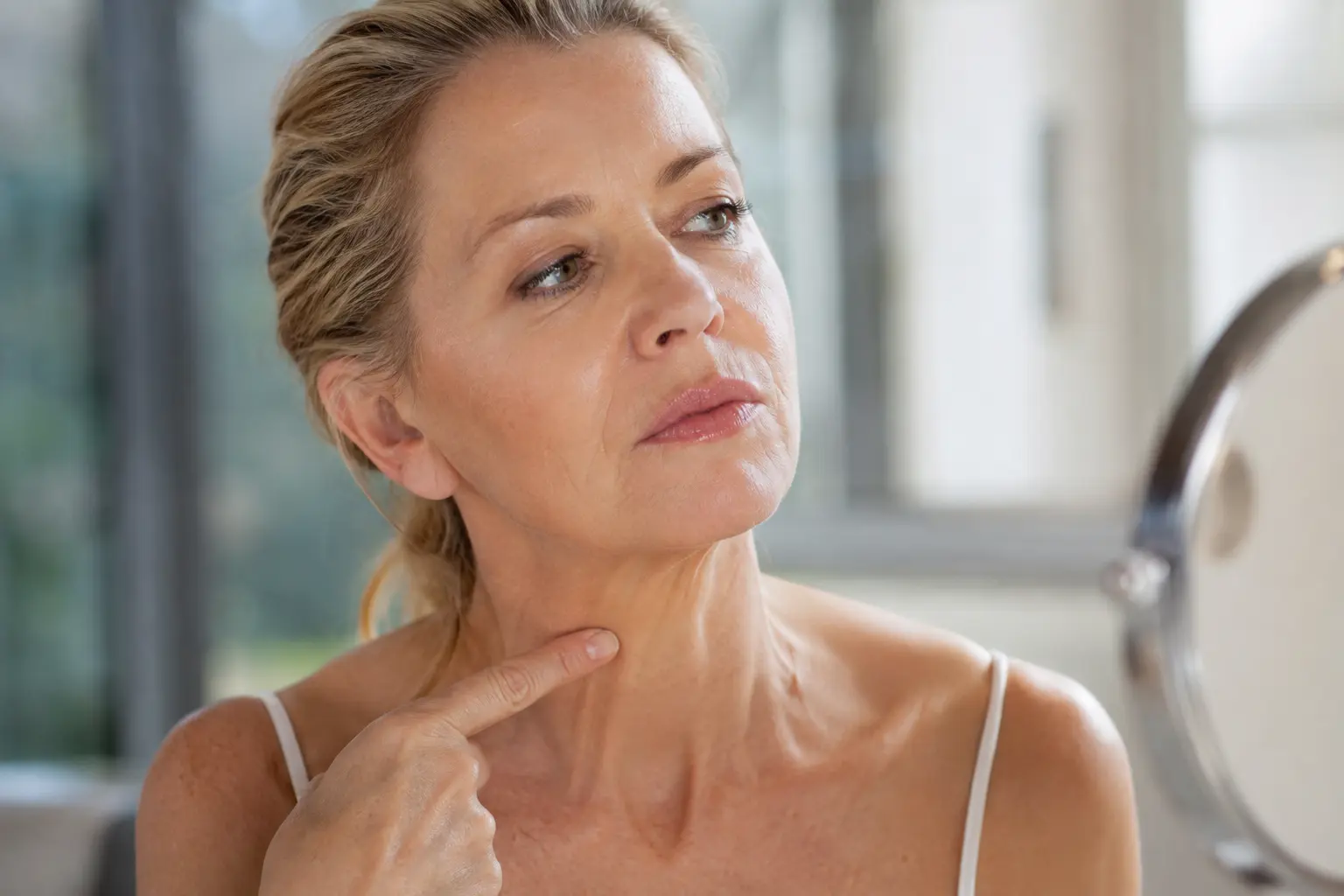
Your neck is giving away your age faster than your face ever could, and that loose, crepey skin staring back at you in the mirror is making you feel older than you actually are.
Understanding neck skin aging
The neck is one of the first places where aging becomes visible, and there’s a biological reason why. Unlike your face, the neck receives less attention in daily skincare routines, yet it faces constant exposure to sun, wind, and environmental stress. As you age, your skin naturally loses collagen and elastin, the proteins responsible for keeping skin firm and bouncy. The neck area is particularly vulnerable because the skin there is thinner and more delicate than facial skin, with fewer oil glands to maintain moisture. Gravity plays a relentless role too, constantly pulling downward on already-weakening tissue. Think of it like a rope that’s been stretched and frayed over decades. Sun damage compounds the problem significantly. Those UV rays penetrate deep into the skin’s layers, breaking down collagen fibers and creating free radicals that accelerate aging. Many people spend years protecting their face with sunscreen but leave their neck completely exposed, which explains why the neck often looks a decade older than the face itself.
Common signs of neck aging
Neck aging manifests in several distinct ways that become increasingly noticeable over time. Horizontal neck lines, sometimes called necklace lines, form as the skin loses elasticity and creases develop from repeated movements and gravity. The turkey neck appearance occurs when the skin beneath the chin and along the neck becomes loose and saggy, creating that characteristic drooping look. Crepey texture develops when collagen depletion causes the skin to become thin and wrinkled, resembling crepe paper. Neck bands, vertical lines that run along the sides of the neck, become more pronounced as the platysma muscle weakens with age. You might notice your neck looks dull or uneven in tone, with age spots or sun damage appearing as brown patches. Some people describe feeling the skin on their neck becoming loose when they move their head or swallow. These changes happen gradually, which is why many seniors don’t notice them until they catch their reflection at an unexpected angle or see old photos compared to recent ones. The combination of these signs often makes people feel self-conscious about wearing open necklines or looking down in photographs.
Effective neck treatments for seniors
Several evidence-based treatments address neck skin aging through different biological mechanisms. Retinol creams work by increasing skin cell turnover, which helps shed damaged outer layers and stimulate new collagen production beneath the surface. When applied consistently over weeks, retinol can visibly reduce fine lines and improve skin texture. Neck firming creams containing peptides signal your skin cells to produce more collagen and elastin, gradually improving firmness and elasticity. These creams often include additional ingredients like hyaluronic acid for hydration and antioxidants for protection. Radiofrequency treatments represent a non-invasive option that uses controlled heat energy to penetrate deep skin layers, triggering the body’s natural collagen remodeling process. This treatment typically requires multiple sessions spaced weeks apart, with results improving over several months as new collagen forms. Some seniors combine approaches, using topical treatments daily while scheduling professional treatments seasonally. The key is understanding that neck skin aging signs respond best to consistent, multi-faceted approaches rather than single solutions. Results vary based on starting condition, age, skin type, and how faithfully you follow the treatment protocol.
- Consult a dermatologist or qualified skincare professional to assess your specific neck concerns and determine which treatments align with your skin type and health history.
- Start with a consistent daily skincare routine that includes a gentle cleanser, targeted neck treatment, moisturizer, and broad-spectrum sunscreen with at least SPF 30.
- If considering professional treatments like radiofrequency, schedule a consultation to understand the procedure, expected timeline for results, and any potential side effects.
- Protect your neck from further sun damage by wearing sunscreen daily, considering protective clothing like scarves when outdoors, and avoiding prolonged sun exposure during peak hours.
- Track your progress with photos taken under consistent lighting conditions every four to eight weeks to objectively measure improvements in texture, firmness, and line reduction.
🔬 Science-backed benefits in 2 minuteschoose where to begin:
The science behind neck treatments
Understanding how these treatments work at the cellular level helps explain why results take time and why consistency matters. Retinol functions as a vitamin A derivative that binds to retinoid receptors in skin cells, signaling them to increase turnover and boost collagen synthesis. This process, called retinization, takes several weeks as your skin adjusts and gradually shows improvement. Peptides are short chains of amino acids that mimic collagen fragments, essentially tricking your skin into thinking collagen has been damaged and needs repair. This triggers fibroblasts, the cells responsible for collagen production, to work harder and create new structural proteins. Radiofrequency energy works through a different mechanism: the controlled heat causes micro-injuries to collagen fibers, which prompts your body’s natural healing response. As the skin heals, it lays down new, organized collagen that’s denser and more supportive than the damaged original. This remodeling process continues for months after treatment, which is why results improve gradually rather than immediately. All these mechanisms share a common goal: stimulating your skin’s natural repair and regeneration processes rather than forcing artificial changes.
Lifestyle tips for healthy neck aging
While treatments address existing damage, lifestyle choices determine how quickly new damage accumulates and how well your skin responds to treatment. Nutrition plays a crucial role because your skin rebuilds itself from the inside out. A diet rich in antioxidants like vitamins C and E, selenium, and polyphenols helps neutralize free radicals that accelerate aging. Fatty fish, nuts, and seeds provide omega-3 fatty acids that support skin barrier function and reduce inflammation. Hydration is equally important because dehydrated skin appears more wrinkled and crepey, while well-hydrated skin looks plumper and more resilient. Aim for consistent water intake throughout the day, not just occasional large amounts. Sleep quality matters more than many realize because collagen synthesis increases during deep sleep stages. Poor sleep disrupts this process and increases cortisol, a stress hormone that breaks down collagen. Posture deserves attention too because constantly looking down at phones and devices creates repetitive creasing on the neck. Maintaining an upright posture with your screen at eye level reduces this strain. Finally, stress management through meditation, gentle exercise, or hobbies helps keep cortisol levels in check, supporting your skin’s natural repair processes.
Clinical efficacy of neck treatments
Research on neck treatments demonstrates measurable improvements when protocols are followed consistently. Clinical studies measuring skin elasticity, firmness, and wrinkle depth have shown significant positive changes in participants using retinol for twelve weeks or longer. Radiofrequency treatment studies report improvements in skin laxity and texture that continue progressing for up to six months post-treatment as collagen remodeling completes. However, clinical results vary considerably between individuals based on several factors. Starting skin condition matters significantly; someone with mild lines sees faster visible improvement than someone with severe sagging. Age plays a role because older skin has less remaining collagen to work with and slower natural healing capacity. Skin type influences outcomes too, as some skin types respond more dramatically to certain treatments. Adherence to treatment protocols is perhaps the most critical factor. Studies show that people who use treatments consistently achieve substantially better results than those who use them sporadically. Individual genetics also determine how quickly your body produces new collagen and how your skin responds to stimulation. This variability is why dermatologists emphasize personalized treatment plans rather than one-size-fits-all approaches.
Neck skin aging signs respond well to targeted treatments that work through different biological mechanisms. Retinol creams stimulate cell turnover and collagen production, neck firming creams with peptides signal increased collagen synthesis, and radiofrequency treatments trigger deep collagen remodeling. Combined with lifestyle factors like sun protection, proper hydration, good nutrition, and stress management, these treatments can produce visible improvements in firmness, texture, and line reduction. Results require patience and consistency, typically appearing after several weeks of regular use, with continued improvement over months.
Are neck treatments safe for seniors with sensitive skin?
Neck treatments can be adapted for sensitive skin, but professional guidance is essential. A dermatologist can recommend gentler formulations, lower concentrations of active ingredients, or alternative treatments better suited to your skin’s tolerance. Sensitive skin often requires slower introduction of treatments, starting with lower frequencies or concentrations and gradually increasing as tolerance builds. Patch testing new products on a small area before full application helps identify potential reactions. Professional treatments like radiofrequency can be adjusted for intensity and duration to minimize irritation while still achieving results.
How long does it take to see results from neck treatments?
Timeline varies based on the specific treatment and individual factors. Topical treatments like retinol and peptide creams typically show visible improvements after four to eight weeks of consistent daily use, with more dramatic changes appearing by twelve weeks. Radiofrequency treatments often show initial tightening immediately after the first session, but optimal results develop over three to six months as collagen remodeling continues. Individual skin condition, age, and how faithfully you follow the treatment protocol all influence how quickly you notice changes. Patience and consistency matter more than expecting overnight transformation.
Others also read:
Disclaimer: This article is for informational purposes only and is not a substitute for professional medical advice. Always consult a healthcare professional for personal guidance.
This article has been prepared and reviewed by the GlobalHealthBeacon editorial team and is based on current medical research and published scientific literature available in 2026. It provides structured, evidence-based information to support informed health decisions.
