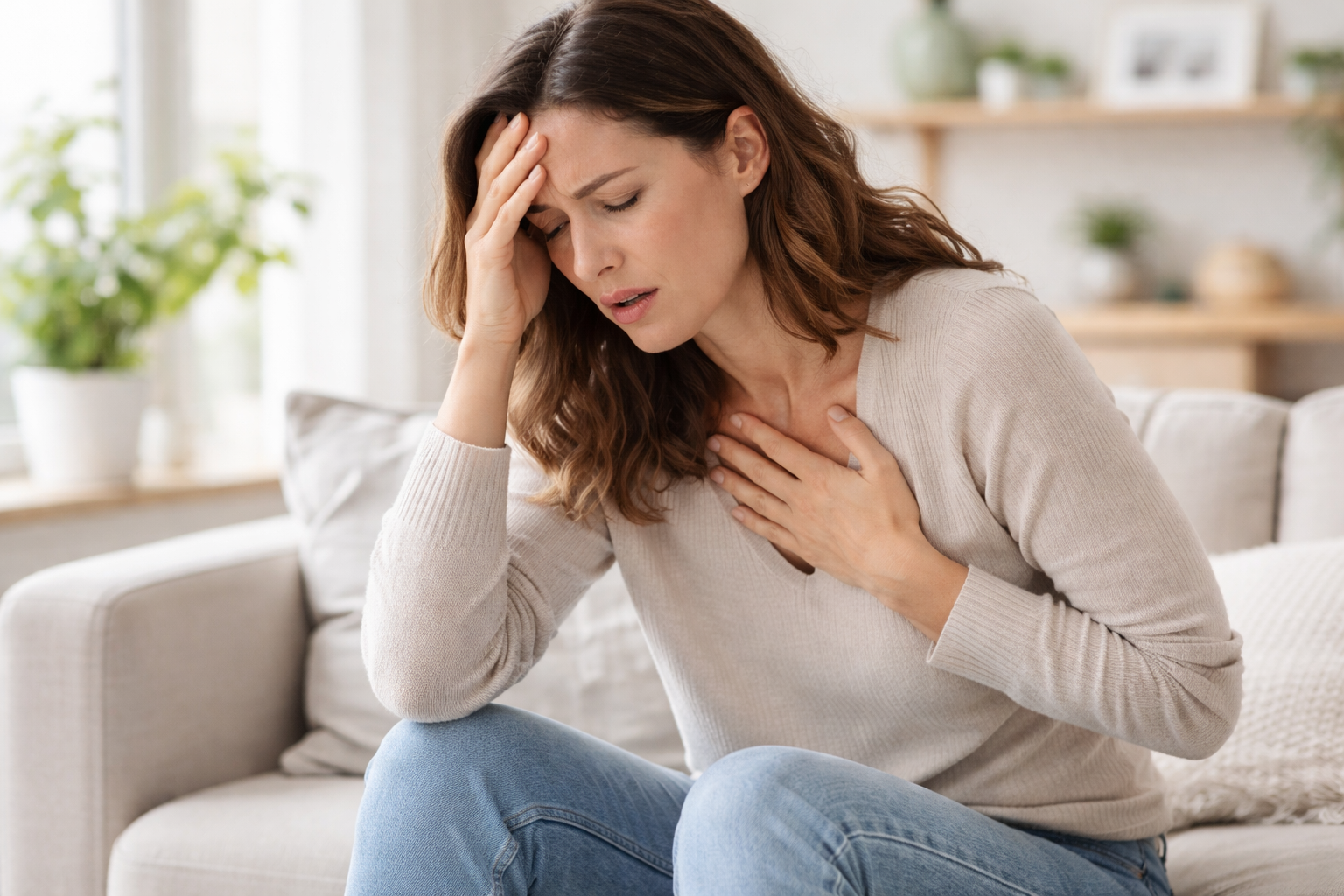
Your heart is pounding so hard you swear it might burst through your chest, your hands are tingling, and that crushing feeling in your throat makes you absolutely certain something is seriously wrong – but what if it’s just panic attack symptoms playing tricks on you?
Understanding panic attack symptoms
Panic attack symptoms represent a sudden surge of intense physical and psychological responses that can feel absolutely overwhelming in the moment. When a panic attack strikes, your body floods with adrenaline and cortisol, triggering a cascade of reactions. You might experience a racing or pounding heart that feels erratic and uncontrollable, sharp or dull chest pain that makes you catch your breath, shortness of breath that feels like you cannot fill your lungs completely, dizziness or lightheadedness that makes the room spin, trembling or shaking in your hands and legs, sweating that soaks through your clothes, and an overwhelming sense of impending doom or fear of losing control. These symptoms often peak within five to ten minutes, though the entire episode can last anywhere from minutes to an hour. What makes panic attacks particularly distressing is their unpredictability and the way they can mimic serious medical emergencies. A woman experiencing her first panic attack might genuinely believe she is having a heart attack, which ironically intensifies the anxiety and prolongs the episode.
Distinguishing between panic attacks and heart issues
The distinction between panic attacks and actual cardiac events lies in several key patterns that medical professionals use to differentiate them. Panic attacks, while intensely frightening, are generally short-lived episodes that resolve without causing permanent physical damage to the heart itself. They emerge suddenly, often without clear physical triggers, and are rooted in the nervous system’s fight-or-flight response. Heart issues such as angina or myocardial infarction present differently. Cardiac chest pain typically builds gradually or comes on with physical exertion, feels like pressure or heaviness rather than sharp stabbing sensations, and often radiates to the left arm, shoulder, neck, jaw, or back. Heart problems frequently accompany other symptoms like persistent nausea, unusual fatigue, or pain that does not resolve quickly. Additionally, cardiac events often have identifiable risk factors like high blood pressure, high cholesterol, smoking history, or family history of heart disease. A woman with panic disorder might experience identical symptoms repeatedly without any underlying heart damage, whereas a woman with coronary artery disease faces genuine physiological risk that requires medical intervention and ongoing management.
Key differences to note
Understanding the nuanced differences between these two conditions empowers women to respond appropriately rather than spiral into fear. Panic attacks typically announce themselves with sudden onset, arriving like a thunderbolt without warning, and they carry a distinctive psychological component of intense fear or sense of impending doom that feels disproportionate to any actual physical danger. Heart problems, by contrast, often develop gradually or present with exertion, and the physical symptoms tend to persist or worsen rather than peak and subside. Panic attacks are triggered by stress, anxiety, caffeine, sleep deprivation, or sometimes seemingly nothing at all, whereas heart problems stem from underlying physiological conditions like plaque buildup in arteries, weakened heart muscle, or arrhythmias. The timeline differs significantly too. Panic attack symptoms typically resolve within minutes to an hour as your nervous system calms down, while heart problems demand immediate medical intervention and do not simply disappear on their own. Additionally, panic attacks often leave you exhausted but physically unharmed, whereas heart events can cause measurable damage to heart tissue that shows up on electrocardiograms, blood tests, and imaging studies. Recognizing these patterns helps distinguish between a terrifying but ultimately benign panic episode and a genuine medical emergency requiring urgent care.
- Recognize the rapid onset of symptoms during a panic attack, which typically builds within seconds to minutes and peaks quickly, versus the gradual or exertion-related onset of cardiac symptoms.
- Differentiate panic attack symptoms from persistent chest pain characteristic of heart problems by noting whether symptoms resolve within an hour or continue despite rest and time.
- Seek medical help immediately if you experience symptoms like chest discomfort, sweating, or shortness of breath, especially if accompanied by pain radiating to your arm, neck, or jaw, or if symptoms persist longer than typical panic episodes.
🔬 Science-backed benefits in 2 minuteschoose where to begin:
Real-life examples and case studies
Consider Sarah, a 48-year-old woman who woke at 3 AM with her heart racing at 120 beats per minute, convinced she was having a heart attack. She rushed to the emergency room where an EKG showed normal rhythm and troponin levels were negative. Within two hours, her symptoms completely resolved. Sarah had experienced her first panic attack, triggered by stress about her daughter’s college applications. Her case illustrates how panic attacks can mimic cardiac emergencies perfectly while leaving no physiological evidence of heart damage. Contrast this with Margaret, a 52-year-old with a family history of early heart disease who experienced chest heaviness during her morning walk. Unlike Sarah’s sudden onset, Margaret’s symptoms built gradually and persisted even after she sat down to rest. Her EKG showed ST segment changes, and elevated troponin confirmed she had experienced a heart attack. Margaret required immediate intervention including cardiac catheterization and stent placement. These cases demonstrate how timing, progression, and medical findings help distinguish between panic and cardiac events. Women often find reassurance in understanding that panic attacks, while terrifying, do not damage the heart, whereas cardiac events require urgent medical attention and ongoing management.
Treatment and management
Managing panic attacks and heart issues requires fundamentally different approaches tailored to each condition’s underlying mechanisms. For panic attacks, treatment typically involves cognitive behavioral therapy, which helps rewire the thought patterns that fuel anxiety spirals, combined with breathing techniques and grounding strategies that calm the nervous system during episodes. Many women benefit from learning progressive muscle relaxation, practicing mindfulness meditation, or using the 5-4-3-2-1 sensory technique to anchor themselves in the present moment. Lifestyle modifications including regular exercise, limiting caffeine and alcohol, maintaining consistent sleep schedules, and stress management through yoga or journaling can significantly reduce panic attack frequency and severity. Some women require medication like selective serotonin reuptake inhibitors to address underlying anxiety. Heart issues demand entirely different interventions. Depending on the type and severity of cardiac disease, treatment might include medications to manage blood pressure, cholesterol, and heart rhythm, procedures like angioplasty or stent placement to restore blood flow, bypass surgery to reroute blood around blocked arteries, or cardiac rehabilitation programs combining exercise, education, and psychological support. The key distinction is that panic attacks respond to nervous system regulation and psychological intervention, while heart problems require medical and sometimes surgical intervention to address structural or functional cardiac issues.
Long-term outlook and prognosis
The long-term trajectory for women managing panic attacks versus heart disease differs substantially. With proper treatment, panic disorder has an excellent prognosis. Women who engage in therapy, learn coping strategies, and address underlying anxiety often experience dramatic improvements in symptom frequency and intensity within weeks to months. Many women eventually reach a point where panic attacks become rare or disappear entirely, and their quality of life returns to normal or even improves as they develop resilience and self-awareness. The key is consistent engagement with treatment and patience as the nervous system recalibrates. Heart disease, while manageable, requires lifelong attention. Women with coronary artery disease, heart failure, or arrhythmias must maintain medication compliance, attend regular cardiology appointments, monitor symptoms closely, and make sustained lifestyle changes including heart-healthy diet, regular exercise, stress management, and smoking cessation. However, modern cardiology has transformed outcomes dramatically. Many women live decades after a heart attack or diagnosis, enjoying active, fulfilling lives with proper management. The difference is that panic disorder can often be resolved or significantly improved, whereas heart disease requires ongoing monitoring and management to prevent complications and maintain quality of life.
Understanding the differences between panic attack symptoms and heart issues is crucial for prompt diagnosis and appropriate treatment. While panic attacks are often triggered by stress and anxiety, heart problems require medical attention and intervention. Recognizing the key distinctions can empower women to seek help when needed and lead to better health outcomes.
What are the typical symptoms of a panic attack?
Common symptoms of a panic attack include rapid heart rate, chest pain, shortness of breath, dizziness, and a sense of impending doom. These symptoms usually peak within minutes and can be accompanied by sweating or trembling.
When should I seek medical help for chest pain or related symptoms?
If you experience sudden and severe chest pain, especially accompanied by shortness of breath, sweating, or nausea, it is crucial to seek immediate medical attention. These symptoms could indicate a heart issue that requires prompt diagnosis and treatment.
Others also read:
Disclaimer: This article is for informational purposes only and is not a substitute for professional medical advice. Always consult a healthcare professional for personal guidance.
This article has been prepared and reviewed by the GlobalHealthBeacon editorial team and is based on current medical research and published scientific literature available in 2026. It provides structured, evidence-based information to support informed health decisions.

