Your gums bleed when you brush, your breath smells no matter what you do, and you have no idea what a periodontist actually does or why you need one – but this guide breaks periodontist explained into real, actionable steps you can take today.
What is a periodontist?
A periodontist is a dental specialist who has completed additional training beyond general dentistry to focus specifically on gum health and the structures supporting your teeth. Think of them as the gum experts. While your regular dentist handles cavities and cleanings, a periodontist dives deeper into problems affecting your gums, bone, and the tissues holding everything together. They diagnose conditions like gingivitis and periodontitis, perform specialized treatments, and help you understand why your gums might be bleeding or receding. For young adults, visiting a periodontist early can prevent years of more serious dental problems down the road. They examine your gum pockets, assess bone loss, and create personalized plans to restore your oral health. Many people don’t realize gum disease is silent – you might have it without obvious symptoms until significant damage occurs.
- Examines the health of your gums and underlying bone structure
- Offers treatments for gum disease and related conditions
- Provides guidance on proper oral hygiene practices
Why visit a periodontist?
You should see a periodontist if you notice bleeding gums during brushing or flossing, persistent bad breath that won’t go away, gums that feel tender or swollen, or teeth that seem to be shifting or feeling loose. Early intervention is crucial because gum disease progresses quietly. Imagine your gums as a protective barrier – once that barrier breaks down, bacteria can reach the bone supporting your teeth, and that’s when real problems start. A young adult with early-stage gum disease caught now can reverse it with proper treatment and habits. Wait five years, and you might need bone grafts or tooth extraction. Periodontists also help after you’ve noticed problems – they can stop disease progression, reduce inflammation, and teach you exactly what went wrong so you don’t repeat the same mistakes. They’re essentially your gum health insurance policy.
📘 Fix your day in under 2 minuteschoose where to begin:
Preparing for your first visit
Before your appointment, write down any symptoms you’ve noticed – when your gums bleed, if you have bad breath, any pain or sensitivity. Gather your dental history if possible, including previous cleanings or treatments. Make a list of all medications and supplements you take, as some affect gum health and healing. Bring your insurance card and arrive 10-15 minutes early to complete intake forms. Think about your daily habits too – how often do you floss, do you smoke, do you grind your teeth at night? These details help the periodontist understand your specific risk factors. If you’ve had X-rays at your general dentist recently, ask if they can send those records ahead. The more information you provide upfront, the more efficiently the periodontist can assess your situation and create a targeted treatment plan rather than spending time gathering basic facts.
During the appointment
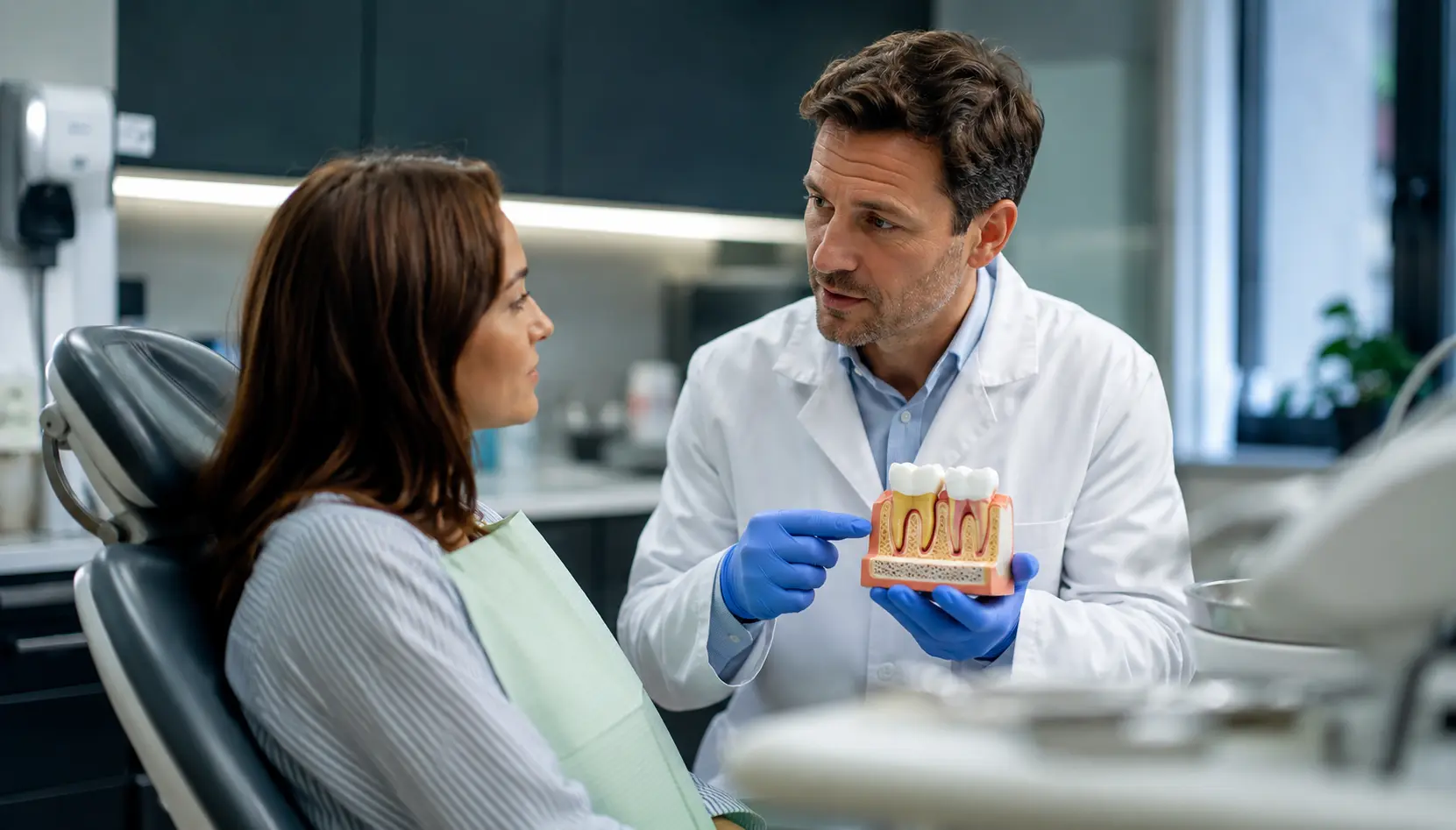
Expect your first visit to take 60-90 minutes. The periodontist will start with a thorough examination using special instruments to measure gum pocket depths – this tells them how much disease is present. They’ll likely take digital X-rays to see bone levels below the gum line. You’ll feel the probe moving along your gum line; it’s not painful but can feel uncomfortable if your gums are inflamed. The periodontist will discuss their findings with you, showing you exactly what they see and explaining what it means. They might say something like ‘You have 4-5mm pockets here, which indicates early periodontitis’ and then walk you through what caused it and how to fix it. They’ll recommend a treatment plan that might include a deep cleaning called scaling and root planing, or in more advanced cases, surgical options. Don’t hesitate to ask questions – understanding the problem makes you more likely to follow through with treatment.
Aftercare and follow-up
After your treatment, follow the periodontist’s instructions precisely. If you had scaling and root planing, your gums might be sensitive for a few days – use a soft toothbrush and avoid hot foods. You might be prescribed an antimicrobial rinse to use for a week or two. The real work happens at home: brush twice daily with a soft brush, floss every single day, and consider an electric toothbrush if you’re not removing plaque effectively. Schedule your follow-up appointment before you leave – typically 4-6 weeks after treatment to assess healing. Many young adults make the mistake of skipping follow-ups, thinking they’re done. That’s how problems return. You’ll likely need maintenance cleanings every 3-4 months instead of the standard 6 months because your gums need more frequent professional care. Think of it as an investment in keeping your teeth for life rather than an ongoing burden.
Understanding the role of a periodontist is essential for maintaining good oral health. By visiting a periodontist early, addressing concerns, and following through with recommended treatments and aftercare, you can safeguard your smile for years to come.
How often should I see a periodontist?
It is advisable to visit a periodontist at least once a year for a preventive check-up. However, if you notice any unusual symptoms or changes in your oral health, do not hesitate to schedule an appointment for a thorough evaluation.
Is gum disease reversible?
In its early stages, gum disease can be reversed with proper treatment and oral hygiene practices. However, advanced stages of gum disease may require more intensive interventions to manage and control the condition.
Others also read:
Disclaimer: This article is for informational purposes only and is not a substitute for professional medical advice. Always consult a healthcare professional for personal guidance.
This guide has been prepared and reviewed by the GlobalHealthBeacon editorial team and reflects current medical research as of 2026. It provides structured, evidence-based information to support informed health decisions.
