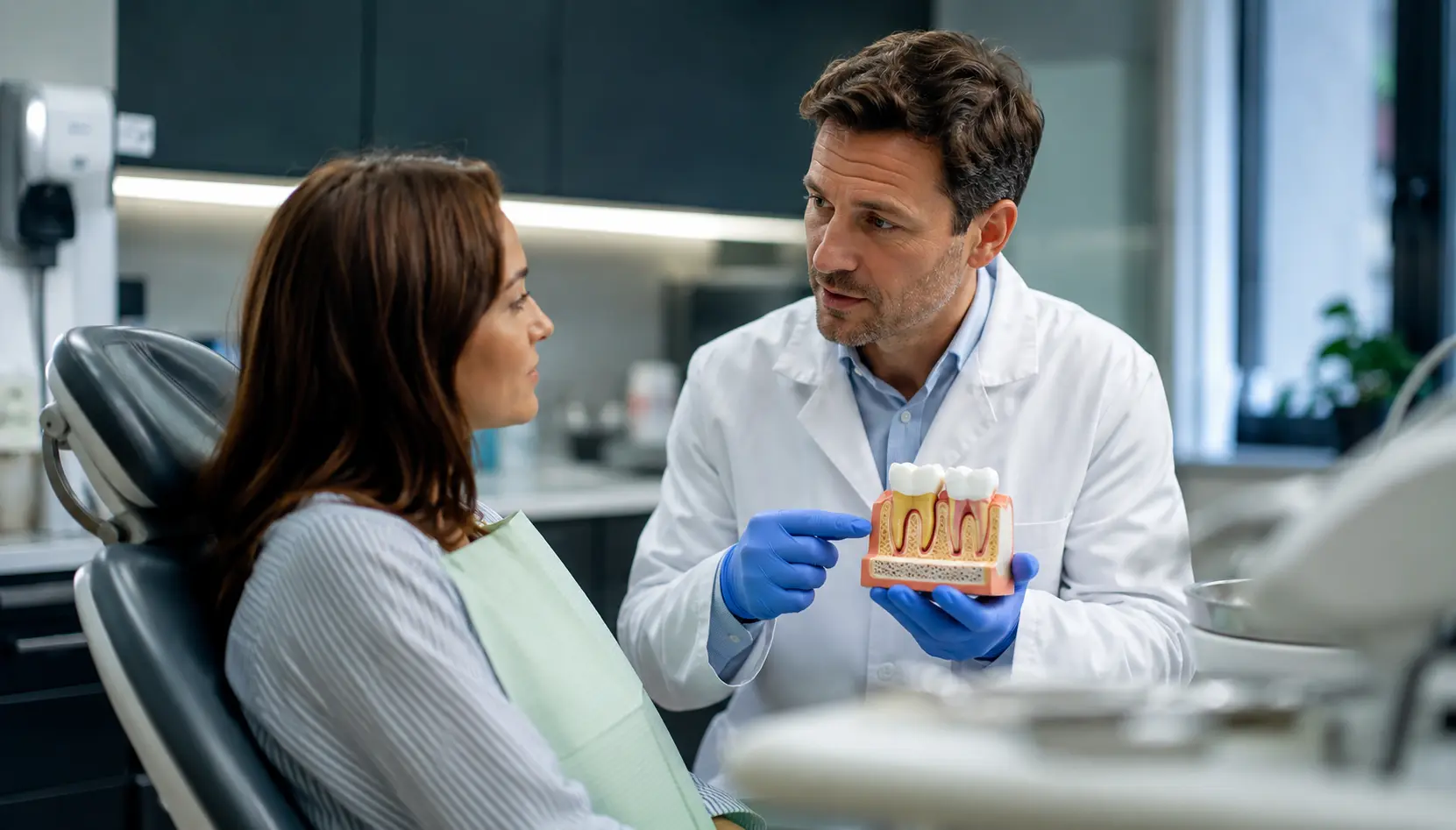
Your gums are bleeding when you brush, your teeth feel loose, and that constant dull ache is stealing your confidence – but when a periodontist explained what was actually happening beneath the surface, everything changed.
Understanding periodontal disease
Periodontal disease, commonly called gum disease, sneaks up on many women without warning. It starts quietly with plaque buildup along the gum line, triggering inflammation that feels like a persistent irritation you can’t quite shake. If you ignore it, the infection deepens into the bone supporting your teeth, potentially leading to tooth loss. Think of it like this: you notice your gums bleeding during your morning routine, but you brush it off as normal. Weeks pass, and the bleeding gets worse. Your teeth start feeling slightly loose when you chew. That’s your body sending distress signals. The progression from gingivitis to periodontitis happens gradually, which is why many women don’t realize how serious it’s become until significant damage has occurred. Understanding this progression is the first step toward taking control of your oral health.
- Regular dental check-ups are crucial to detect early signs of gum disease before it progresses to more serious stages.
- Practicing good oral hygiene, such as brushing twice daily and flossing consistently, can help prevent periodontal problems from developing.
- Treatment may involve deep cleaning procedures like scaling and root planing to remove plaque and tartar buildup beneath the gum line.
The impact on womens oral health
Women’s bodies go through hormonal shifts that men simply don’t experience, and your gums pay the price. During your menstrual cycle, pregnancy, and especially menopause, fluctuating estrogen and progesterone levels make your gum tissue more vulnerable to infection and inflammation. Imagine being pregnant and suddenly noticing your gums swell and bleed more easily – this pregnancy gingivitis affects nearly half of pregnant women. Then there’s menopause, when declining estrogen can cause gum recession and increased sensitivity that makes eating uncomfortable. Some women describe it as their gums becoming paper-thin and exposed. These hormonal windows create prime conditions for gum disease to take hold, which is why periodontist care becomes even more critical during these life stages. Understanding this connection helps you recognize that your gum problems aren’t a personal failure but a natural response to your body’s changes.
💬 Ready to feel better in 2 minutes?choose where to begin:
Improving gum health through professional care
A periodontist brings specialized expertise that general dentists simply can’t match. During your first visit, they’ll assess your specific situation through detailed measurements, imaging, and a thorough examination of your gum pockets. They might discover gum recession you didn’t even know you had, or identify early bone loss that could have gone unnoticed. A periodontist creates a personalized treatment roadmap tailored to your unique needs, whether that’s laser therapy, graft procedures for recession, or targeted antibiotics. Beyond treatment, they teach you techniques you’ve probably been doing wrong for years – like how to floss without damaging your gums or the best brush angle for your specific gum contours. Many women find that professional guidance transforms their daily routine from a source of frustration into a confident, effective practice. The reassurance of knowing you’re in expert hands often reduces the anxiety that comes with gum problems.
The verdict on periodontist care
Women who’ve committed to periodontist care consistently report a transformation in how their mouths feel and function. One woman might describe how her bleeding gums disappeared within weeks of starting treatment, while another celebrates being able to eat crunchy foods again without pain. The confidence boost is real – no more covering your mouth when you smile or feeling self-conscious about your breath. Most importantly, women report a shift in mindset: from feeling helpless about their gum disease to feeling empowered and in control. The investment of time and money in professional care pays dividends not just in oral health but in overall quality of life. That said, results depend heavily on your commitment to maintenance between visits. Skipping your at-home routine or missing follow-up appointments can reverse the progress you’ve made. The periodontist is your partner, but you’re the one doing the daily work.
Exploring the realm of periodontist care reveals its significance in addressing gum diseases and promoting womens oral health. From understanding the condition to seeking expert treatment, the journey towards healthier gums is a vital aspect of overall well-being.
Can periodontist care prevent gum disease?
Regular periodontist visits and diligent oral hygiene practices can significantly reduce the risk of gum disease and maintain optimal gum health.
Are women more prone to gum issues?
Hormonal changes in women can increase susceptibility to gum diseases, making regular periodontist care essential for managing oral health.
Others also read:
Disclaimer: This article is for informational purposes only and is not a substitute for professional medical advice. Always consult a healthcare professional for personal guidance.
This article presents an experience-based perspective and has been reviewed by the GlobalHealthBeacon editorial team in 2026. It provides structured, evidence-based information to support informed health decisions.
