Your gut is screaming for help and you don’t even realize it – bloating, low energy, brain fog – but here’s the thing: a solid prebiotics foods list might be the missing piece that changes everything.
What are prebiotics?
Prebiotics are specialized plant fibers that your body cannot digest, but your gut bacteria absolutely love them. Think of them as fertilizer for the beneficial microorganisms living in your colon. When you consume prebiotic foods, these fibers travel through your stomach and small intestine untouched, then reach your colon where the magic happens. Your good bacteria ferment these fibers, producing short-chain fatty acids that fuel your gut lining and reduce inflammation throughout your digestive system. This process is called fermentation, and it’s essentially your gut bacteria throwing a feast. The result? Better nutrient absorption, a stronger immune response, and less digestive distress. For young adults juggling work, school, and social life, prebiotics offer a simple way to support your body’s natural defenses without complicated meal prep or expensive supplements.
- Prebiotics help improve digestion and absorption of nutrients.
- They aid in reducing inflammation and boosting the immune system.
- Include prebiotics in your diet for better overall gut health.
Top prebiotic foods to include
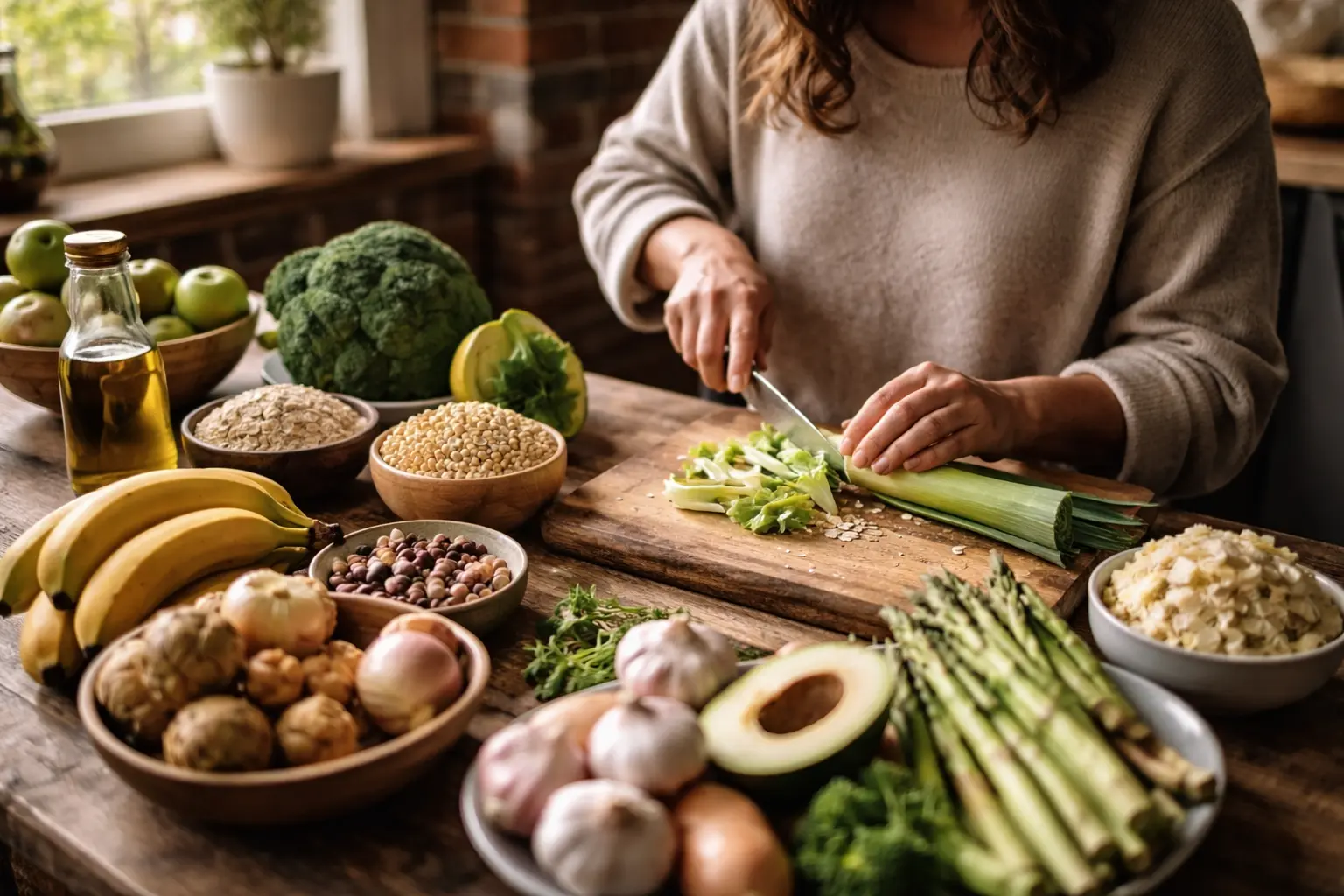
Chicory root stands out as one of the most potent prebiotic sources, containing up to 65 percent inulin by weight. You can find it dried and roasted as a coffee substitute, or fresh in some specialty markets. Garlic is another powerhouse that delivers both inulin and fructooligosaccharides, especially when eaten raw or lightly cooked. Raw onions pack similar benefits and work perfectly sliced into salads, salsas, or caramelized into soups. Leeks, asparagus, and bananas round out the accessible options that fit naturally into everyday meals. Bananas deserve special mention because they’re convenient, affordable, and slightly underripe ones contain more resistant starch, a type of prebiotic fiber. Jerusalem artichokes offer an intense prebiotic punch but can cause bloating if you’re not accustomed to them. The key is variety – rotating through different prebiotic sources ensures you’re feeding diverse bacterial populations in your gut.
📘 Fix your day in under 2 minuteschoose where to begin:
How to incorporate prebiotics
Start by adding raw garlic and onions to your existing meals – toss them into salads, blend them into dressings, or pile them onto sandwiches. If raw garlic feels too intense, roast whole cloves until they soften and become sweet. For chicory root, try brewing it as a tea in the evening or mixing chicory root powder into your morning coffee for a gradual introduction. Asparagus works beautifully roasted with olive oil and salt, or chopped into pasta dishes. Bananas are the easiest entry point – eat one daily or blend into smoothies with yogurt and berries. Leeks can replace onions in soups and stir-fries, offering a milder flavor. The strategy is to weave prebiotics into foods you already enjoy rather than forcing down unfamiliar dishes. Start with one or two sources and gradually add more over two to three weeks, allowing your digestive system to adapt without overwhelming it.
Precautions and considerations
When you first introduce prebiotics, your gut bacteria begin fermenting these fibers intensely, which can trigger bloating, gas, or mild cramping. This is completely normal and temporary. Your body needs time to build up the bacterial populations that efficiently process these fibers. The solution is simple: start small. Introduce one prebiotic food in a modest amount, perhaps half a banana or a quarter cup of cooked asparagus, then wait three to five days before increasing. This gradual approach prevents the dramatic fermentation spike that causes discomfort. If you have existing digestive conditions like IBS, Crohn’s disease, or SIBO, consult your healthcare provider before making major dietary changes. Some people with these conditions may need to introduce prebiotics even more slowly or under professional guidance. Keep a simple food diary for two weeks to track what you eat and how you feel, which helps identify your personal tolerance levels and preferences.
Healthy gut, healthy you
Your gut microbiota influences everything from your mood and energy levels to your immune response and metabolism. By deliberately adding prebiotic foods to your diet, you’re creating an environment where beneficial bacteria thrive and harmful bacteria struggle to gain ground. This shift happens gradually but compounds over weeks and months. You might notice improved digestion within days, clearer skin within weeks, and sustained energy improvements within a month or two. The investment is minimal – most prebiotic foods are affordable and available at any grocery store. Think of this as preventive health maintenance that tastes good and fits into your normal eating patterns. Young adults who establish this habit early often find they feel noticeably better, experience fewer digestive issues, and build a foundation for long-term wellness. Start this week by choosing one prebiotic food that appeals to you and incorporating it into three meals. That single change, repeated consistently, becomes the cornerstone of better gut health.
Prebiotic foods are essential for nurturing the beneficial bacteria in your gut, promoting gut health and overall well-being. Incorporate foods like chicory root, garlic, and onions into your diet to reap the benefits of these valuable prebiotics.
Are there any side effects of consuming prebiotic foods?
Some individuals may experience bloating or gas when first introducing prebiotic foods to their diet. Start with small amounts and gradually increase to allow your gut to adjust.
Can I take prebiotic supplements instead of eating prebiotic foods?
While supplements are available, it’s generally recommended to obtain prebiotics from whole foods as part of a balanced diet. Consult with a healthcare provider before starting any new supplement regimen.
Disclaimer: This article is for informational purposes only and is not a substitute for professional medical advice. Always consult a healthcare professional for personal guidance.
This guide has been prepared and reviewed by the GlobalHealthBeacon editorial team and reflects current medical research as of 2026. It provides structured, evidence-based information to support informed health decisions.
