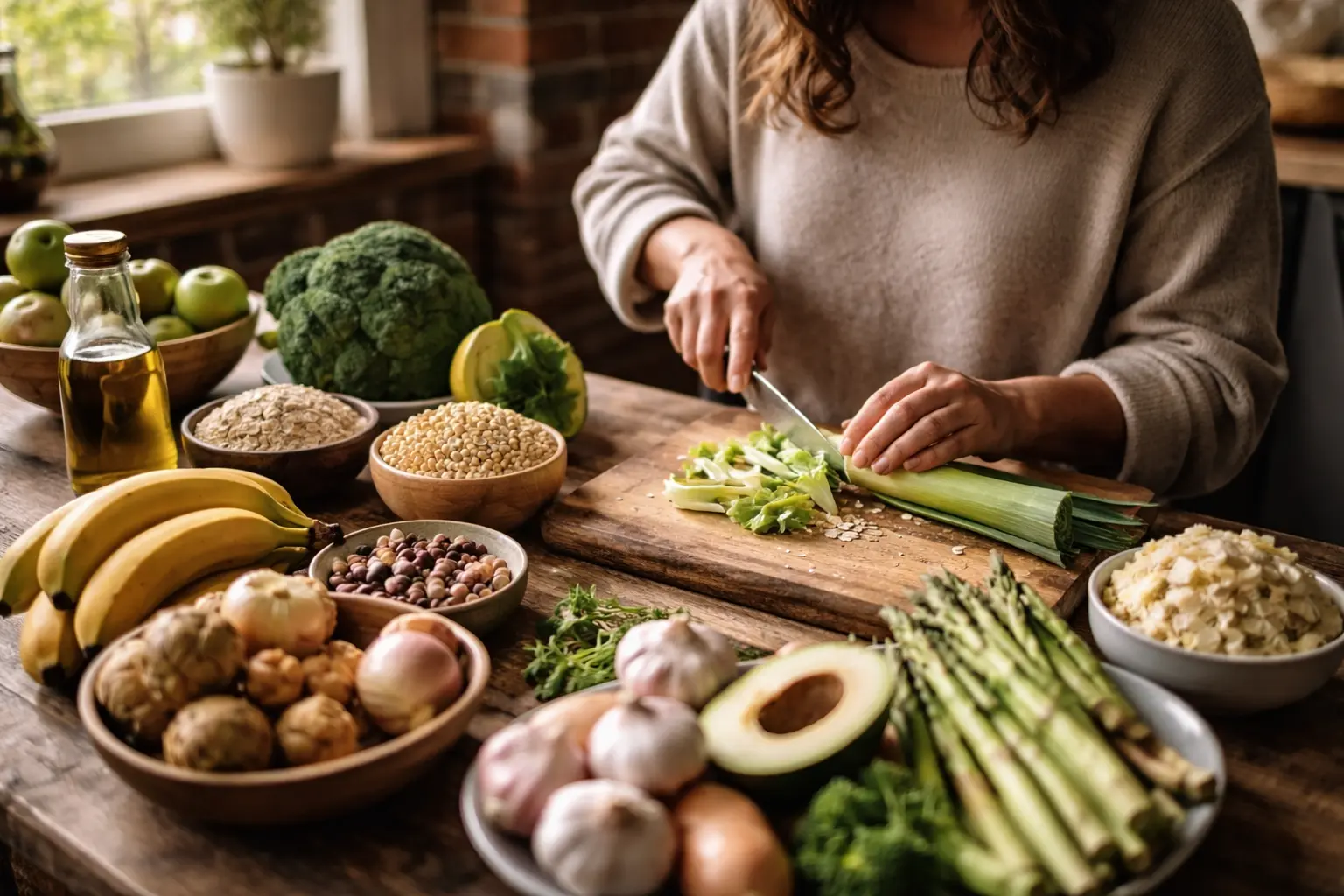
Your gut feels off, digestion is sluggish, and you’re tired of feeling bloated after meals, but nobody talks about prebiotics foods list as the actual solution hiding in your kitchen.
What are prebiotics?
Prebiotics are non-digestible fibers that function as selective food sources for beneficial bacteria already living in your gut. Unlike regular fiber that your body breaks down for energy, prebiotics pass through your stomach and small intestine largely unchanged, reaching your colon intact. Once there, they become a feast for your good bacteria. Think of your gut microbiome as a garden: prebiotics are the fertilizer that helps the plants you want to grow thrive while crowding out the weeds. Your gut bacteria ferment these fibers, creating an environment where beneficial species like Bifidobacterium and Faecalibacterium flourish. This selective feeding is what makes prebiotics different from general dietary fiber. By nourishing these specific microbial allies, prebiotics help maintain the delicate balance your digestive system depends on for optimal function.
Benefits of prebiotics
The research on prebiotics reveals a cascade of interconnected benefits that ripple through multiple body systems. When your gut bacteria ferment prebiotic fibers, they produce short-chain fatty acids like butyrate, which fuel the cells lining your colon and strengthen your intestinal barrier. A stronger barrier means fewer harmful substances slip into your bloodstream, which has downstream effects on inflammation throughout your body. Beyond digestion, a thriving prebiotic-fed microbiome supports nutrient absorption, helping your body extract more vitamins and minerals from the food you eat. Your immune system also gets a boost because roughly 70 percent of your immune tissue lives in your gut. When beneficial bacteria are well-fed and abundant, they outcompete pathogenic species and produce compounds that train your immune cells to respond appropriately. Young adults often notice improved energy levels, clearer skin, and better mood stability as their gut health improves, though these effects develop gradually over weeks.
Top prebiotic foods to include in your diet
Chicory root stands out as one of the most concentrated prebiotic sources, containing up to 65 percent inulin by weight, making even small portions highly effective. Garlic and onions, staples in most kitchens, deliver significant prebiotic content while adding flavor to everyday meals. Raw garlic contains more prebiotics than cooked garlic, though cooking doesn’t eliminate them entirely. Bananas, especially when slightly underripe, provide resistant starch alongside inulin, offering a convenient portable option. Asparagus, leeks, and Jerusalem artichokes round out the list with substantial prebiotic fiber. Oats deserve special mention because they’re accessible and versatile: a bowl of oatmeal provides meaningful prebiotic content while being gentle on your digestive system. Wheat bran and barley offer additional options for those seeking variety. The key is understanding that prebiotic content varies by ripeness, preparation method, and plant part. For instance, banana peels contain more prebiotics than the flesh, though eating them raw isn’t practical. Incorporating a diverse mix ensures you’re feeding different bacterial species.
- Start by identifying one or two prebiotic foods you already enjoy eating, whether that’s oatmeal, garlic in pasta, or sliced bananas in yogurt.
- Introduce these foods gradually over one to two weeks, beginning with small portions to allow your gut bacteria time to adapt without causing bloating or gas.
- Track how you feel: note any changes in digestion, energy, or bloating to understand your personal tolerance level.
- Expand your prebiotic variety by adding a new food every week or two, rotating between different sources to feed diverse bacterial populations.
- Aim for consistency rather than perfection, aiming to include prebiotic foods in most meals without rigid rules.
🔬 Science-backed benefits in 2 minuteschoose where to begin:
How prebiotics work
The journey of a prebiotic fiber through your digestive system is a fascinating biological process. When you eat a prebiotic-rich food like chicory root or garlic, your saliva and stomach acid don’t break it down because your human enzymes lack the specific tools needed. This is intentional: the fiber travels intact through your small intestine, where it doesn’t get absorbed into your bloodstream. Once it reaches your colon, the resident bacteria recognize it as food and begin fermenting it. This fermentation process is where the magic happens. Bacteria produce short-chain fatty acids, primarily butyrate, acetate, and propionate, which serve multiple functions. Butyrate directly feeds the cells lining your colon, strengthening the intestinal barrier and reducing permeability. These fatty acids also lower the pH in your colon, creating an acidic environment where beneficial bacteria thrive while pathogenic species struggle. Additionally, the fermentation process generates gases like hydrogen and methane, which is why some people experience temporary bloating when first increasing prebiotic intake.
Prebiotics vs. probiotics
The confusion between prebiotics and probiotics is understandable because they work together but operate differently. Probiotics are live microorganisms, typically bacteria or yeast, that you consume with the goal of colonizing your gut and providing health benefits. Think of probiotics as the actual workers: they’re the beneficial bacteria themselves. Prebiotics, by contrast, are the food that feeds those workers, making them the fuel source. You could consume all the probiotics in the world, but without adequate prebiotic food, those bacteria won’t establish themselves or thrive. Conversely, prebiotics alone can enhance the bacteria already living in your gut without introducing new species. The most effective approach combines both: consuming prebiotic foods feeds your existing beneficial bacteria while probiotic foods or supplements introduce new beneficial species. However, prebiotics from whole foods like bananas and garlic are generally more stable and effective than relying solely on probiotic supplements, which often don’t survive stomach acid in sufficient quantities.
Including prebiotics in your diet
Building a prebiotic-rich diet doesn’t require overhauling your eating habits or buying exotic ingredients. Start by auditing what you already eat: do you eat oatmeal for breakfast, garlic in your pasta, or bananas as snacks? If so, you’re already consuming prebiotics. The strategy is to be intentional about increasing frequency and variety. A practical approach involves adding prebiotic foods to meals you already prepare. Roasted garlic and onions enhance almost any savory dish. Sliced bananas work in smoothies, yogurt, or eaten plain. Asparagus makes an excellent side dish. Oats can be incorporated into breakfast, baked goods, or even savory dishes. The common mistake young adults make is introducing too much too quickly, leading to bloating and gas that discourages them from continuing. Your gut bacteria need time to adapt to increased prebiotic intake. Start with one serving daily for a week, then gradually increase. If you experience significant bloating, reduce portions temporarily and increase more slowly. Most people find their tolerance improves within two to three weeks as their beneficial bacteria population expands.
Prebiotics are non-digestible fibers that selectively feed beneficial bacteria in your gut, supporting digestion, nutrient absorption, and immune function through the production of short-chain fatty acids. By gradually incorporating prebiotic-rich foods like chicory root, garlic, onions, bananas, and oats into your daily meals, you can naturally enhance your gut microbiome. The key is starting slowly, maintaining consistency, and choosing whole food sources over supplements when possible. Understanding how prebiotics work alongside your existing gut bacteria helps you make informed choices about your digestive health.
What are the best sources of prebiotics?
The most effective prebiotic sources include chicory root (highest inulin concentration), garlic, onions, bananas (especially slightly underripe), asparagus, leeks, oats, wheat bran, and barley. Raw garlic contains more prebiotics than cooked, though both are beneficial. Bananas provide additional resistant starch alongside inulin. Jerusalem artichokes and dandelion greens offer concentrated prebiotic content for those seeking variety. The best source is whichever prebiotic food you’ll actually eat consistently.
How can I incorporate prebiotics into my diet?
Incorporate prebiotics by adding them to meals you already prepare: roast garlic and onions with vegetables, add sliced bananas to yogurt or smoothies, include asparagus as a side dish, eat oatmeal for breakfast, or use wheat bran in baking. Start with one serving daily and gradually increase over two to three weeks to allow your gut to adapt. Common mistakes include adding too much too quickly, which causes bloating. Focus on consistency and variety rather than perfection, rotating between different prebiotic sources to feed diverse bacterial populations.
Others also read:
Disclaimer: This article is for informational purposes only and is not a substitute for professional medical advice. Always consult a healthcare professional for personal guidance.
This article has been prepared and reviewed by the GlobalHealthBeacon editorial team and is based on current medical research and published scientific literature available in 2026. It provides structured, evidence-based information to support informed health decisions.
