That sharp pain shooting down your neck after eight hours hunched over your laptop is your body screaming for help, and mastering proper sitting posture for home working isn’t some boring fitness thing but the difference between feeling energized or completely wrecked by day’s end.
Creating a comfortable workspace
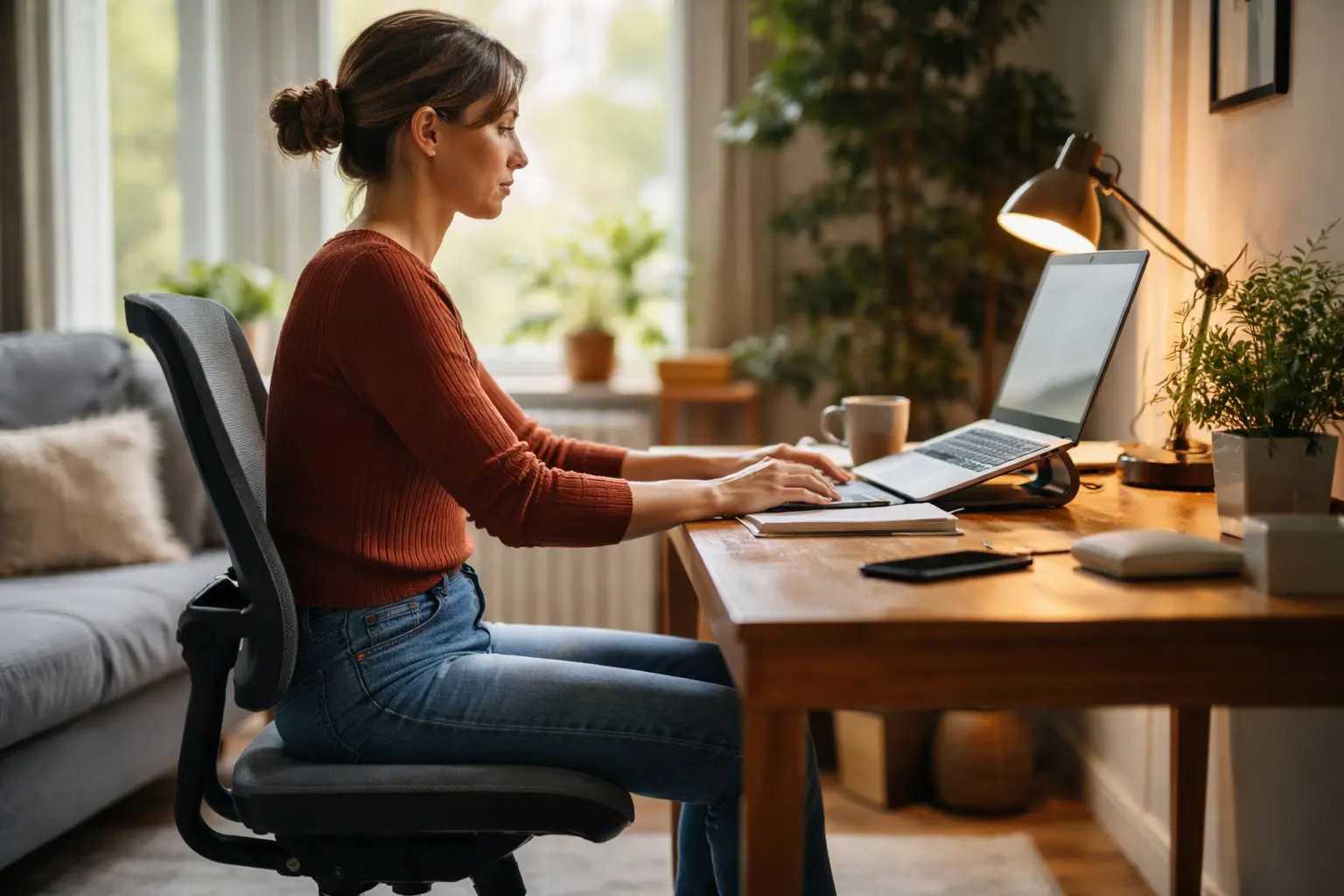
Think back to your first week working from home. Maybe you sat on your couch with your laptop balanced on your knees, or perched on a dining chair that wasn’t designed for anything longer than a meal. That’s where most of us start, right? The good news is that setting up your workstation properly doesn’t require a complete overhaul or expensive equipment. Start by investing in an adjustable chair that supports your lower back, then position your monitor at eye level so you’re not constantly looking down. Your keyboard and mouse should sit within easy reach, keeping your wrists neutral and your shoulders relaxed. Picture this: Sarah, a 26-year-old marketing manager, spent three weeks with persistent shoulder tension until she realized her monitor was six inches too low. One simple adjustment changed everything. The key is understanding that your body needs support throughout the day, not just occasional relief.
- Adjust your chair height to keep your feet flat on the floor
- Position your screen at arm’s length away to reduce eye strain
- Use a document holder to prevent neck strain while reading documents
Taking regular breaks
Here’s what nobody tells you about remote work: sitting for six hours straight is actually worse than you think. Your muscles tighten, your circulation slows, and your posture gradually collapses without you even noticing. The solution is refreshingly simple but requires discipline. Set a timer for every 30 minutes and stand up, even if it’s just for two minutes. Walk to get water, stretch your arms overhead, or do a few neck rolls. These micro-movements feel insignificant in the moment, but they’re genuinely transformative over time. Consider Jake, a 24-year-old developer who added a five-minute walk around his apartment every hour. Within two weeks, his afternoon back pain disappeared. The breaks aren’t luxuries or procrastination tactics; they’re essential maintenance for your body. Think of it like giving your muscles permission to reset before they lock into bad patterns.
💬 Ready to feel better in 2 minutes?choose where to begin:
Mindful movement practices
Adding gentle movement to your daily routine is where real change happens. Yoga and Pilates aren’t just trendy wellness activities; they’re specifically designed to strengthen the muscles that support good posture and undo the damage of prolonged sitting. Even 15 minutes of focused stretching or a beginner yoga video can improve your flexibility and body awareness. Many young adults find that incorporating these practices three times a week makes a noticeable difference in how they carry themselves throughout the day. Emma, a 25-year-old accountant, started a 10-minute morning yoga routine and noticed she could sit upright longer without fatigue. These disciplines teach you to recognize tension patterns in your body and correct them before they become chronic issues. The real magic is that as your strength improves, maintaining proper posture becomes effortless rather than exhausting.
Ergonomic essentials
Sometimes the right tools genuinely make the difference between discomfort and comfort. Lumbar support cushions, footrests, and standing desks aren’t gimmicks; they’re practical solutions that many young adults swear by. The trick is experimenting to find what works for your unique body and workspace. Some people thrive with a standing desk for part of the day, while others prefer a high-quality lumbar pillow that transforms their regular chair. Marcus, a 27-year-old consultant, invested in a simple footrest and suddenly his lower back pain decreased significantly because his feet had proper support. Start with one or two additions rather than overhauling everything at once. Your body will tell you what it needs if you pay attention. The goal is reducing strain on your muscles and joints so that by the end of your workday, you feel energized rather than depleted.
Learn how strategic workstation setups, regular breaks, mindful movements, and ergonomic aids can transform your home office experience. By prioritizing posture, you pave the way for a healthier, more comfortable work environment.
How can I improve my sitting posture at home?
To enhance your sitting posture at home, ensure your workstation is ergonomically configured, take short breaks every 30 minutes, practice mindful movement exercises like yoga, and consider using ergonomic tools.
What are some common signs of poor sitting posture?
Common signs of poor sitting posture include neck or back pain, headaches, muscle stiffness, tingling or numbness in extremities, and reduced range of motion in the joints.
Others also read:
Disclaimer: This article is for informational purposes only and is not a substitute for professional medical advice. Always consult a healthcare professional for personal guidance.
This article presents an experience-based perspective and has been reviewed by the GlobalHealthBeacon editorial team in 2026. It provides structured, evidence-based information to support informed health decisions.
← Back to the main proper sitting posture for home working page
