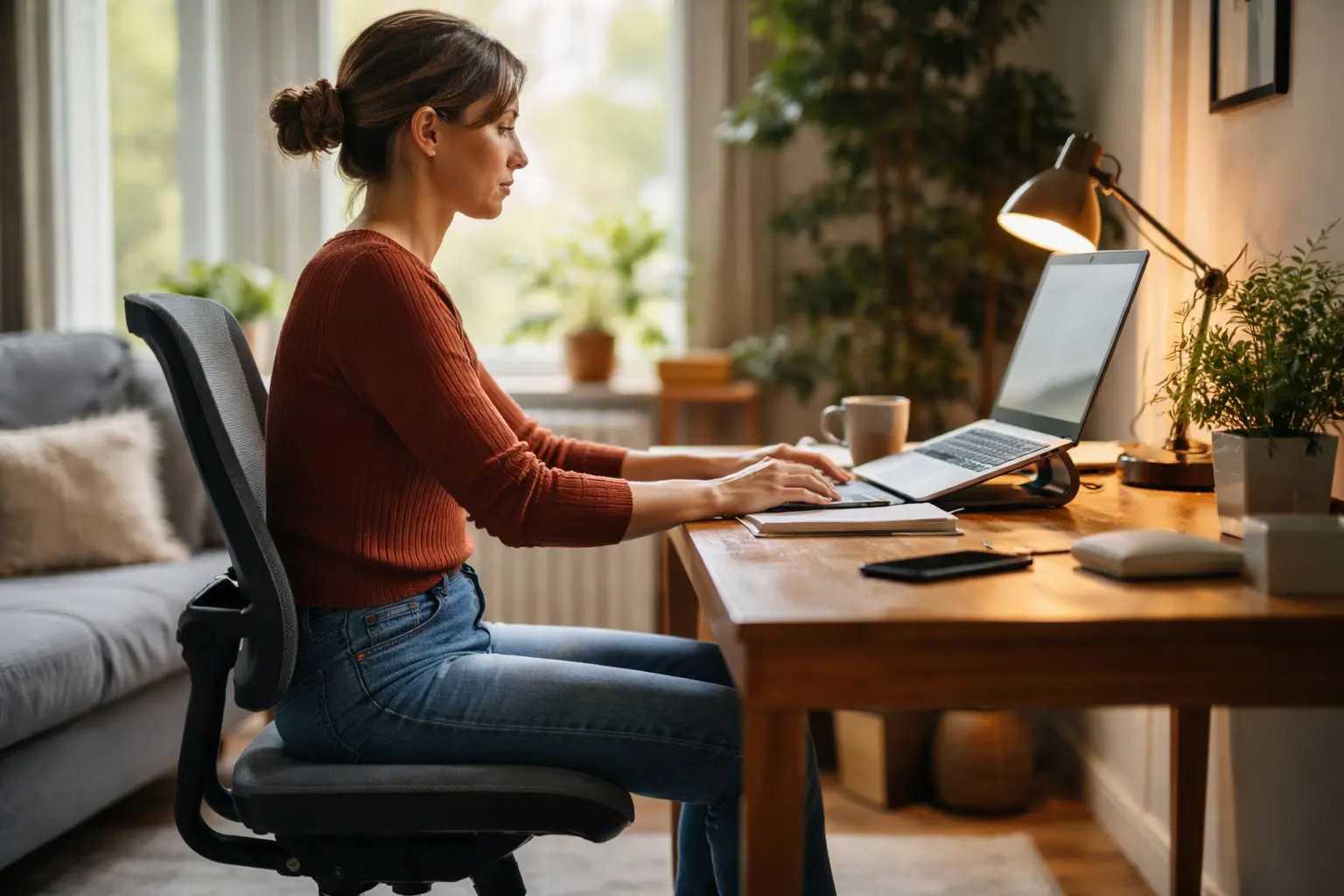
Your neck aches by 2pm, your lower back screams by dinner, and you can’t remember the last time you sat through a full workday without pain – but fixing your proper sitting posture for home working doesn’t require expensive equipment or hours at the gym.
Ergonomic seating arrangement
Your chair is the foundation of everything. Think of it as the base of your spine’s support system. Start by selecting a chair with genuine lumbar support that cradles your lower back rather than leaving it unsupported. Adjust the height so your knees sit level with your hips, which takes pressure off your lower back and prevents that forward slouch many women experience after hours of sitting. Your feet should rest flat on the floor or a footrest, creating a stable 90-degree angle at your knees and hips. Position your screen at arm’s length away and slightly below eye level to prevent neck strain. Many women make the mistake of placing monitors too high, forcing them to crane their necks upward all day. If your current chair lacks proper support, consider adding a lumbar pillow or rolled towel behind your lower back as a temporary solution while you source a better option.
- Select a chair with proper lumbar support to maintain a neutral spine position.
- Adjust your chair height so that your knees are level with your hips to reduce pressure on your lower back.
- Use a footrest if needed to keep your feet supported and to maintain good circulation.
Mindful posture corrections
Awareness is your secret weapon. Set a timer to check your posture every 30 minutes, especially during deep work sessions when you naturally sink into bad habits. Notice where tension builds: are your shoulders creeping toward your ears? Is your chin jutting forward? These are signals your body sends when focus takes over. Engage your core muscles by gently drawing your navel toward your spine, which stabilizes your entire torso and takes strain off your lower back. Sit up straight without rigidity, maintaining the natural curves of your spine rather than forcing an unnatural arch. Many women hold tension in their shoulders and neck without realizing it, creating a cascade of problems down the spine. Try this: take a deep breath, then on the exhale, drop your shoulders away from your ears and reset your posture. Repeat this reset every hour. The goal isn’t perfection but consistent small corrections that add up throughout your day.
📘 Fix your day in under 2 minuteschoose where to begin:
Stretch breaks
Stretching isn’t optional if you work from home. Your muscles tighten from static positioning, and without movement, tension accumulates and becomes pain. Schedule stretch breaks every 60 to 90 minutes, treating them as seriously as meetings. Focus on your neck by gently tilting your head toward each shoulder, holding for 15 seconds per side. Roll your shoulders backward slowly, releasing tension that builds from typing and mouse work. Stretch your chest by clasping your hands behind your back and gently pulling your shoulders back, opening up the front of your body. Many women spend hours hunched forward, tightening their chest and shoulders, so this stretch reverses that pattern. Lean forward gently to stretch your lower back, or stand and reach one arm overhead, bending slightly to the opposite side to stretch your entire side body. These breaks take just five minutes but prevent the cumulative damage that leads to chronic pain and poor posture habits.
Proper computer screen setup
Your screen position directly influences your posture throughout the day. Position it at arm’s length away, roughly 20 to 26 inches from your eyes, which is the distance that feels natural when you extend your arm. The top of your screen should sit at or slightly below eye level, allowing your gaze to drift downward naturally rather than forcing you to look up or crane down. Poor lighting creates eye strain, which causes you to lean forward unconsciously, compressing your spine and shoulders. Use glare-free lighting by positioning your monitor perpendicular to windows or using a monitor hood if needed. If you use a laptop, elevate it on a stand or books so the screen reaches proper height, then use an external keyboard and mouse to maintain distance. Many women work from couches or beds with laptops on their laps, creating extreme forward bending that damages posture over weeks. Even small adjustments to screen height and distance create noticeable relief within days of consistent use.
Regular movement
Sitting, even with perfect posture, is not a neutral position for your body. Movement breaks are essential to prevent stiffness and maintain circulation. Stand up and walk around every 60 to 90 minutes, even if just for two minutes. This interrupts static positioning and resets your muscles. Incorporate gentle exercises throughout your day: neck rolls release tension, shoulder shrugs activate your upper back, and standing hip circles mobilize your lower spine. Consider a short walk outside during lunch, which provides mental clarity and physical reset. Some women find that a standing desk for part of the day or a balance ball chair for short periods adds beneficial variety to their posture. The key is avoiding the trap of sitting motionless for hours, which is when poor posture becomes entrenched and pain develops. Even light movement counteracts the effects of prolonged sitting and keeps your body engaged and alert.
Effective strategies for maintaining proper sitting posture while working from home include ergonomic seating, mindful corrections, regular stretching breaks, proper screen setup, and incorporating movement throughout the day.
How can I improve my sitting posture at home?
You can enhance your sitting posture by using ergonomic seating, taking regular stretch breaks, setting up your computer screen correctly, and incorporating movement into your daily routine.
Why is proper sitting posture important for home working?
Maintaining proper sitting posture while working from home helps prevent musculoskeletal issues, reduces discomfort and fatigue, and supports overall spinal health.
Others also read:
Disclaimer: This article is for informational purposes only and is not a substitute for professional medical advice. Always consult a healthcare professional for personal guidance.
This guide has been prepared and reviewed by the GlobalHealthBeacon editorial team and reflects current medical research as of 2026. It provides structured, evidence-based information to support informed health decisions.
← Go to the proper sitting posture for home working main guide
