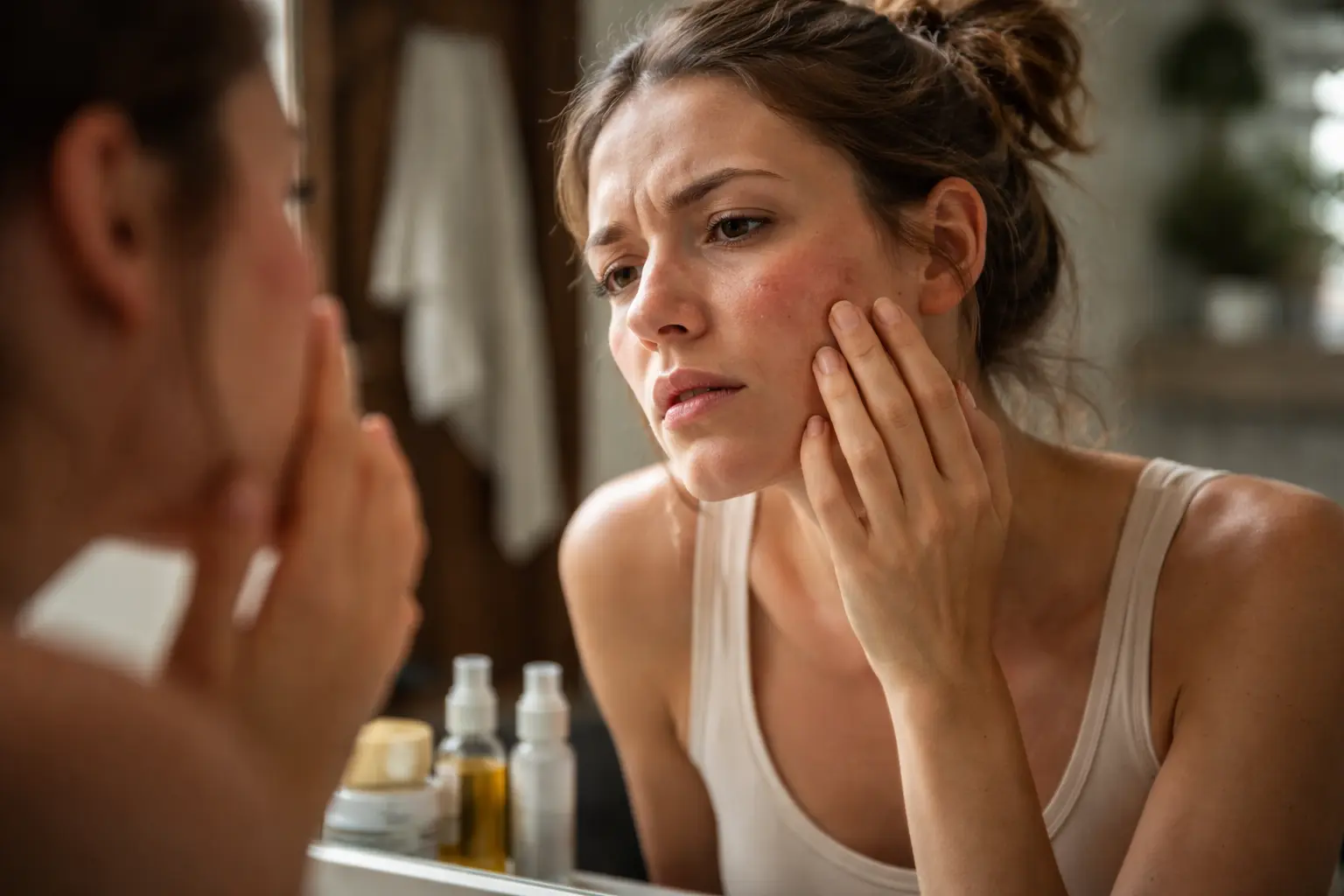
Your skin is burning, peeling, and angry after starting retinol, and you’re wondering if you made a huge mistake – but here’s the truth about retinol side effects that most people don’t tell you upfront.
What are retinol side effects?
Retinol, a potent derivative of vitamin A, has earned its reputation as a powerhouse anti-aging ingredient. When you apply it to your skin, retinol works by accelerating cell turnover and stimulating collagen production, which is why dermatologists recommend it so widely. However, this aggressive cellular activity comes with a trade-off. Your skin may respond with redness, irritation, peeling, and heightened sun sensitivity. Think of it like this: if your skin is used to a gentle routine, introducing retinol is like switching from walking to sprinting overnight. Some women experience these effects mildly within days, while others face more intense reactions that last weeks. The severity depends on your skin type, the retinol concentration you’re using, and how frequently you apply it. Understanding what’s happening beneath the surface helps you stay calm and committed to the process rather than abandoning retinol before your skin has time to adapt.
- Redness and irritation: Some individuals may experience redness, stinging, or irritation when first starting retinol, typically appearing within hours or days of application.
- Peeling and dryness: Retinol can lead to visible peeling and dryness as it accelerates cell turnover in the skin, sometimes lasting several weeks during the adjustment phase.
- Sun sensitivity: Retinol makes your skin more sensitive to the sun, increasing the risk of sunburn and cumulative UV damage if proper protection is not used daily.
Managing retinol side effects
The key to successfully using retinol without excessive side effects is patience and a strategic approach. Start with the lowest concentration available, typically 0.25% to 0.3%, and use it just twice per week initially. This gives your skin time to build tolerance gradually. After two to three weeks, if you’re experiencing only mild irritation, increase frequency to three times per week. Many women make the mistake of jumping to nightly use immediately, which overwhelms their skin barrier and intensifies side effects. Apply retinol to completely dry skin, wait five to ten minutes, then follow with a nourishing moisturizer to buffer irritation. During the day, sunscreen with at least SPF 30 is non-negotiable; retinol increases photosensitivity, meaning your skin burns more easily. Consider using retinol only during winter months if you live in a sunny climate or spend significant time outdoors. Some women find that alternating retinol nights with hydrating serums containing hyaluronic acid reduces irritation while maintaining benefits.
📘 Fix your day in under 2 minuteschoose where to begin:
When to seek professional help
While mild redness and peeling are normal during retinization, severe reactions warrant professional guidance. If you develop intense burning that doesn’t subside within thirty minutes of application, significant swelling, blistering, or signs of an allergic reaction like hives, stop using retinol immediately and contact your dermatologist. These symptoms suggest your skin barrier is compromised or you may have a sensitivity to retinol itself. A dermatologist can assess your skin, recommend alternative vitamin A derivatives like retinaldehyde or bakuchiol, which are gentler, or suggest prescription-strength treatments if retinol isn’t suitable for you. Don’t wait weeks hoping the reaction improves on its own. Professional intervention early prevents lasting damage and gets you back on track with an appropriate skincare plan. Some women discover through testing that their skin responds better to time-released retinol formulations or encapsulated versions that reduce irritation while maintaining efficacy.
Tips for a healthy skincare routine
Building a retinol-friendly routine requires strategic ingredient pairing and consistent habits. Incorporate hydrating powerhouses like hyaluronic acid, glycerin, and ceramides into your moisturizer to counteract the drying effects of retinol and support your skin barrier. On non-retinol nights, use gentle cleansers and rich moisturizers to allow your skin to recover. Avoid combining retinol with other potentially irritating ingredients like vitamin C, niacinamide, or acids during your adjustment period; once your skin is fully adapted, you can layer some of these cautiously. Many women find success with the sandwich method: apply moisturizer first, then retinol, then another layer of moisturizer to buffer irritation while maintaining efficacy. Keep your routine simple during retinization; this isn’t the time to introduce new products. Patience is essential here. Your skin needs four to twelve weeks to fully adapt to retinol, so resist the urge to judge results before that timeline. Track your progress with photos taken under consistent lighting to notice improvements in fine lines, texture, and firmness that may not be obvious day-to-day.
Final thoughts on retinol side effects
Retinol side effects are temporary obstacles on the path to clearer, firmer, more youthful skin, not reasons to give up. Countless women have navigated the initial discomfort and emerged with visibly transformed skin. The redness fades, the peeling stops, and your skin learns to thrive with retinol. What matters most is approaching retinol with realistic expectations and a commitment to the process. Start low, go slow, and protect your skin from the sun. Listen to your body’s signals and adjust your routine accordingly. If severe reactions occur, seek professional guidance rather than pushing through. Remember that retinol isn’t a one-size-fits-all solution; your dermatologist can help you find the right formulation and concentration for your unique skin. By taking a thoughtful, informed approach to retinol, you’re investing in long-term skin health and the confidence that comes with knowing you’re using evidence-based skincare.
Retinol side effects, including redness, peeling, and sun sensitivity, are manageable with a gradual introduction, proper sun protection, and strategic moisturizing. Start with low concentrations, increase frequency slowly, and consult a dermatologist if you experience severe reactions.
Can retinol cause permanent damage to the skin?
While retinol can cause irritation and sensitivity, it typically does not cause permanent damage when used correctly. Severe reactions are rare and usually indicate a need to lower concentration or frequency. Discontinue use if you experience severe reactions and consult a dermatologist to rule out allergies or barrier damage.
How can I reduce redness and peeling caused by retinol?
To reduce redness and peeling from retinol, start with a lower concentration like 0.25%, use it only two to three times weekly initially, apply it to dry skin followed by moisturizer, and use the sandwich method if irritation persists. Incorporate hydrating ingredients like hyaluronic acid and ceramides, avoid other irritating actives during adjustment, and always use SPF 30+ during the day.
Others also read:
Disclaimer: This article is for informational purposes only and is not a substitute for professional medical advice. Always consult a healthcare professional for personal guidance.
This guide has been prepared and reviewed by the GlobalHealthBeacon editorial team and reflects current medical research as of 2026. It provides structured, evidence-based information to support informed health decisions.
