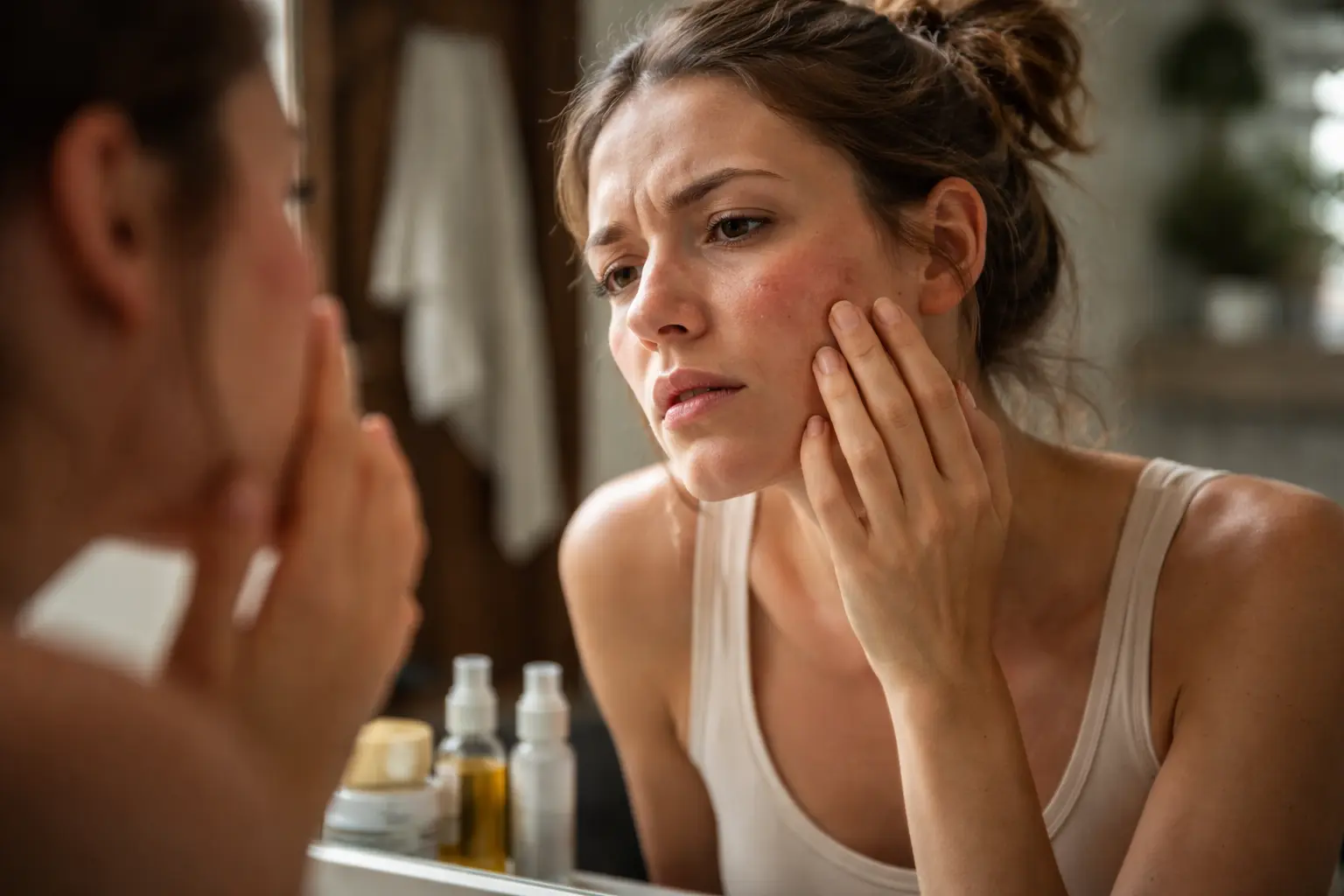
You’re staring at your reflection noticing fine lines that weren’t there last year, scrolling through skincare reviews at midnight wondering if retinol versus retinal usage is finally the answer to the aging skin keeping you up at night, and honestly, the confusion between these two vitamin A powerhouses is exhausting.
Understanding retinol and retinal
Both retinol and retinal are forms of vitamin A, but they work at different speeds in your skin. Think of retinol as the slower, gentler cousin that needs conversion steps before it becomes useful. Your skin must first convert retinol into retinal, then into retinoic acid, the actual active form that signals your cells to behave differently. Retinal, also called retinaldehyde, skips one of those conversion steps, sitting closer to retinoic acid on the vitamin A ladder. This proximity matters enormously. A woman in her late forties using retinal might see visible improvements in skin firmness within weeks, while the same woman using retinol might wait two to three months for comparable results. The biological difference is real and measurable, not just marketing hype. Your skin’s ability to convert these ingredients depends on enzyme availability, skin barrier health, and even your age, which is why the same product works differently for different women.
Retinol benefits
Retinol has earned its reputation as the accessible entry point to vitamin A therapy. If you’re new to retinoids or have historically sensitive skin, retinol offers a gentler introduction without the intensity that leaves some women red and flaking after one application. Picture a woman in her thirties with combination skin and mild acne scars. She starts with a low-concentration retinol serum twice weekly, gradually building tolerance over months. Her skin responds by increasing cell turnover, which means dead skin cells shed more efficiently, revealing fresher skin beneath. Retinol also stimulates collagen production, though more gradually than retinal, leading to improvements in skin texture and a more even tone over time. Many women report that retinol helps minimize pore appearance and reduces breakout frequency, making it particularly valuable for those juggling anti-aging concerns with active acne. The slower conversion process, while less dramatic, allows your skin to adapt without the irritation that sometimes accompanies stronger retinoids.
Retinal advantages
Retinal represents the next level of potency in vitamin A derivatives, and for women seeking faster, more visible transformation, it delivers. Because retinal converts directly to retinoic acid with minimal enzymatic steps, it reaches the active form your skin cells recognize almost immediately. Consider a woman in her fifties who has used retinol for years but plateaued in results. Switching to retinal-based products can reignite improvements in skin firmness, radiance, and fine line reduction. Users frequently report noticing changes within two to four weeks rather than months. The mechanism is straightforward: retinal binds more efficiently to cellular receptors, triggering stronger gene expression changes that accelerate collagen synthesis and increase skin cell turnover. This potency comes with a trade-off, though. Retinal typically causes more initial irritation, redness, and dryness than retinol, especially in the first two weeks. Women with compromised skin barriers or active inflammation may find retinal too aggressive without careful introduction and support from hydrating products.
- Consult with a dermatologist before incorporating retinal into your skincare routine to assess your skin barrier health and any underlying conditions.
- Start with a low concentration, using retinal just once or twice weekly, gradually increasing frequency as your skin demonstrates tolerance over four to six weeks.
- Use retinal products consistently in evening routines and always follow with a nourishing moisturizer, then apply broad-spectrum sunscreen during the day since retinal increases skin sensitivity to UV damage.
🔬 Science-backed benefits in 2 minuteschoose where to begin:
Potential side effects
Both retinol and retinal can trigger what dermatologists call retinization, a temporary adjustment period where your skin experiences irritation, dryness, flakiness, and sometimes mild redness. This is not an allergic reaction but rather your skin adapting to increased cell turnover and barrier changes. A woman starting retinal might experience these symptoms more intensely and quickly than someone beginning retinol. The key is distinguishing between normal adjustment and genuine adverse reaction. Normal retinization typically peaks around week two, then gradually improves as your skin acclimates. Genuine problems include persistent burning, severe redness that doesn’t improve, or signs of barrier damage like extreme tightness and sensitivity to all products. Minimizing side effects requires introducing these ingredients slowly, using them just once or twice weekly initially, and always pairing them with a quality moisturizer applied to damp skin to lock in hydration. Many women make the mistake of jumping to nightly use immediately or combining retinoids with other potentially irritating ingredients like vitamin C or acids, which compounds sensitivity.
Combining retinol and retinal
Some women strategically layer retinol and retinal to access benefits from both the gentler and more potent forms of vitamin A. This approach requires careful planning and honest assessment of your skin’s tolerance. Imagine a woman who uses retinol three nights weekly and wants to add retinal for faster results. Rather than using both on the same nights, she might alternate, using retinal twice weekly on non-retinol nights, giving her skin adequate recovery time between stronger treatments. This staggered approach allows her to benefit from retinal’s potency without overwhelming her skin barrier. The critical mistake many women make is using both simultaneously on the same evening, thinking more vitamin A equals faster results. In reality, this often triggers excessive irritation, barrier damage, and the very fine lines and sensitivity she was trying to prevent. Successful combination requires starting with one ingredient, establishing tolerance over six to eight weeks, then carefully introducing the second at minimal frequency. Monitoring your skin’s response becomes essential, watching for signs of over-treatment like persistent dryness, sensitivity to water temperature, or increased reactivity to other products.
Final thoughts on retinol versus retinal usage
Choosing between retinol and retinal ultimately depends on where you are in your skincare journey and what your skin can tolerate. If you’re new to vitamin A derivatives, have sensitive skin, or are rebuilding a compromised barrier, retinol offers a proven, gentler pathway to anti-aging benefits without the intensity that causes many women to abandon treatment. If you’ve used retinol successfully for months or years and want to accelerate results, or if you’re in your fifties or sixties seeking more dramatic improvements in firmness and texture, retinal might be your next logical step. Neither ingredient is inherently superior; they’re simply different tools for different situations and skin conditions. The real skill lies in understanding your skin’s current state, respecting its limits, and choosing the ingredient that challenges it appropriately without breaking it. Many women find that their ideal approach shifts over time, perhaps starting with retinol in their thirties, progressing to retinal in their forties, or alternating between them based on seasonal skin sensitivity and life stress.
Retinol and retinal are two distinct forms of vitamin A with different conversion speeds and potency levels in your skin. Retinol offers a gentler introduction suitable for beginners and sensitive skin types, while retinal delivers faster, more visible results for women seeking potent anti-aging benefits. Understanding how each ingredient works biologically helps you make informed decisions about which fits your current skin needs, tolerance level, and skincare goals.
Are retinol and retinal suitable for all skin types?
While retinol and retinal can benefit most skin types, individual responses vary significantly. Women with sensitive skin, active rosacea, eczema, or compromised barriers may experience excessive irritation. Those with darker skin tones sometimes face increased risk of post-inflammatory hyperpigmentation when starting retinoids. Consulting a dermatologist before incorporating these ingredients helps identify your specific tolerance level and the appropriate starting concentration.
Can I use retinol and retinal together?
Yes, but with careful planning and patience. Rather than using both on the same evening, alternate them on different nights, allowing your skin recovery time between stronger treatments. Start with one ingredient for six to eight weeks, establish tolerance, then introduce the second at minimal frequency. Monitor your skin closely for signs of over-treatment like persistent dryness or increased sensitivity. Many women find alternating retinol and retinal provides balanced benefits without the irritation of simultaneous use.
Others also read:
Disclaimer: This article is for informational purposes only and is not a substitute for professional medical advice. Always consult a healthcare professional for personal guidance.
This article has been prepared and reviewed by the GlobalHealthBeacon editorial team and is based on current medical research and published scientific literature available in 2026. It provides structured, evidence-based information to support informed health decisions.
