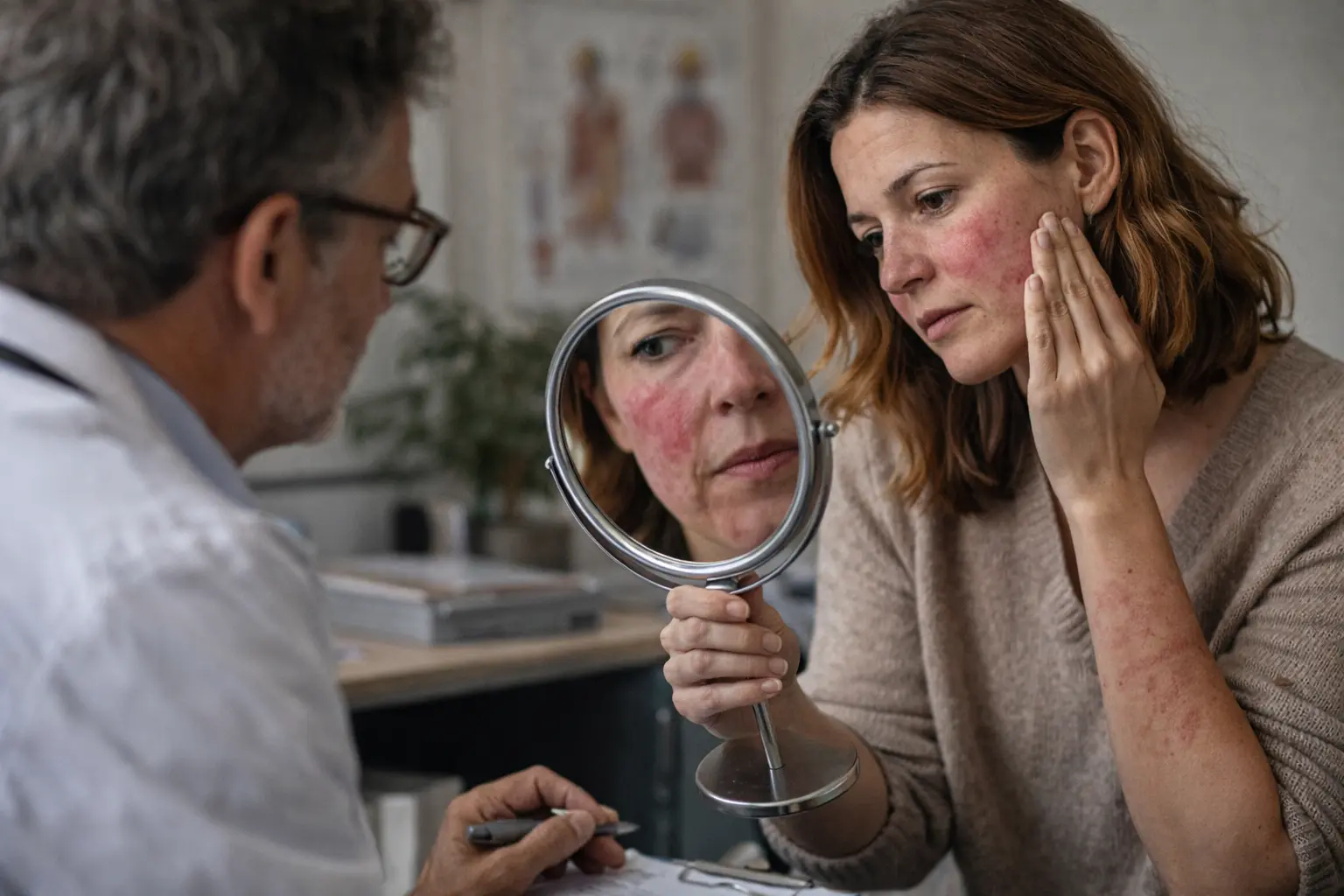
Your face feels like it’s on fire, your cheeks are permanently flushed, and those stubborn red bumps won’t budge no matter what you try – rosacea symptoms explained means finally understanding what’s actually happening to your skin instead of guessing.
Understanding rosacea symptoms
Rosacea typically starts as persistent facial redness that feels warm to the touch, often concentrated on the cheeks, nose, forehead, or chin. Many women describe it as a constant blush that doesn’t fade with concealer or foundation. Beyond the redness, you might notice visible blood vessels appearing like fine lines across your skin, small red or flesh-colored bumps that resemble acne but don’t respond to typical acne treatments, and sometimes a burning or stinging sensation. The condition progresses in stages, and without proper management, it can lead to thickened skin texture, enlarged pores, and in some cases, ocular rosacea affecting your eyes. Think of it like your skin’s sensitivity dial turned up to maximum – even mild irritants trigger a visible reaction. Common triggers include sun exposure, hot weather, spicy foods, alcohol, emotional stress, and certain skincare products. Understanding these early signs helps you catch rosacea before it advances to more uncomfortable stages.
- Facial flushing that can come and go
- Persistent redness on the cheeks, nose, forehead, or chin
- Pimples or bumps that resemble acne
Recognizing rosacea subtypes
Rosacea isn’t one-size-fits-all, and dermatologists recognize four distinct subtypes, each presenting differently. Erythematotelangiectatic rosacea shows up as persistent redness with visible blood vessels, often the earliest stage women notice. Papulopustular rosacea adds acne-like bumps and pustules to the redness, sometimes making women mistake it for hormonal breakouts. Phymatous rosacea involves thickening and enlargement of facial features, particularly the nose, which develops a bumpy texture – this subtype is less common in women but still occurs. Ocular rosacea affects the eyes, causing dryness, irritation, and sometimes vision issues. A woman might experience one subtype or a combination of symptoms. For example, someone could have the persistent redness of subtype one while also experiencing the bumps of subtype two. Proper diagnosis by a dermatologist is essential because each subtype responds differently to treatment. Getting the right diagnosis means avoiding wasted time on ineffective treatments and starting a plan that actually addresses your specific presentation.
📘 Fix your day in under 2 minuteschoose where to begin:
Common triggers to avoid
Identifying your personal rosacea triggers is like detective work for your skin. While triggers vary widely between individuals, certain culprits appear repeatedly. Sun exposure ranks high on the list – UV rays cause immediate flushing and long-term skin damage that worsens rosacea. Temperature extremes matter too, whether it’s hot showers, saunas, or cold wind. Spicy foods and hot beverages trigger facial blood vessel dilation, creating visible flushing within minutes. Alcohol, particularly red wine and beer, is notorious for causing rosacea flare-ups. Emotional stress and anxiety activate your nervous system, which translates to facial redness. Even some skincare products containing alcohol, fragrance, or harsh acids can irritate sensitive rosacea-prone skin. The key strategy is keeping a detailed trigger diary for two to four weeks. Write down what you ate, drank, your stress level, weather conditions, and any skincare products used, then note when flare-ups occurred. Patterns emerge quickly, revealing your unique triggers. Once identified, you can strategically avoid them or prepare preventive measures like applying sunscreen before sun exposure or using a cooling facial mist before stressful situations.
Skincare and lifestyle tips
Your skincare routine becomes your rosacea management foundation. Start by simplifying – use a gentle, fragrance-free cleanser with lukewarm water, never hot. Pat skin dry gently rather than rubbing. Look for products specifically labeled hypoallergenic and non-comedogenic, avoiding anything with alcohol, fragrance, or strong acids like glycolic or salicylic acid. A lightweight, soothing moisturizer with niacinamide or centella asiatica helps calm inflammation. Broad-spectrum sunscreen with SPF 30 or higher is non-negotiable daily, even on cloudy days. Beyond products, lifestyle adjustments matter significantly. Manage stress through yoga, meditation, or deep breathing exercises – even ten minutes daily reduces cortisol levels that trigger flare-ups. Protect your skin from wind and cold by wearing scarves in winter. Avoid extreme temperature changes, like jumping from a cold environment into a hot one. Stay hydrated and limit alcohol consumption. Some women find that regular exercise helps, though intense workouts causing excessive sweating can trigger symptoms, so timing and cooling strategies matter. These combined approaches create an environment where your skin can heal and inflammation decreases noticeably.
Seeking professional help
Self-diagnosis and over-the-counter treatments often fall short with rosacea because the condition requires professional assessment and tailored treatment plans. A dermatologist can confirm rosacea diagnosis through examination and rule out similar conditions like lupus or seborrheic dermatitis. Once confirmed, treatment options expand significantly. Topical treatments like metronidazole, azelaic acid, or sulfur-based products reduce redness and bumps. Oral medications including low-dose doxycycline or other antibiotics address inflammation without fighting infection. Laser and light-based therapies target visible blood vessels and persistent redness, often providing dramatic improvements. Some women benefit from combination approaches using multiple treatments simultaneously. Early intervention is crucial because untreated rosacea tends to worsen progressively, and advanced stages become harder to manage. Think of dermatology consultation as investing in your skin’s future – catching rosacea early and starting appropriate treatment prevents years of frustration and visible symptoms. Many insurance plans cover dermatology visits, and online consultations now make professional guidance more accessible.
Rosacea symptoms include facial redness, visible blood vessels, and bumps that require proper identification and management. Recognizing your subtype, identifying personal triggers, and establishing a gentle skincare routine form the foundation of effective symptom control. Professional dermatological guidance ensures you receive appropriate treatment and prevents progression to more severe stages.
Is rosacea curable?
While there is no cure for rosacea, symptoms can be managed effectively with the right treatments and lifestyle adjustments. Early intervention is key to prevent worsening of the condition.
Can rosacea go away on its own?
Rosacea is a chronic condition that typically requires ongoing management. It is essential to work with a dermatologist to develop a personalized treatment plan that addresses your specific symptoms.
Others also read:
Disclaimer: This article is for informational purposes only and is not a substitute for professional medical advice. Always consult a healthcare professional for personal guidance.
This guide has been prepared and reviewed by the GlobalHealthBeacon editorial team and reflects current medical research as of 2026. It provides structured, evidence-based information to support informed health decisions.
