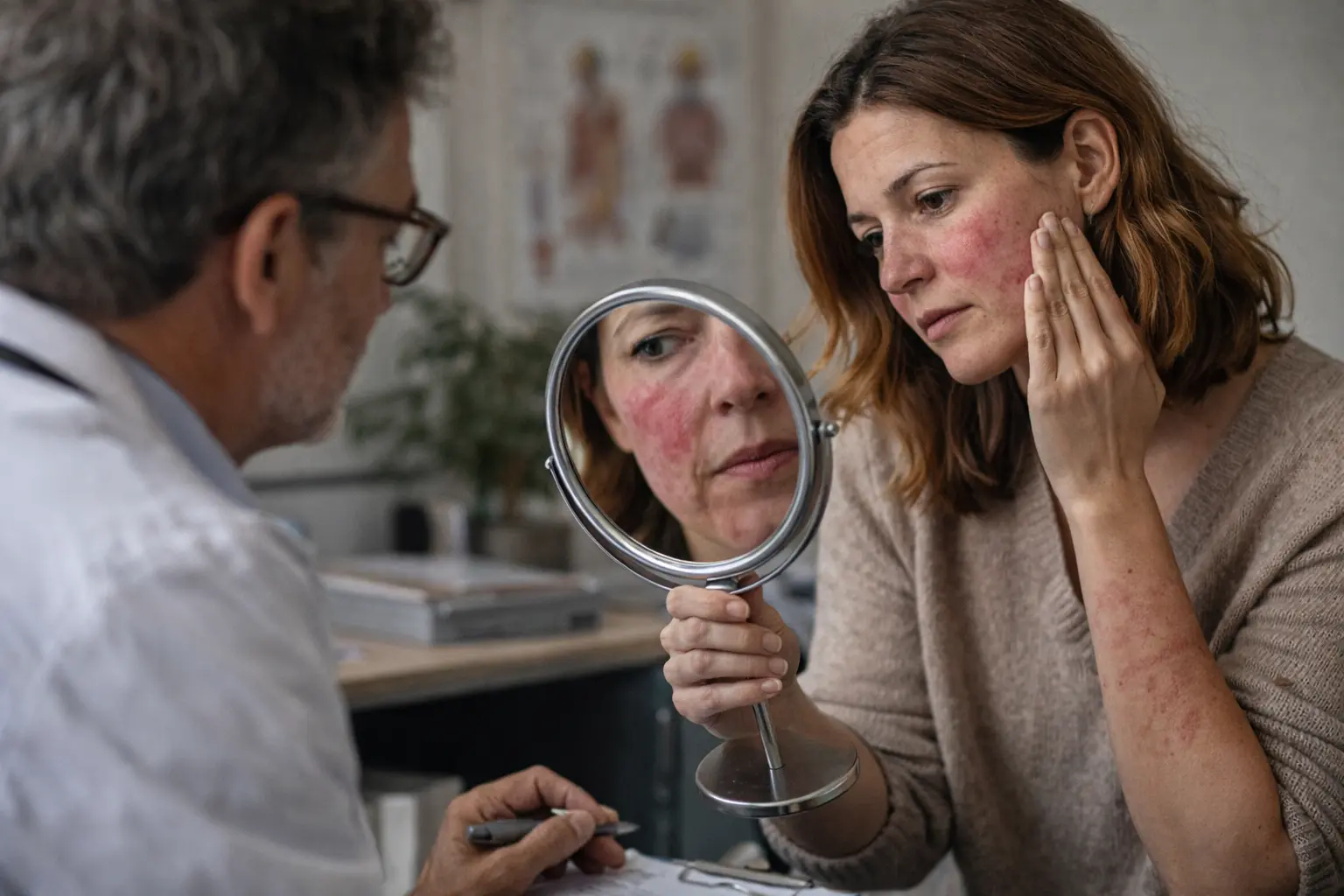
Your face flushes bright red at the worst possible moments, tiny blood vessels become visible, and you’re left wondering why your skin won’t cooperate with you – rosacea symptoms explained means understanding that this isn’t just about looking flushed, it’s a real vascular and inflammatory condition happening beneath your skin.
Vascular dysfunction: the culprit behind rosacea symptoms
At the core of rosacea lies a fundamental problem with how blood vessels in your face behave. Unlike healthy skin where blood vessels constrict and dilate in response to temperature changes in a controlled manner, rosacea-affected skin experiences erratic vascular responses. These blood vessels overreact to stimuli, causing them to dilate excessively and remain dilated longer than normal. Imagine your facial blood vessels as a thermostat that’s constantly broken, unable to regulate properly. This persistent dilation creates the characteristic persistent redness and visible blood vessel patterns that define rosacea. The flushing episodes that accompany rosacea occur when these vessels suddenly dilate in response to triggers like heat, spicy food, or emotional stress. Over time, repeated episodes can lead to permanent changes in the skin’s appearance, with some individuals developing a thickened, bumpy texture. Understanding this vascular instability is crucial because it explains why topical treatments alone often fall short – the problem runs deeper than surface-level inflammation.
Inflammatory pathways: fueling rosacea symptoms
Beyond the vascular dysfunction, rosacea involves a complex inflammatory cascade that amplifies skin irritation. When triggered, your immune system releases inflammatory mediators like cytokines and histamine, which intensify redness, cause swelling, and can lead to pustule formation. Think of it as your immune system overreacting to perceived threats on your skin. In rosacea, this immune response becomes dysregulated, meaning it activates more intensely and persists longer than necessary. The inflammatory process creates a vicious cycle: initial irritation triggers immune activation, which causes visible symptoms like redness and swelling, which then further irritates the skin and perpetuates inflammation. Research has shown that people with rosacea have elevated levels of certain inflammatory markers in their skin compared to those without the condition. This inflammatory component explains why some rosacea sufferers experience not just redness but also burning sensations, stinging, and the development of small pustules. Managing these inflammatory pathways through understanding triggers becomes essential for breaking this cycle and reducing symptom severity.
Triggers and provocateurs of rosacea flare-ups
Rosacea triggers vary significantly from person to person, but certain common provocateurs consistently appear across the rosacea community. Hot beverages work as triggers because they directly heat the facial skin, causing blood vessels to dilate. Spicy foods trigger a similar response through capsaicin compounds that activate heat receptors in your mouth and face. Alcohol, particularly red wine and beer, contains histamine and other compounds that can provoke both vascular and inflammatory responses. Beyond these dietary factors, environmental triggers like extreme cold, wind, and intense sun exposure can strip the skin barrier and provoke flare-ups. Emotional stress activates your nervous system, releasing hormones that dilate blood vessels and increase inflammation. Intense exercise generates heat and increases blood flow to the face. Certain skincare products with harsh ingredients, high alcohol content, or strong fragrances can irritate sensitive rosacea-prone skin. The key insight is that triggers are cumulative – you might tolerate one trigger alone but experience a flare-up when multiple triggers occur simultaneously. Keeping a detailed trigger diary helps identify your personal pattern.
- Avoid hot beverages, spicy foods, and alcohol.
- Manage stress with relaxation techniques.
- Use gentle skincare products.
🔬 Science-backed benefits in 2 minuteschoose where to begin:
Environmental factors: impact on rosacea symptoms
Your external environment plays a surprisingly powerful role in rosacea severity. Temperature extremes are particularly problematic because they force your facial blood vessels to work harder. Cold weather causes initial vasoconstriction followed by reactive vasodilation as you warm up, triggering flushing episodes. Hot weather and indoor heating systems create sustained warmth that keeps blood vessels dilated. Sun exposure damages the skin barrier through UV radiation, increasing inflammation and triggering flare-ups even in people who don’t normally consider themselves sun-sensitive. Wind strips away protective skin oils and causes irritation that can provoke rosacea symptoms. Indoor air conditioning combined with heating creates rapid temperature fluctuations that confuse your vascular system. Humidity levels matter too – very dry air dehydrates the skin barrier, while excessive humidity can trap heat against the skin. Pollution particles can irritate sensitive rosacea skin and trigger inflammatory responses. Understanding these environmental factors means you can take protective measures like using broad-spectrum sunscreen year-round, protecting your face from wind with scarves, maintaining consistent indoor temperatures, and using humidifiers during dry seasons. Environmental control is often one of the most effective yet underutilized strategies for managing rosacea.
Microbial influences: Candida and Demodex mites in rosacea
Emerging research has identified potential microbial contributors to rosacea development and persistence. Demodex mites, microscopic organisms that naturally live on human skin, appear in significantly higher numbers on rosacea-affected skin compared to healthy skin. These mites may trigger immune responses through their waste products and bacterial associations, perpetuating inflammation. Candida yeast overgrowth has also been implicated in some rosacea cases, particularly in individuals with compromised skin barriers or dysbiotic skin microbiomes. The relationship between these microorganisms and rosacea isn’t straightforward causation but rather a complex interaction where microbial overgrowth exacerbates existing vascular and inflammatory dysfunction. Some dermatologists now prescribe low-dose antibiotics like doxycycline not primarily for their antibiotic properties but for their anti-inflammatory and anti-microbial effects on Demodex populations. Maintaining a healthy skin microbiome through gentle cleansing, avoiding over-washing which disrupts beneficial bacteria, and using appropriate skincare products can help prevent microbial overgrowth. This microbial angle represents an important shift in rosacea understanding, moving beyond viewing it as purely vascular or inflammatory to recognizing it as a multifactorial condition involving skin ecosystem balance.
Genetic predisposition: the role in rosacea development
If you have family members with rosacea, your risk of developing the condition is substantially higher, pointing to a significant genetic component. Research suggests that rosacea runs in families, with studies indicating that approximately 30-40 percent of rosacea patients have a positive family history. Genetic factors likely influence how your vascular system responds to stimuli, how reactive your immune system becomes, and how resilient your skin barrier is. Certain genetic variations may predispose you to having more sensitive blood vessels that overreact to temperature changes or stress hormones. Other genetic factors might influence your skin’s ability to maintain a healthy microbiome or repair damage from environmental stressors. Understanding your genetic predisposition doesn’t mean you’re destined to develop rosacea, but rather that you should be more vigilant about trigger avoidance and preventive skincare. If you have a family history of rosacea, starting early with sun protection, gentle skincare routines, and stress management can potentially delay onset or reduce severity. Genetic testing isn’t yet routine for rosacea, but knowing your family history gives you valuable information for personalizing your approach to skin health and early symptom management.
Rosacea emerges from the intersection of vascular dysfunction, inflammatory pathways, environmental triggers, microbial factors, and genetic predisposition. Understanding these interconnected mechanisms helps explain why rosacea manifests differently in different people and why a one-size-fits-all treatment approach rarely works. Your personal rosacea profile depends on which factors dominate your particular case, making individualized trigger identification and management essential for effective symptom control.
Are there specific foods that can trigger rosacea flare-ups?
Yes, common food triggers include hot beverages like coffee and tea, spicy foods containing capsaicin, and alcohol particularly red wine and beer. These trigger flare-ups through different mechanisms: hot beverages directly heat facial skin causing vasodilation, spicy foods activate heat receptors, and alcohol contains histamine and other inflammatory compounds. Individual tolerance varies significantly, so tracking your personal responses helps identify which foods affect you most.
Can stress worsen rosacea symptoms?
Absolutely. Stress activates your nervous system and releases hormones like cortisol and adrenaline that trigger blood vessel dilation and increase inflammatory mediator release. This creates visible flushing and can perpetuate the inflammatory cycle. Stress management through relaxation techniques, exercise, meditation, or therapy can meaningfully reduce rosacea flare-up frequency and severity by calming both your nervous system and inflammatory responses.
Others also read:
Disclaimer: This article is for informational purposes only and is not a substitute for professional medical advice. Always consult a healthcare professional for personal guidance.
This article has been prepared and reviewed by the GlobalHealthBeacon editorial team and is based on current medical research and published scientific literature available in 2026. It provides structured, evidence-based information to support informed health decisions.
