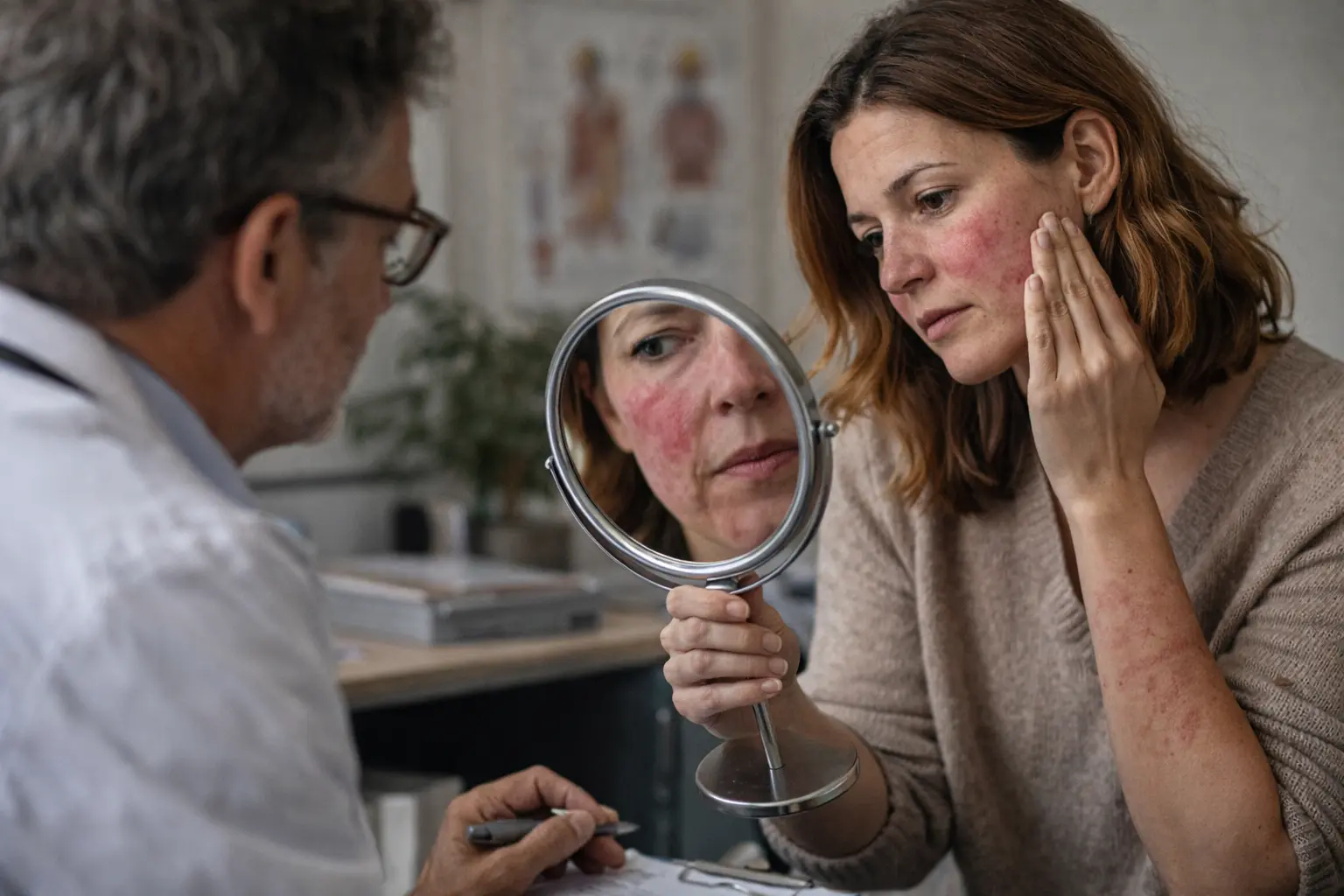
You wake up, look in the mirror, and your face is flushed red again, burning like you’ve been out in the sun for hours when you haven’t, and rosacea symptoms explained finally make sense when you realize this isn’t just sensitive skin or a bad reaction to something you ate, it’s a real condition affecting millions of women just like you.
Rosacea subtypes: recognizing the differences
Rosacea presents itself in four distinct subtypes, each with its own personality and behavioral patterns. The first subtype, erythematotelangiectatic rosacea, shows up as persistent redness and visible blood vessels, often making women feel like their skin is constantly blushing even when they’re calm. Papulopustular rosacea adds bumps and pustules to the mix, sometimes mimicking acne so closely that women spend years treating it incorrectly. Phymatous rosacea thickens the skin, particularly around the nose, creating texture changes that can feel deeply frustrating. Then there’s ocular rosacea, which affects the eyes and eyelids, causing dryness, irritation, and a gritty sensation that many women don’t initially connect to their skin condition. Understanding which subtype you have matters tremendously because treatment approaches differ significantly. A woman with erythematotelangiectatic rosacea might benefit most from laser therapy, while someone with papulopustular rosacea may respond better to oral medications. Getting an accurate diagnosis from a dermatologist isn’t just helpful, it’s essential for avoiding months or years of ineffective treatments.
Triggers and lifestyle factors
Rosacea triggers are deeply personal, which is both the frustrating and empowering part of managing this condition. For some women, sunlight is the primary culprit, making summer outings feel stressful without proper protection. Others find that stress and emotional intensity cause immediate flare-ups, creating a difficult cycle where anxiety about a flare-up actually triggers one. Temperature extremes matter too, whether it’s hot yoga classes, saunas, or even stepping from an air-conditioned building into summer heat. Spicy foods and alcohol are common triggers, though the specific foods vary from person to person. One woman might react to red wine but tolerate white wine, while another finds that all alcohol causes problems. Certain skincare products, particularly those with alcohol, fragrance, or strong actives like retinoids, can aggravate rosacea significantly. The key strategy is becoming a detective with your own skin. Keep a simple log of what you eat, your stress levels, weather conditions, and skincare products used on days when flare-ups occur. Over time, patterns emerge. Many women discover they can prevent 60-70% of their flare-ups simply by identifying and avoiding their personal triggers, which is a powerful form of control over a condition that often feels unpredictable.
Professional treatment options
Working with a dermatologist transforms rosacea management from guesswork into a strategic plan tailored specifically to your skin and lifestyle. Treatment options span a wide range, from topical medications like metronidazole and azelaic acid that reduce inflammation and redness, to oral antibiotics such as doxycycline which work at lower doses for their anti-inflammatory properties rather than their antibiotic effects. Laser and light-based therapies have shown remarkable results for many women, particularly those with persistent redness and visible blood vessels. IPL (intense pulsed light) and laser treatments can significantly reduce flushing and improve skin texture over a series of sessions. Some women find that a combination approach works best, perhaps using a topical medication daily while adding oral medication during flare-up seasons, then incorporating laser therapy for long-term improvement. Your dermatologist will consider your specific subtype, the severity of your symptoms, your skin tone, and your lifestyle when recommending treatments. It’s also important to discuss realistic timelines, as most treatments require consistency over weeks or months before noticeable improvement appears. The goal isn’t necessarily to cure rosacea, but to achieve a level of control where the condition doesn’t dictate your daily choices or emotional wellbeing.
- Schedule a consultation with a dermatologist for an accurate diagnosis and to rule out other skin conditions that might mimic rosacea symptoms.
- Discuss your personal triggers, lifestyle patterns, and treatment goals with your healthcare provider to develop a plan that fits your life.
- Follow the prescribed treatment plan consistently, keeping notes on how your skin responds over the first 4-8 weeks.
🔬 Science-backed benefits in 2 minuteschoose where to begin:
Skincare tips for rosacea
Your skincare routine becomes a form of self-care when you have rosacea, and the right approach can make a tangible difference in how your skin feels and looks. Start with the gentlest possible cleansing, using lukewarm water and a mild, fragrance-free cleanser applied with your fingertips rather than a washcloth. Pat your skin dry gently, never rubbing, as friction itself can trigger redness. After cleansing, apply any prescribed topical medications while your skin is still slightly damp, as this helps with absorption. Follow with a fragrance-free, hypoallergenic moisturizer designed for sensitive skin. Many women with rosacea benefit from moisturizers containing ceramides or centella asiatica, which support the skin barrier. Sun protection is non-negotiable, even on cloudy days, since UV exposure is a major trigger for most rosacea sufferers. Use a broad-spectrum SPF 30 or higher daily, and reapply every two hours if you’re outdoors. Avoid products with common irritants like alcohol, menthol, eucalyptus, fragrance, and strong acids. Some women find that minimalist routines work best, using just a cleanser, moisturizer, and sunscreen rather than layering multiple products. Others benefit from adding a gentle serum with calming ingredients. The real key is finding what your individual skin tolerates and sticking with it consistently.
Emotional impact and coping strategies
Living with a visible skin condition like rosacea carries an emotional weight that’s often underestimated. The constant flushing can feel embarrassing in professional settings, social situations, or intimate moments. Many women report feeling self-conscious about their appearance, avoiding social events or using heavy makeup to cover redness, which ironically can trigger more flare-ups. Some experience anxiety about their appearance that affects their confidence and quality of life. This emotional toll is real and valid, and acknowledging it is the first step toward managing it. Connecting with others who understand the experience, whether through online support communities or in-person support groups, can be incredibly validating. Hearing from other women who’ve navigated the same frustrations, discovered their triggers, and found effective treatments provides both practical insights and emotional reassurance. Some women find that working with a therapist or counselor helps them process the emotional impact and develop coping strategies for anxiety or low self-esteem related to their appearance. Mindfulness practices, stress reduction techniques, and gentle exercise can help manage both stress-related flare-ups and the emotional effects of living with a chronic condition. Remember that rosacea is a medical condition, not a reflection of your worth or beauty.
Research and future treatment possibilities
The scientific understanding of rosacea has evolved significantly in recent years, with researchers working to uncover the underlying mechanisms that cause this condition. Current research explores the role of the immune system, blood vessel dysfunction, and the skin microbiome in rosacea development. Scientists are investigating why certain people develop rosacea while others don’t, and why triggers affect individuals so differently. This research is leading to the development of more targeted therapies that address root causes rather than just managing symptoms. Newer treatments in clinical trials include oral medications that specifically target inflammatory pathways involved in rosacea, potentially offering more effective options with fewer side effects than current treatments. Advances in laser and light-based therapies continue to improve results and reduce treatment time. Some research focuses on topical treatments that can better penetrate the skin barrier and provide longer-lasting relief. Staying informed about these developments helps you have more informed conversations with your dermatologist about emerging options that might benefit your specific situation. Many dermatology clinics participate in clinical trials, which can provide access to cutting-edge treatments while contributing to the scientific knowledge that helps future rosacea sufferers.
Rosacea is a complex skin condition with four distinct subtypes, each requiring individualized understanding and management. Identifying personal triggers, working with a dermatologist to develop a tailored treatment plan, maintaining a gentle skincare routine, and addressing the emotional aspects of living with a visible condition are all essential components of effective management. Ongoing research continues to expand treatment options and deepen our understanding of this condition.
Can rosacea be cured?
Rosacea is a chronic condition without a definitive cure currently available. However, this doesn’t mean you’re stuck with severe symptoms indefinitely. With proper management strategies, consistent treatment, trigger identification, and lifestyle modifications, most women can achieve significant symptom control and maintain clear, comfortable skin for extended periods. Many find that their rosacea becomes increasingly manageable over time as they learn their patterns.
Are there dietary changes that can help with rosacea?
While individual triggers vary widely, common dietary culprits include spicy foods, hot beverages, alcohol (particularly red wine), and foods high in histamine. Rather than following a restrictive diet, the most effective approach is tracking your personal responses. Keep a food diary alongside your rosacea symptoms to identify which foods specifically trigger your flare-ups. Some women find that eliminating just one or two trigger foods makes a noticeable difference, while others need more extensive dietary adjustments.
Others also read:
Disclaimer: This article is for informational purposes only and is not a substitute for professional medical advice. Always consult a healthcare professional for personal guidance.
This article has been prepared and reviewed by the GlobalHealthBeacon editorial team and is based on current medical research and published scientific literature available in 2026. It provides structured, evidence-based information to support informed health decisions.
