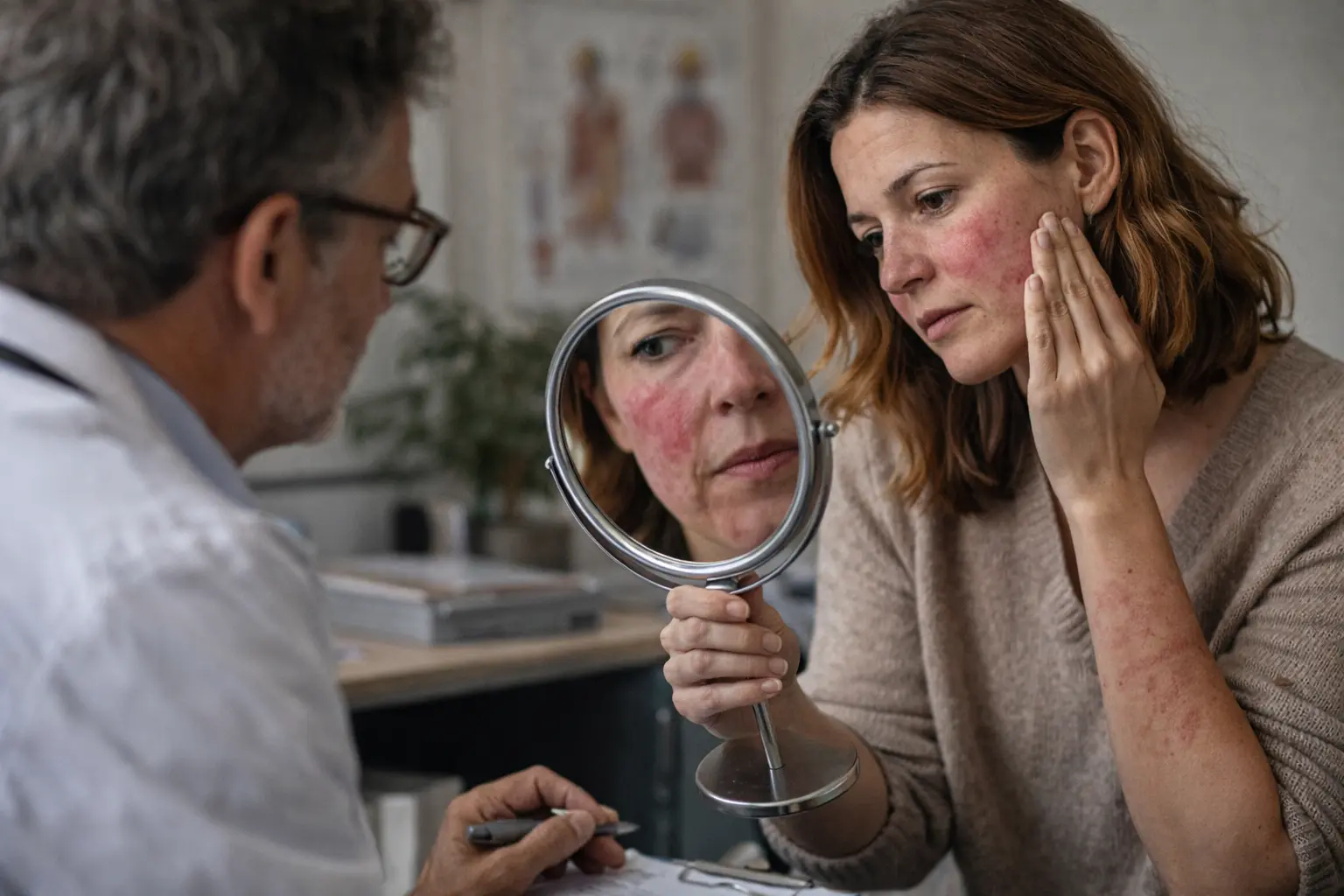
Your face flushes at the slightest provocation, red patches refuse to fade, and tiny bumps keep appearing no matter what you try, but rosacea symptoms explained through science finally give you real answers about what’s actually happening beneath your skin.
Understanding rosacea symptoms
Rosacea is a chronic skin condition that primarily affects the face, and understanding what’s happening can feel like solving a puzzle with missing pieces. The hallmark signs include persistent facial redness, small bumps that resemble acne, and visible blood vessels that seem to map out their own territory across your cheeks and nose. What makes rosacea tricky is that it’s highly individualized. One person might experience intense eye irritation alongside facial symptoms, while another deals mainly with flushing episodes triggered by seemingly random factors. Common triggers include sunlight exposure, which can cause immediate flushing, stress and anxiety that amplify inflammation, spicy foods and hot beverages that dilate blood vessels, and alcohol consumption that intensifies redness. Some people notice their symptoms worsen during temperature changes or after intense exercise. The condition typically develops in stages, starting with occasional flushing that becomes more frequent over time, progressing to persistent redness with visible blood vessels, and potentially advancing to thickened skin and bumpy texture if left unmanaged.
The role of inflammation in rosacea
At the heart of rosacea lies a cascade of inflammatory processes that your immune system initiates, often in response to triggers that wouldn’t bother most people. When inflammation kicks in, blood vessels in your face dilate excessively, flooding the area with blood and creating that characteristic redness. This isn’t just surface-level flushing either. The inflammation triggers the release of chemical messengers like cytokines and neuropeptides that activate immune cells, leading to the formation of papules and pustules that can feel tender or itchy. Think of it like your immune system overreacting to a perceived threat, sending reinforcements that create collateral damage in the form of skin irritation. Research shows that people with rosacea have heightened vascular reactivity, meaning their blood vessels respond more dramatically to stimuli than in people without the condition. Additionally, the inflammatory response can damage the skin barrier, making it more permeable and prone to further irritation. This creates a frustrating cycle where inflammation begets more inflammation, and each flare-up can leave your skin more sensitive than before.
Genetic factors and skin barrier dysfunction
Your genes play a significant role in determining whether you’ll develop rosacea, which explains why the condition often runs in families and why some people seem predisposed while others never experience it. If your parents or grandparents dealt with rosacea, your risk increases substantially. Beyond genetics, scientists have discovered that people with rosacea often have abnormalities in their skin barrier function, the protective layer that keeps irritants out and moisture in. When this barrier is compromised, microorganisms can more easily penetrate the skin and trigger inflammatory responses. The skin barrier dysfunction also means your skin loses water more rapidly, becoming drier and more reactive. Imagine your skin’s protective wall having cracks in it, allowing invaders through while your immune system stands guard, ready to overreact at any sign of intrusion. This combination of genetic susceptibility and barrier weakness creates the perfect storm for rosacea development. Managing these factors involves establishing a gentle skincare routine using mild cleansers and moisturizers that support barrier repair, identifying and avoiding personal triggers like sunlight exposure and spicy foods, and consulting a dermatologist for personalized treatment options tailored to your specific situation.
- Establish a gentle skincare routine using mild cleansers and moisturizers.
- Identify and avoid triggers like sunlight exposure, spicy foods, and alcohol.
- Consult a dermatologist for personalized treatment options and management strategies.
🔬 Science-backed benefits in 2 minuteschoose where to begin:
Microbial role in rosacea pathogenesis
For years, scientists puzzled over why certain microorganisms seemed connected to rosacea, and research has revealed a complex relationship between your skin’s microbial community and inflammation. Demodex mites, tiny organisms that live on everyone’s skin, appear in higher numbers on people with rosacea, and their presence may trigger immune responses that amplify inflammation. These mites feed on skin oils and dead skin cells, but in rosacea-prone individuals, the immune system seems to overreact to their presence or their byproducts. Specific bacteria, particularly Bacillus oleronius and certain strains of Staphylococcus, have also been implicated in rosacea development. What’s fascinating is that these microbes don’t cause rosacea directly like a bacterial infection would. Instead, they act as triggers that set off a disproportionate immune response in genetically susceptible people. The immune system produces inflammatory chemicals in response to these microbes, leading to the characteristic redness, bumps, and visible blood vessels. This understanding has opened new treatment avenues, with some dermatologists using antimicrobial approaches alongside traditional therapies to help manage the condition more effectively.
Treatment approaches for rosacea
Managing rosacea effectively requires a multi-pronged approach that combines medical treatments with lifestyle modifications tailored to your specific triggers and severity. Topical medications like metronidazole and azelaic acid work by reducing inflammation and controlling the microbial factors that contribute to flare-ups. Oral antibiotics, particularly low-dose doxycycline, function not just as antimicrobials but as anti-inflammatory agents that calm the immune response driving rosacea. Laser and light-based therapies target the dilated blood vessels directly, reducing redness and visible vascular changes with impressive results for many people. Beyond medications, lifestyle modifications form the foundation of long-term management. This means identifying your personal triggers through careful observation, whether that’s certain foods, temperature extremes, or stress, and developing strategies to avoid or minimize exposure to them. Sun protection becomes non-negotiable, as UV exposure consistently worsens rosacea in most people. Seeking professional guidance from a dermatologist is essential because what works brilliantly for one person might not help another, and your treatment plan should evolve as your condition changes.
Scientific insights into rosacea mechanisms
The scientific understanding of rosacea has evolved dramatically over the past decade, revealing it as a multifactorial condition influenced by interconnected genetic, inflammatory, and microbial factors rather than a simple skin disease. Researchers now recognize that rosacea involves dysregulation of the innate immune system, where pattern recognition receptors on skin cells overreact to normal stimuli. Advanced imaging studies have shown structural abnormalities in blood vessels and nerve endings in rosacea-prone skin, explaining the heightened sensitivity and flushing episodes. Genetic studies have identified specific variants associated with increased rosacea risk, particularly in genes related to immune function and vascular regulation. This growing body of knowledge allows healthcare providers to move beyond one-size-fits-all treatment approaches toward personalized medicine. By understanding which mechanisms are most active in your particular case, whether that’s primarily vascular dysfunction, microbial triggers, or immune dysregulation, dermatologists can select treatments that directly address your underlying drivers. This precision approach represents the future of rosacea management, where treatment becomes increasingly tailored to individual biology rather than just symptom suppression.
Rosacea emerges as a complex skin condition shaped by genetic predisposition, inflammatory cascades, and microbial factors working in concert. Effective management requires understanding your personal triggers, maintaining a gentle skincare routine, and working with healthcare providers to develop a treatment strategy that addresses your specific mechanisms. Scientific research continues illuminating the pathways driving rosacea, enabling more targeted and personalized approaches to control symptoms and improve quality of life.
Are there specific foods or beverages that worsen rosacea symptoms?
Certain foods and drinks like spicy foods, alcohol, and hot beverages can trigger rosacea flares in some individuals. It’s important to identify personal triggers and avoid them to manage symptoms effectively.
Can rosacea be cured permanently?
While rosacea cannot be cured permanently, symptoms can be managed effectively with appropriate treatments and lifestyle modifications. Consistent skincare routines and minimizing triggers can help control the condition.
Others also read:
Disclaimer: This article is for informational purposes only and is not a substitute for professional medical advice. Always consult a healthcare professional for personal guidance.
This article has been prepared and reviewed by the GlobalHealthBeacon editorial team and is based on current medical research and published scientific literature available in 2026. It provides structured, evidence-based information to support informed health decisions.
