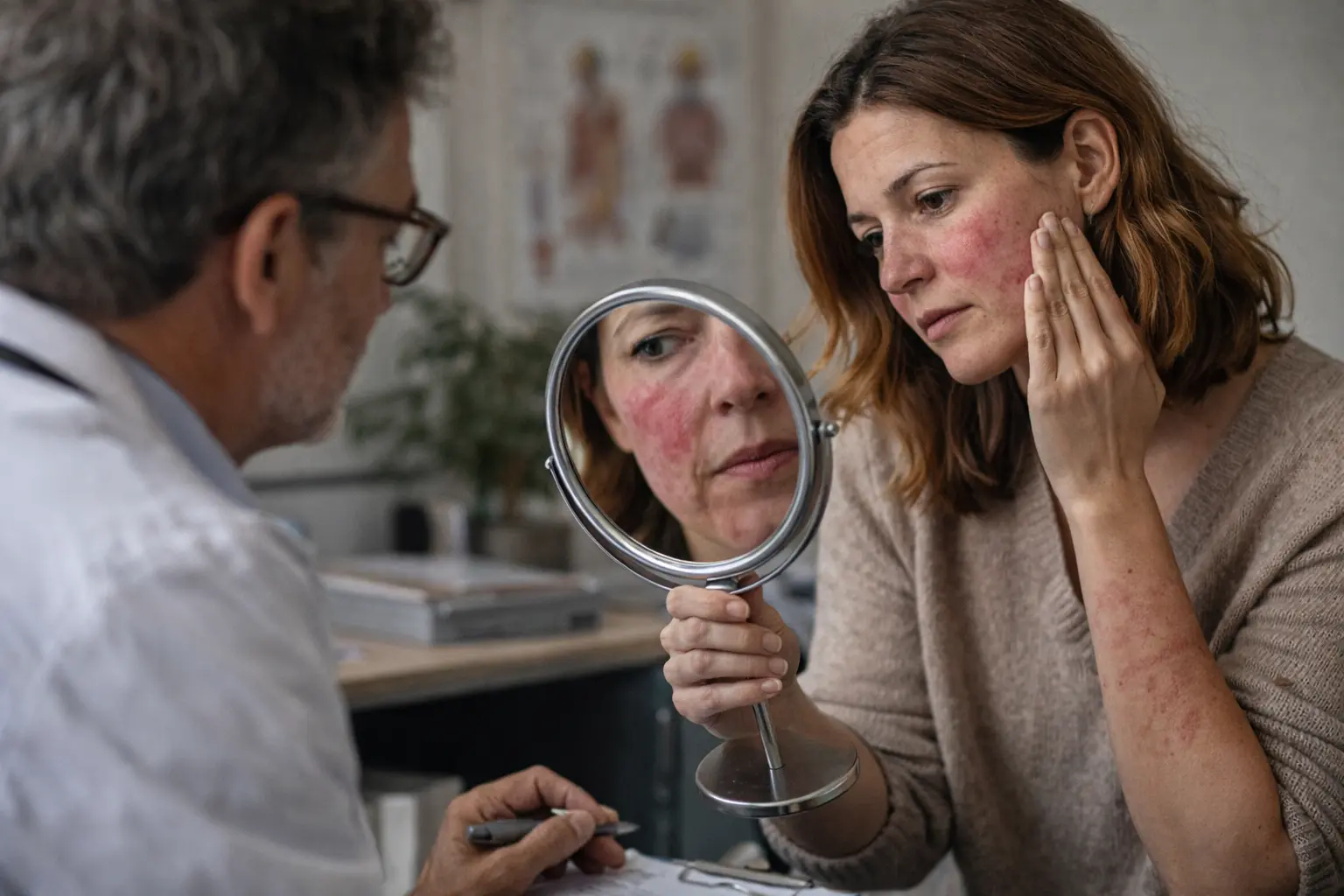
Your face flushes red at the worst possible moments, tiny bumps appear overnight, and that persistent burning sensation won’t quit—welcome to rosacea symptoms explained, the skin condition that’s stealing your confidence one flush at a time.
Understanding rosacea symptoms
Rosacea hits different when you’re young and trying to navigate work, dating, and social life. It typically starts innocently enough: your cheeks get a little flushed after a hot drink or a stressful meeting, and you think nothing of it. But then the redness doesn’t fade. Days turn into weeks, and suddenly you’re noticing persistent facial redness that feels like a permanent blush you never asked for. As the condition progresses, acne-like bumps appear without the blackheads, which confuses people who assume it’s just breakouts. Visible blood vessels start showing through on your cheeks and nose, making you hyperaware of your face in every mirror and selfie. The stinging and burning sensations add another layer of frustration, especially when you’re trying to focus on work or enjoy time with friends. Many young adults describe feeling like their skin betrayed them at exactly the wrong time in their lives.
- Facial redness that is persistent
- Bumps resembling acne but without blackheads
- Visible blood vessels on the face
- Flushing or blushing easily
- Stinging or burning sensations
Triggers and lifestyle management
Finding your rosacea triggers is like detective work, and honestly, it’s exhausting. For some people, spicy foods are the culprit—one bite of sriracha and their face is on fire. For others, it’s alcohol, especially red wine and hot drinks like coffee. Stress is a major trigger too, which creates a frustrating cycle: you get anxious about your skin, your skin flushes, and the anxiety gets worse. Sun exposure can set things off for days. The key is keeping a detailed log of what you eat, drink, and experience when flare-ups happen. Once you identify patterns, you can start making adjustments. Establishing a skincare routine with gentle cleansers and fragrance-free moisturizers designed for sensitive skin becomes non-negotiable. Avoid harsh scrubs and products with alcohol or strong actives. What works for your friend with perfect skin might make yours worse, so patience and experimentation are essential. Some young adults find success with mineral sunscreen, others with specific moisturizer brands. It’s genuinely about discovering what your unique skin needs.
💬 Ready to feel better in 2 minutes?choose where to begin:
Seeking professional help
There comes a point when drugstore products and skincare routine tweaks just aren’t enough, and that’s when you need to book that dermatology appointment. Walking into a dermatologist’s office can feel vulnerable, especially if you’ve been struggling alone with this for months. A good dermatologist won’t dismiss your concerns or make you feel like you’re overreacting. They’ll examine your skin, ask about your triggers and symptoms, and discuss treatment options tailored to your specific situation. Topical creams containing azelaic acid or sulfur can reduce redness and bumps. Oral antibiotics like doxycycline work not just as antibiotics but also for their anti-inflammatory properties. Laser treatments and IPL therapy are options some dermatologists recommend for more severe cases. The process isn’t always quick—finding the right treatment combination takes time and adjustment. Don’t hesitate to ask questions about side effects, timelines, and what to expect. Your dermatologist is there to partner with you in managing this condition, not to judge you.
Embracing self-care and confidence
Living with rosacea forces you to become intentional about self-care in ways you might never have been before. It’s not just about skincare anymore; it’s about protecting your mental health too. A balanced diet with plenty of water, regular exercise that doesn’t overheat your face, and genuine stress management techniques like meditation or journaling actually make a difference. Some young adults find that yoga or swimming in cool water helps them stay calm and centered. Building a support system, whether that’s friends who understand or online communities of people with rosacea, reminds you that you’re not alone in this struggle. Confidence doesn’t come from having perfect skin; it comes from accepting yourself while actively managing your condition. You learn to use makeup strategically if you want to, or go bare-faced and own it. You stop canceling plans because of a flare-up and start living your life anyway. Rosacea is a part of your story, but it’s not your whole story. The vibrant, ambitious, interesting person you are exists completely separate from your skin condition.
Navigating rosacea as a young adult means understanding your unique symptoms, identifying personal triggers, and building a management plan that actually works for your life. From facial redness and bumps to the emotional toll of visible skin changes, this condition requires patience and self-compassion. By seeking professional guidance, experimenting with skincare and lifestyle adjustments, and embracing your whole self beyond your skin, you can regain control and confidence. Rosacea is manageable, and so are you.
Are there specific foods that can worsen rosacea?
While triggers vary from person to person, common culprits include spicy foods, alcohol, and hot beverages. It’s essential to note down what triggers your symptoms to manage them effectively.
Can rosacea be cured permanently?
Rosacea is a chronic condition with no permanent cure. However, with proper skincare, lifestyle adjustments, and medical treatment, individuals can successfully control their symptoms and lead fulfilling lives.
Others also read:
Disclaimer: This article is for informational purposes only and is not a substitute for professional medical advice. Always consult a healthcare professional for personal guidance.
This article presents an experience-based perspective and has been reviewed by the GlobalHealthBeacon editorial team in 2026. It provides structured, evidence-based information to support informed health decisions.
