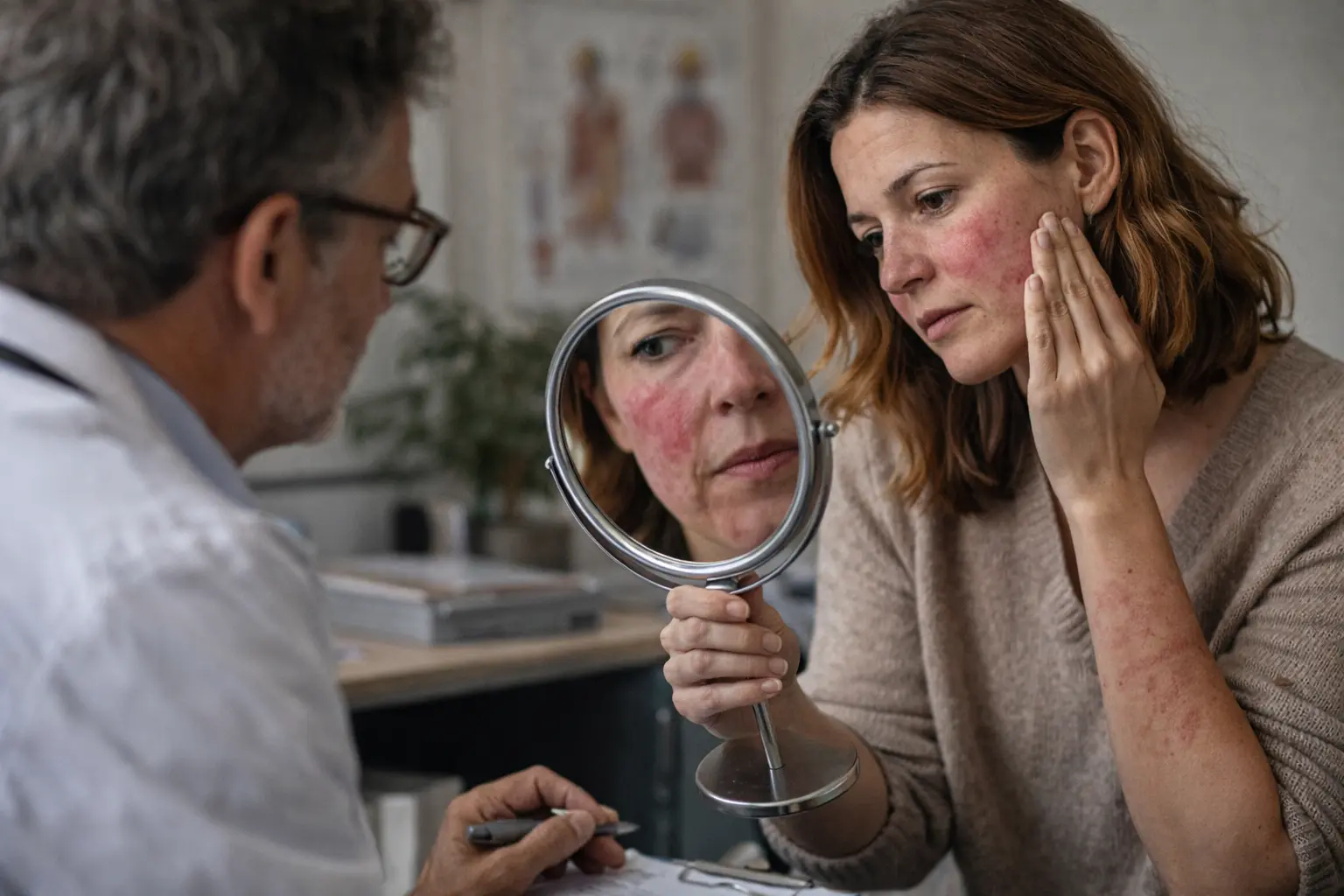
Your face feels like it’s on fire, your cheeks are permanently flushed, and nothing seems to calm the persistent redness down – rosacea symptoms explained here show you that what you’re experiencing isn’t just normal aging, it’s a real condition that millions of older adults face, and there are actual steps you can take to get relief.
Understanding rosacea symptoms
As you move through your 50s, 60s, and beyond, rosacea often shows up differently than it did in younger people. Your skin has spent decades exposed to sun, weather, and environmental stressors, which means it’s more reactive now. The flushing episodes tend to happen more frequently and last longer. You might notice your cheeks and nose stay red even when you’re not embarrassed or overheated. Visible blood vessels become more prominent because the skin thins with age, making those tiny capillaries more obvious. One woman in her late sixties described it as her face having a permanent sunburn that never quite faded. The bumps and pustules that develop can feel more stubborn too, sometimes lingering for weeks. Your skin barrier has weakened over time, so irritation spreads faster and deeper. Understanding these age-specific patterns helps you recognize what’s actually happening and stops you from blaming yourself or thinking it’s just part of getting older.
- Increased dryness and irritation may accompany rosacea in older adults, especially when combined with other age-related skin changes.
- It’s common for bumps and pimples to be more persistent in older individuals with rosacea, sometimes taking weeks to fully resolve.
- Thicker skin in some areas and thinner, more fragile skin in others can complicate the treatment of rosacea compared to younger populations.
Effective skincare for older adults with rosacea
Your skincare routine needs to shift when rosacea enters the picture. Harsh cleansers, hot water, and rough washcloths become your enemies. Start with lukewarm water, not hot, because heat triggers flushing immediately. Use a gentle, creamy cleanser without sulfates or fragrance. Pat your face dry instead of rubbing. Many older adults make the mistake of over-treating their skin, thinking more products mean better results, but that backfires with rosacea. A simple routine works best: cleanser, a gentle moisturizer with ceramides or hyaluronic acid, and a mineral sunscreen every single day. Avoid products with alcohol, menthol, or strong acids. One dermatologist recommends the ‘less is more’ approach for seniors with rosacea, noting that many patients see improvement just by simplifying their routine. Look for products labeled hypoallergenic and fragrance-free. Your skin doesn’t need exfoliation right now, even though you might think it does. Let your skin calm down first, then introduce gentle treatments slowly if needed.
📘 Fix your day in under 2 minuteschoose where to begin:
Diet and triggers
Food and drink are major rosacea triggers, and identifying yours is like solving a personal puzzle. Spicy foods, hot beverages, alcohol, and certain foods high in histamine can set off a flare within minutes or hours. Keep a simple food diary for two weeks, noting what you ate and when rosacea flared. You’ll start seeing patterns. One retired teacher realized her morning coffee was triggering afternoon flushing, so she switched to lukewarm herbal tea and saw improvement within days. Alcohol is particularly problematic for many older adults with rosacea, especially red wine and spirits. Citrus fruits, tomatoes, and chocolate are common culprits too. The tricky part is that triggers vary person to person, so what bothers your friend might not affect you. Once you identify your triggers, you’re not eliminating them forever, just managing them strategically. Some people find they can tolerate small amounts if they’re not combined with other triggers. Others need complete avoidance. The key is understanding your own body’s response and making informed choices about what you eat and drink.
Treatment options for older patients
Seeing a dermatologist isn’t optional if you want real results, it’s essential. Your doctor needs to understand your full medical history because you might be taking medications that interact with rosacea treatments or worsen symptoms. Prescription creams like metronidazole or sulfacetamide work well for many older adults and have fewer side effects than oral medications. Oral antibiotics like doxycycline in low doses can reduce inflammation without the antibiotic effect. Laser therapy is increasingly popular for seniors because it targets the visible blood vessels and redness without harsh chemicals, though it requires multiple sessions and isn’t suitable for everyone. Some older adults worry about trying new treatments, but dermatologists are experienced in adjusting plans for age-related skin sensitivity. Your doctor might start with the gentlest option first and escalate only if needed. Combination therapy, using a prescription cream plus lifestyle changes, often works better than any single treatment alone. Don’t assume you’re too old for certain treatments or that nothing will help. Modern dermatology has many options specifically designed for mature skin with rosacea.
Self-care and stress management
Stress and rosacea have a direct connection that many older adults don’t realize until they experience it firsthand. When you’re anxious or tense, your face flushes within minutes. Breaking this cycle means addressing stress proactively. Meditation, even just ten minutes daily, has shown real results for rosacea sufferers. Gentle yoga or tai chi combines movement with breathing techniques that calm your nervous system. One retired accountant started a daily meditation practice and noticed her flare-ups decreased by half within a month. Sleep matters more than you might think. Poor sleep triggers inflammation throughout your body, including your face. Aim for seven to nine hours nightly. Regular exercise improves circulation and reduces stress, but avoid overheating during workouts since heat is a trigger. Stay hydrated throughout the day, as dehydration worsens skin sensitivity. Protect yourself from wind and cold by wearing a scarf in winter. These self-care practices aren’t luxuries, they’re foundational to managing rosacea effectively alongside any medical treatment.
Rosacea in older adults presents distinct challenges that require a personalized approach combining professional treatment, dietary awareness, and lifestyle adjustments. Your skin has changed with age, making it more reactive and sensitive, but understanding these changes helps you take control. Gentle skincare, identifying your specific triggers, working with a dermatologist, and prioritizing stress management create a comprehensive strategy that actually works. You’re not stuck with persistent redness and flushing, and you’re not alone in dealing with this.
Is rosacea more common in older adults?
Yes, rosacea often manifests or worsens in middle-aged and older adults, with symptoms varying significantly in intensity and frequency compared to younger individuals. Fair-skinned people and those with a family history are at higher risk.
Can rosacea worsen with age?
Rosacea symptoms may progress with age due to cumulative sun exposure, changes in skin texture and thickness, and increased sensitivity, but effective management through proper skincare, trigger avoidance, and professional treatment can help minimize the impact and prevent escalation.
Others also read:
Disclaimer: This article is for informational purposes only and is not a substitute for professional medical advice. Always consult a healthcare professional for personal guidance.
This guide has been prepared and reviewed by the GlobalHealthBeacon editorial team and reflects current medical research as of 2026. It provides structured, evidence-based information to support informed health decisions.
