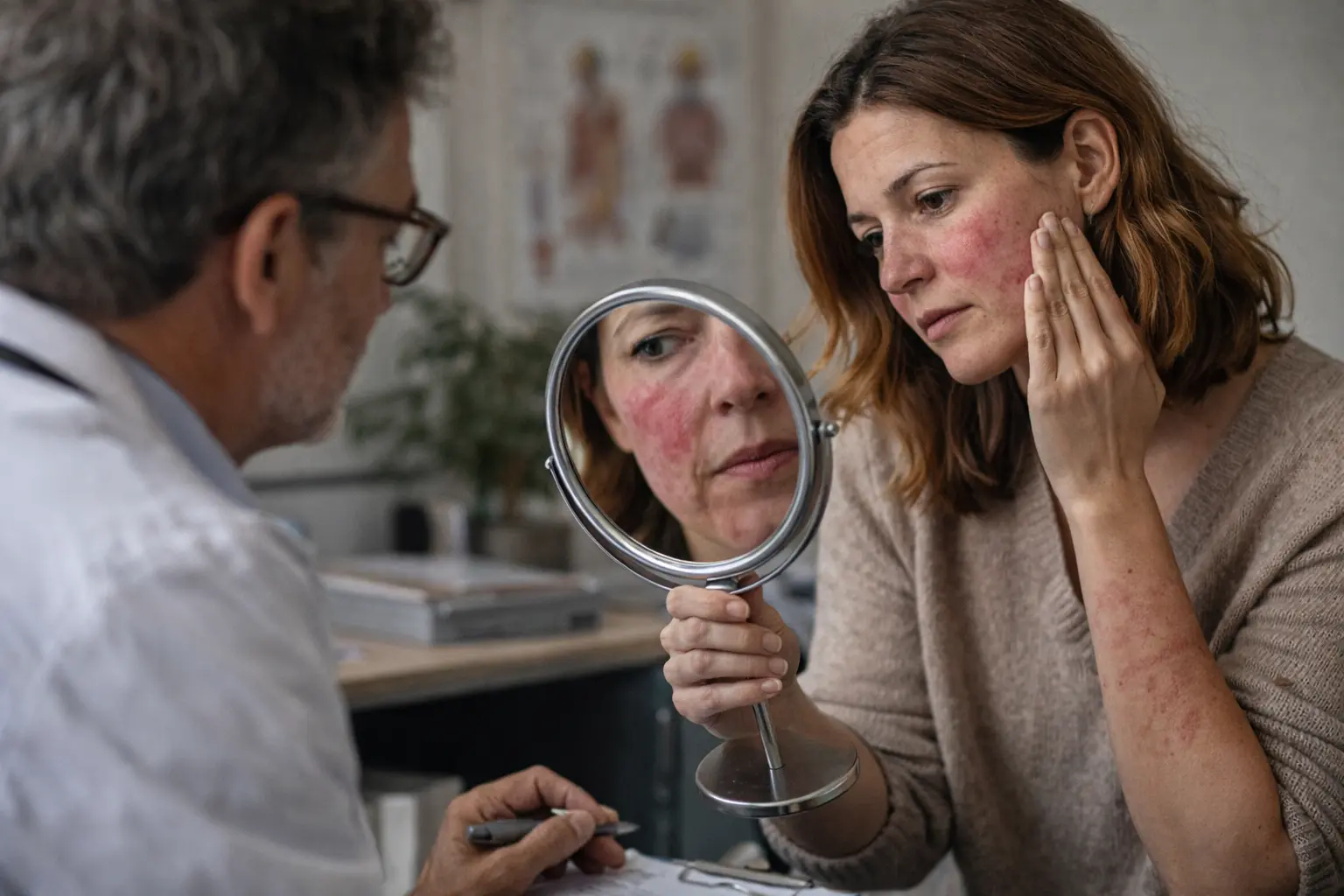
Your cheeks are constantly flushed, small bumps keep appearing no matter what skincare routine you try, and you’re tired of feeling self-conscious about your skin, so let’s break down rosacea symptoms explained and figure out what’s actually going on with your face.
Understanding rosacea symptoms
Rosacea shows up differently for everyone, but the core signs are usually facial redness that feels warm to the touch, visible blood vessels that seem to appear out of nowhere, and small bumps that look like acne but don’t respond to typical acne treatments. Some people also experience eye irritation, a gritty sensation, or even swollen eyelids. The redness typically concentrates on the cheeks, nose, chin, and forehead, though it can spread. Your skin might feel tight, sensitive, or reactive to things that never bothered you before. The condition is chronic, meaning it comes and goes, but understanding what triggers your specific flare-ups is the first step toward managing it effectively.
- Facial redness, especially on the cheeks, nose, chin or forehead
- Bumps and pimples on the affected areas
- Visible blood vessels on the skin
Identifying rosacea flare-ups
Flare-ups aren’t random, even though they might feel that way. Common triggers include stress and anxiety, extreme temperatures (both hot and cold), spicy foods, hot beverages like coffee or tea, alcohol especially red wine, intense exercise that raises your body temperature, and prolonged sun exposure. Some people find that certain skincare products, fragrances, or even emotional situations set off their symptoms. Keep a simple log for two weeks: note when redness appears, what you ate, your stress level, weather conditions, and what products you used. This pattern becomes your personal roadmap. For example, you might discover that your Tuesday evening flare-ups coincide with your gym sessions, or that weekend brunches with mimosas trigger three days of redness. Once you identify your specific triggers, you can plan around them and significantly reduce how often symptoms appear.
📘 Fix your day in under 2 minuteschoose where to begin:
Treatment options for rosacea
There’s no permanent cure, but effective management is absolutely possible with the right approach. Topical treatments like metronidazole gel or azelaic acid reduce redness and bumps when applied daily. Oral medications such as low-dose doxycycline work by reducing inflammation rather than fighting bacteria. Laser therapy and intense pulsed light treatments can minimize visible blood vessels and persistent redness, though multiple sessions are usually needed. Dermatologists might also recommend sulfur-based products or other prescription options depending on your specific presentation. The key is finding what works for your skin through professional guidance. A dermatologist can assess whether your rosacea is mild, moderate, or severe and recommend a treatment plan tailored to your situation. Many people see significant improvement within weeks of starting appropriate treatment, which is why getting properly diagnosed matters.
Managing rosacea symptoms daily
Your daily routine directly impacts how severe your symptoms are. Start with a gentle, fragrance-free cleanser used with lukewarm water, not hot. Pat your skin dry instead of rubbing. Apply prescribed treatments as directed, then follow with a lightweight, non-irritating moisturizer. Always use broad-spectrum SPF 30 or higher, even on cloudy days, since sun exposure is a major trigger for most people. Avoid physical exfoliants, strong acids, and products with alcohol or fragrance. When you shower or exercise, use cool water to rinse and avoid overheating. At night, keep your bedroom cool and use breathable bedding. Minimize stress through whatever works for you, whether that’s exercise, meditation, or time with friends. These small daily choices compound over time, reducing how often flare-ups occur and how intense they are when they do happen.
Seeking professional help
If you notice persistent facial redness, bumps that don’t respond to acne treatments, or visible blood vessels, schedule an appointment with a dermatologist rather than trying to self-diagnose. Early professional intervention prevents the condition from progressing and gives you access to treatments that actually work. A dermatologist can rule out other conditions that mimic rosacea, like acne, eczema, or allergic reactions. They’ll also monitor your skin over time and adjust your treatment plan as needed. Don’t wait until symptoms severely impact your confidence or daily life. Getting diagnosed and starting treatment early means you’ll spend less time dealing with flare-ups and more time feeling comfortable in your own skin. Your dermatologist becomes your partner in managing this condition long-term.
Understanding rosacea symptoms, identifying triggers, exploring treatment options, implementing daily skincare routines, and seeking professional help are key steps in managing this common skin condition.
Can rosacea be cured?
Rosacea is a chronic condition with no known cure, but it can be effectively managed with treatments and lifestyle changes.
What foods trigger rosacea flare-ups?
Triggers vary among individuals, but common food triggers include spicy foods, hot beverages, alcohol, and foods high in histamines.
Others also read:
Disclaimer: This article is for informational purposes only and is not a substitute for professional medical advice. Always consult a healthcare professional for personal guidance.
This guide has been prepared and reviewed by the GlobalHealthBeacon editorial team and reflects current medical research as of 2026. It provides structured, evidence-based information to support informed health decisions.
