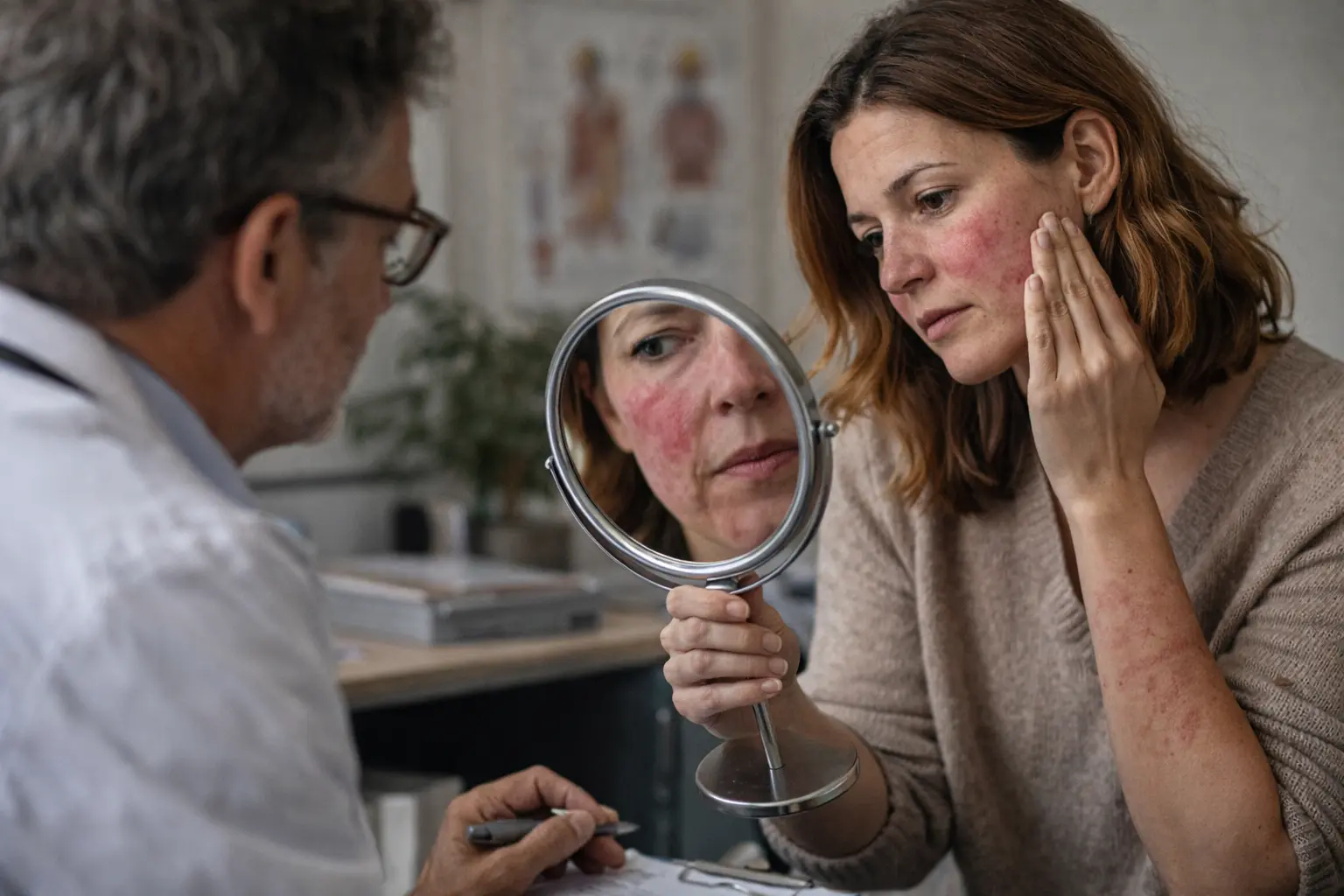
Your face feels like it’s on fire, flushed and blotchy for no reason you can pinpoint, and rosacea symptoms explained means finally understanding why your skin betrays you at the worst moments.
Understanding rosacea
Rosacea is a chronic inflammatory skin condition that primarily affects the facial area, though it can extend to the neck, chest, and ears in some cases. It is characterized by persistent redness, visible blood vessels that appear as fine lines across the cheeks and nose, and sometimes small, red, pus-filled bumps that resemble acne but behave quite differently. The condition typically emerges between ages 30 and 50, though it can develop earlier or later. While the exact cause remains elusive to researchers, the condition appears to involve a combination of genetic predisposition and environmental factors. Various triggers such as sunlight, spicy foods, hot beverages, alcohol, temperature extremes, stress, and intense exercise can worsen symptoms. For many women, hormonal fluctuations around menopause can intensify rosacea flare-ups, making this a particularly relevant concern during midlife transitions.
Common symptoms of rosacea
The symptoms of rosacea can vary significantly from person to person, creating a unique experience for each woman affected. Facial redness typically appears on the cheeks, nose, forehead, and chin, sometimes spreading in a butterfly pattern. Flushing episodes occur when blood vessels dilate rapidly in response to triggers, causing sudden warmth and visible color changes. Swelling, or edema, can make the face feel puffy and uncomfortable, particularly around the eyes and cheeks. Small visible blood vessels, called telangiectasia, appear as fine red or purple lines across the skin. Many individuals experience a stinging or burning sensation that feels like a sunburn without sun exposure. Rosacea can also lead to thickened skin, particularly on the nose, and eye symptoms such as dryness, irritation, grittiness, and redness. Some women report that symptoms worsen during their menstrual cycle or when taking certain medications, adding another layer of complexity to managing this condition.
Diagnosis and management
Diagnosing rosacea typically involves a thorough examination by a dermatologist, who evaluates the pattern of redness, presence of visible blood vessels, and any bumps or pustules. There is no single test for rosacea, so diagnosis relies on clinical observation and patient history. Your dermatologist will ask about triggers, symptom duration, and family history, as rosacea often runs in families. Management strategies often include lifestyle modifications as the foundation, such as identifying and avoiding personal triggers through careful observation and journaling. Using gentle skincare products formulated for sensitive skin, avoiding harsh scrubs and irritating ingredients, and protecting the skin from the sun using broad-spectrum sunscreen with SPF 30 or higher are essential daily practices. In more severe cases, prescription medications like metronidazole, azelaic acid, or oral antibiotics may be recommended. Laser therapy and light-based treatments have shown promising results in reducing visible blood vessels and persistent redness, offering hope for women seeking more dramatic improvements.
- Consult a dermatologist for an accurate diagnosis and to rule out other skin conditions that may mimic rosacea symptoms.
- Keep a detailed symptom diary for two to four weeks, noting what you ate, drank, activities, stress levels, and environmental conditions when flare-ups occurred.
- Identify and avoid your personal triggers by reviewing patterns in your diary and making gradual adjustments to your routine.
- Follow a gentle skincare routine tailored for sensitive skin using lukewarm water, mild cleansers, and fragrance-free moisturizers.
- Protect your skin from the sun using broad-spectrum sunscreen with SPF 30 or higher, reapplying every two hours, and wearing protective clothing like wide-brimmed hats.
- Consider prescription treatments such as topical metronidazole, azelaic acid, or oral antibiotics if lifestyle modifications alone are insufficient.
- Explore laser therapy or light-based treatments like intense pulsed light (IPL) for reducing visible blood vessels and persistent redness in moderate to severe cases.
🔬 Science-backed benefits in 2 minuteschoose where to begin:
Potential complications
If left untreated or poorly managed, rosacea can lead to potentially serious complications that extend beyond cosmetic concerns. Rhinophyma, a thickening of the skin on the nose that can become quite pronounced, develops when rosacea progresses without intervention, creating a bulbous appearance that can significantly impact self-image and confidence. Ocular rosacea, affecting the eyes, can cause persistent dryness, irritation, a gritty sensation, and in severe cases, corneal damage or vision problems if not properly managed. The visible nature of rosacea can trigger psychological effects including anxiety, depression, social withdrawal, and diminished quality of life, particularly for women who feel their appearance is being judged. Some women report avoiding social situations, professional networking events, or intimate relationships due to embarrassment about their skin. Seeking early diagnosis and appropriate treatment can help prevent these complications from developing or worsening, making proactive management crucial for long-term wellbeing.
Living with rosacea
Living with rosacea can be challenging, but with the right management strategies and support, women can effectively control their symptoms and reclaim their confidence. Developing a personalized skincare routine that works for your specific skin type and triggers becomes a form of self-care and empowerment. Many women find that keeping a detailed trigger diary helps them understand their unique patterns, allowing them to make informed decisions about diet, activities, and stress management. Building a support network, whether through dermatology appointments, online communities, or conversations with friends who understand, provides emotional validation and practical tips. Some women benefit from stress-reduction techniques like yoga, meditation, or breathing exercises, as stress is a common trigger. Adjusting expectations around appearance and focusing on skin health rather than perfection can shift perspective in a healing way. Working closely with healthcare professionals to develop a personalized treatment plan that suits your unique needs, lifestyle, and goals ensures you’re not just managing symptoms but actively improving your quality of life and emotional wellbeing.
Research and future directions
Ongoing research is exploring new treatments for rosacea, including innovative topical agents with anti-inflammatory properties, oral medications that target underlying vascular and immune mechanisms, and advanced light-based therapies that offer more precise results with fewer side effects. Scientists are investigating the role of the skin microbiome, blood vessel dysfunction, and immune system dysregulation in rosacea development, which may lead to breakthrough treatments addressing root causes rather than just symptoms. Clinical trials are testing combination therapies that pair medications with laser treatments for enhanced outcomes. Emerging research also examines how hormonal changes affect rosacea in women, potentially leading to more targeted approaches for managing flare-ups during menopause and other hormonal transitions. By staying informed about the latest advancements in rosacea research through reputable medical sources and discussions with your dermatologist, you can actively participate in your healthcare decisions and potentially benefit from emerging treatments as they become available.
Rosacea is a chronic inflammatory skin condition characterized by facial redness, visible blood vessels, bumps, and eye symptoms that affects many women, particularly during midlife years. Effective management involves identifying personal triggers, following gentle skincare routines, protecting skin from sun exposure, and in severe cases, pursuing prescription treatments or laser therapy. Early diagnosis and proactive treatment are key to preventing complications like rhinophyma and ocular involvement, while also protecting emotional wellbeing and quality of life.
Is rosacea curable?
While rosacea is not curable, it can be effectively managed with appropriate treatments and lifestyle modifications tailored to your individual triggers and skin response. Early diagnosis and intervention are crucial in controlling symptoms and preventing complications from developing.
Can rosacea go away on its own?
Rosacea is a chronic condition that typically requires ongoing management and attention. While symptoms may improve and worsen over time in response to triggers and seasons, they are unlikely to completely disappear without treatment and lifestyle adjustments.
Others also read:
Disclaimer: This article is for informational purposes only and is not a substitute for professional medical advice. Always consult a healthcare professional for personal guidance.
This article has been prepared and reviewed by the GlobalHealthBeacon editorial team and is based on current medical research and published scientific literature available in 2026. It provides structured, evidence-based information to support informed health decisions.
