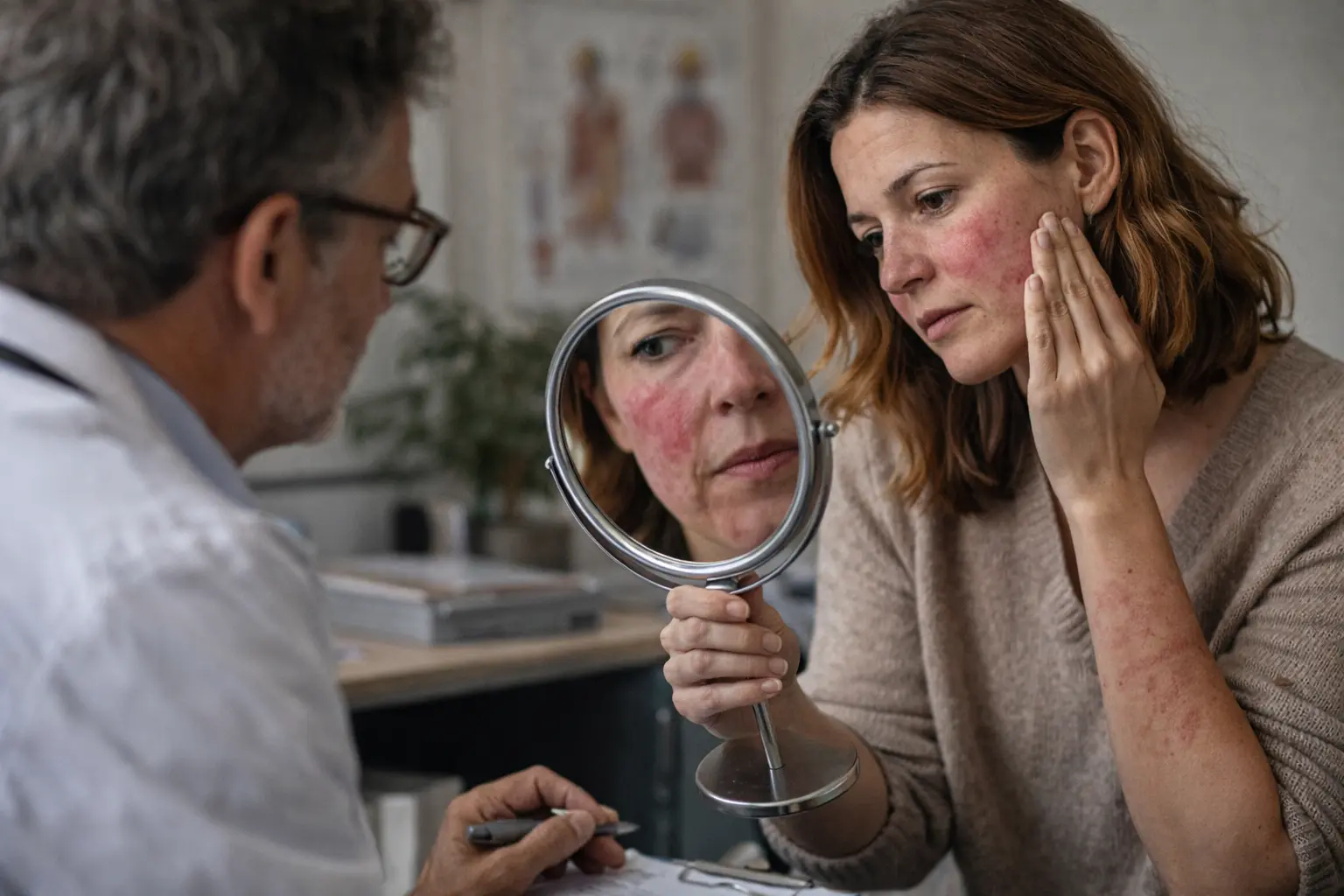
Your face flushes at the slightest provocation, stays red for hours, and you’re tired of people asking if you’re sunburned or angry – welcome to life with rosacea symptoms explained, the chronic skin condition that affects millions of seniors and leaves you searching for real answers.
Understanding rosacea: a brief overview
Rosacea is a chronic inflammatory skin condition that primarily affects the face, and it’s far more common than many people realize. For seniors, understanding what rosacea actually is can be the first step toward better management. The condition is characterized by persistent facial redness, visible blood vessels that appear as fine lines across the cheeks and nose, and sometimes acne-like bumps that can be mistaken for other skin problems. The exact cause remains somewhat mysterious to the medical community, though researchers have identified several contributing factors. Genetics play a significant role – if your parents or grandparents had rosacea, your risk increases substantially. Your immune system’s response to certain triggers also matters greatly. Environmental factors like sun exposure, temperature changes, and even emotional stress can activate the condition. Think of rosacea as your skin’s overreaction system, where normal stimuli trigger an exaggerated inflammatory response that leaves your face flushed and uncomfortable.
Symptoms of rosacea: what to look for
The symptoms of rosacea vary considerably from person to person, which is why two seniors with the condition might have completely different experiences. The most common early sign is facial redness that comes and goes, often triggered by specific situations. You might notice your face flushes easily when you’re in a warm room, eat spicy food, or feel emotionally stressed. As the condition progresses, you may see persistent redness that doesn’t fade, visible blood vessels appearing as fine red lines, and a bumpy texture that resembles acne but doesn’t respond to typical acne treatments. Some people experience swelling and sensitivity so intense that even touching their face causes discomfort. In more advanced cases, the skin can thicken noticeably, particularly around the nose, a condition called rhinophyma. Eye involvement is also possible, causing dryness, irritation, and a gritty sensation. The key point is that rosacea symptoms fluctuate – you might have clear days followed by severe flare-ups, making it unpredictable and sometimes emotionally challenging.
Biological mechanisms of rosacea
Understanding what happens biologically in rosacea helps explain why your skin behaves the way it does. At the core of rosacea is a problem with blood vessel regulation. In healthy skin, blood vessels constrict and dilate in response to temperature and other stimuli in a controlled manner. In rosacea, this system malfunctions – blood vessels dilate too easily and stay dilated too long, causing the persistent redness and flushing episodes you experience. Inflammation is the driving force behind most rosacea symptoms. When triggered, your immune system releases inflammatory substances that cause blood vessels to swell, skin to redden, and tissues to become sensitive. Nerve fibers in the skin also play an important role. These nerves become hypersensitive in rosacea, which explains why your skin reacts so strongly to mild irritants that wouldn’t bother someone without the condition. A protein called cathelicidin, which normally helps fight infection, appears to be overactive in rosacea skin, contributing to both inflammation and the characteristic bumps. Additionally, a microscopic mite called Demodex may be involved, though scientists are still investigating its exact role. This combination of vascular dysfunction, immune activation, and nerve sensitivity creates the perfect storm for rosacea symptoms.
- Identify and avoid your personal triggers, which commonly include sunlight, hot beverages, spicy foods, alcohol, extreme temperatures, and emotional stress – keeping a simple diary can help you spot patterns.
- Adopt a gentle skincare routine using lukewarm water and fragrance-free products specifically formulated for sensitive skin, avoiding harsh scrubs and irritating ingredients.
- Schedule a consultation with a dermatologist who can examine your skin, confirm the diagnosis, and recommend appropriate treatments ranging from topical medications to laser therapy based on your specific rosacea subtype.
🔬 Science-backed benefits in 2 minuteschoose where to begin:
Diagnosis and treatment options
Getting an accurate diagnosis is crucial because rosacea can be confused with other skin conditions like acne, eczema, or simple sensitivity. A dermatologist diagnoses rosacea primarily through visual examination and your description of symptoms and triggers. There’s no blood test or definitive lab test for rosacea, so your doctor’s experience and your detailed symptom history are essential. Once diagnosed, treatment options depend on your rosacea subtype and severity. Topical treatments like metronidazole cream or azelaic acid can reduce redness and inflammation when applied regularly. Oral medications, particularly low-dose antibiotics like doxycycline, work not just as antibiotics but as anti-inflammatory agents that calm the overactive immune response. For more severe cases, laser and light-based therapies can reduce visible blood vessels and persistent redness by targeting the dilated vessels beneath the skin’s surface. Many seniors find that combining treatments works best – perhaps a topical cream for daily use plus occasional laser sessions for stubborn redness. The key is consistency and patience, as rosacea treatment often takes several weeks to show noticeable improvement. Working closely with your dermatologist to adjust treatments as needed ensures you’re getting the most effective approach for your unique situation.
Lifestyle modifications for rosacea management
Beyond medical treatments, lifestyle changes can significantly reduce how often and severely rosacea flares up. Sun protection is non-negotiable – daily broad-spectrum sunscreen with SPF 30 or higher, protective clothing, and shade-seeking during peak sun hours can prevent many flare-ups. Your diet matters too. While triggers vary individually, common culprits include spicy foods, hot beverages, alcohol, and foods high in histamine. Keeping a food diary helps identify your personal triggers so you can make informed choices rather than eliminating entire food groups unnecessarily. Stress management is equally important because emotional stress is a powerful rosacea trigger for many people. Regular gentle exercise, meditation, deep breathing, or simply engaging in activities you enjoy can help keep stress levels manageable. Sleep quality also affects rosacea – poor sleep can worsen inflammation throughout your body. Skincare hygiene means using gentle products, avoiding irritants, and being consistent with your routine. Temperature control matters too – avoiding extreme heat, using lukewarm rather than hot water, and protecting your face from cold wind can prevent flare-ups. For many seniors, these lifestyle modifications combined with appropriate medical treatment create a sustainable management plan that significantly improves quality of life.
Research and future directions
The scientific understanding of rosacea continues to evolve, with researchers worldwide investigating new mechanisms and potential treatments. Recent studies have explored the role of the microbiome, the community of microorganisms on your skin, in rosacea development. Some research suggests that specific bacterial imbalances may contribute to the condition, which could eventually lead to probiotic-based treatments. Gene therapy and targeted immune-modulating medications are being investigated as potential future options. Clinical trials are ongoing for new topical and oral medications that might offer better results with fewer side effects than current treatments. Researchers are also studying why certain populations are more susceptible to rosacea and whether genetic markers can predict who will develop the condition. For seniors interested in contributing to medical advancement, participating in clinical trials can be meaningful. These studies help researchers understand rosacea better while potentially giving participants access to emerging treatments before they’re widely available. By staying informed about research developments and discussing new options with your dermatologist, you position yourself to benefit from the next generation of rosacea treatments as they become available.
Rosacea is a complex chronic skin condition involving the interplay of blood vessel dysfunction, immune system overactivity, and heightened nerve sensitivity that manifests as facial redness, visible blood vessels, swelling, and sensitivity. Effective management requires a personalized approach combining medical treatments like topical creams, oral medications, or laser therapy with lifestyle modifications including sun protection, trigger avoidance, stress management, and consistent skincare. Ongoing research continues to uncover new insights into rosacea’s underlying causes, offering hope for more targeted and effective treatments in the future. Working with a dermatologist to develop your individualized treatment plan, while making sustainable lifestyle adjustments, provides the best foundation for managing this condition and maintaining quality of life.
Can rosacea be cured completely?
Currently, there is no definitive cure for rosacea, but this doesn’t mean you’re stuck with severe symptoms indefinitely. Many people achieve significant improvement or even remission of symptoms through appropriate treatment and lifestyle management. The goal is to control flare-ups, reduce redness, and minimize discomfort rather than seeking a complete cure. Working with a dermatologist to find the right combination of treatments for your specific situation can lead to excellent results. Some seniors find that their rosacea becomes quite manageable with consistent care, allowing them to live comfortably without constant worry about flare-ups.
Are there any natural remedies for rosacea?
Some people report relief from mild rosacea symptoms using natural approaches like green tea compresses, which have anti-inflammatory properties, or honey masks known for their soothing effects. Oatmeal-based products can also help calm irritated skin. However, natural doesn’t automatically mean safe or effective for everyone – some natural ingredients can actually trigger rosacea in certain individuals. Before trying any alternative treatment, consult with your dermatologist to ensure it won’t interfere with your current treatment plan or worsen your condition. Your doctor can help you distinguish between genuinely helpful natural remedies and those that might cause problems for your particular skin.
Others also read:
Disclaimer: This article is for informational purposes only and is not a substitute for professional medical advice. Always consult a healthcare professional for personal guidance.
This article has been prepared and reviewed by the GlobalHealthBeacon editorial team and is based on current medical research and published scientific literature available in 2026. It provides structured, evidence-based information to support informed health decisions.
