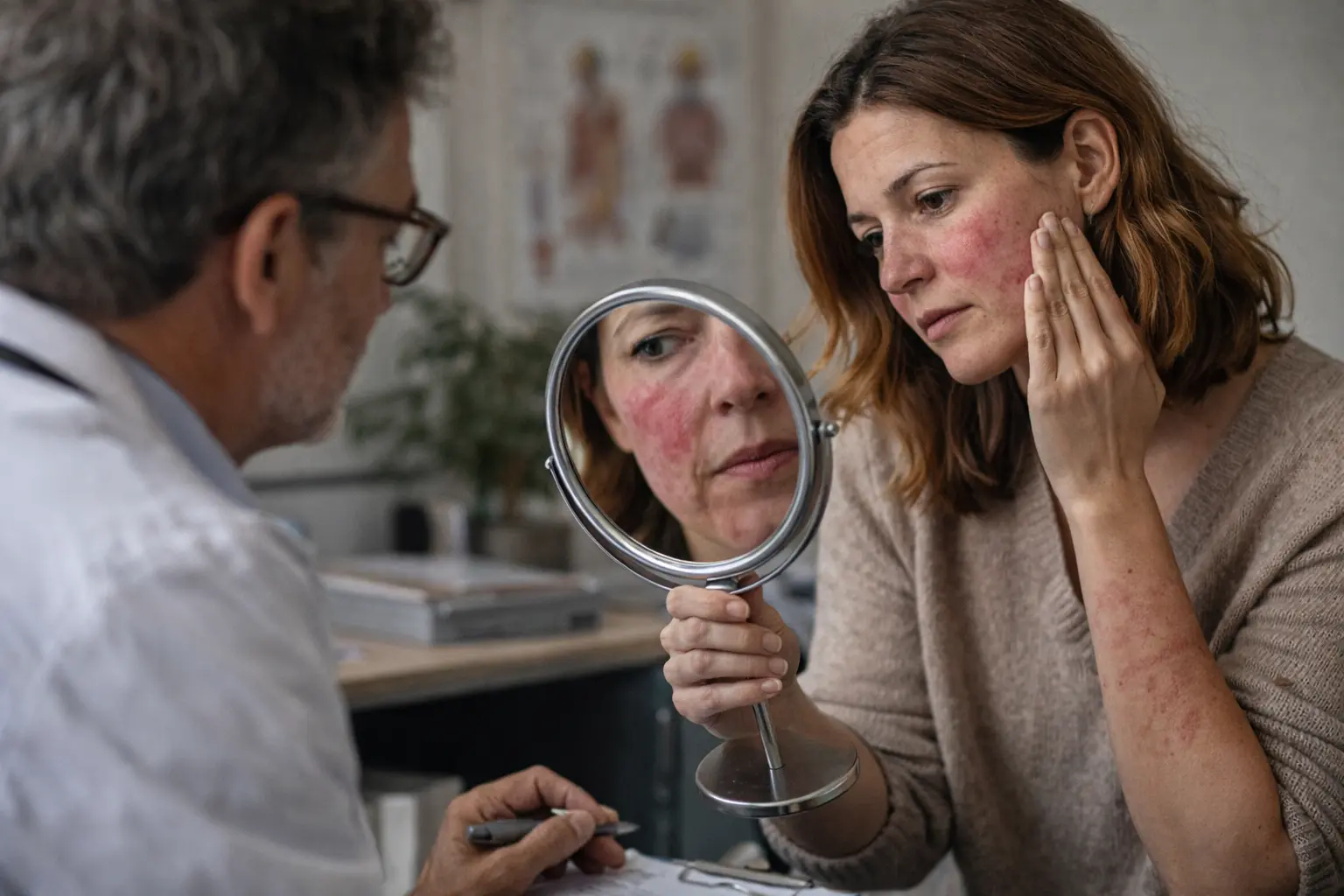
Your face keeps flushing bright red, your skin feels like it’s on fire, and nothing you throw at it seems to help—but you’re pretty sure it’s just acne, right? Wrong. Rosacea symptoms explained might reveal you’ve been treating the wrong condition all along, and that’s exactly why so many women end up frustrated and confused.
Understanding rosacea symptoms
Rosacea is a chronic skin condition that primarily affects the face, and if you’re a woman in your 30s or 40s, you’re in the prime demographic for developing it. The condition shows up as persistent facial redness, visible blood vessels that seem to map themselves across your cheeks and nose, and acne-like bumps that can feel tender and inflamed. What makes rosacea particularly frustrating is that it flares unpredictably. You might have a calm week, then one stressful day at work, a spicy lunch, or even a hot shower triggers a full-blown flare that leaves your face burning and blotchy. Many women describe it as their skin overreacting to everything, and that’s actually accurate. Your skin barrier is more reactive than typical, which means environmental factors, temperature changes, and even certain foods can set off a cascade of inflammation that takes hours or days to settle down.
- Rosacea mainly affects adults between the ages of 30 and 50, with women being more susceptible than men.
- Common symptoms include facial flushing, persistent redness, and skin sensitivity.
- Rosacea can also lead to eye problems such as dryness, irritation, and swollen eyelids.
Distinguishing rosacea from acne
Here’s where things get tricky, because rosacea and acne can look deceptively similar at first glance. Both cause red, inflamed bumps on your skin, which is why so many women spend months treating rosacea like acne and wondering why nothing works. The key difference is what you don’t see with rosacea: blackheads and whiteheads are virtually absent. Acne thrives in pores clogged with oil and dead skin cells, so you get those characteristic comedones. Rosacea doesn’t work that way. Instead, you get persistent redness across the central face, bumps without comedones, and a burning or stinging sensation that acne typically doesn’t cause. Another telltale sign is location. Rosacea clusters on your cheeks, nose, chin, and forehead in a somewhat symmetrical pattern, whereas acne can pop up anywhere. If you’ve been using acne treatments like salicylic acid or benzoyl peroxide and your skin has gotten worse, more irritated, and more sensitive, that’s a red flag that you might be dealing with rosacea instead. Those treatments can actually trigger flares in rosacea-prone skin.
📘 Fix your day in under 2 minuteschoose where to begin:
Triggers and management
Managing rosacea effectively means becoming a detective about your own skin. Everyone’s triggers are slightly different, but common culprits include alcohol, especially red wine and spirits, hot beverages like coffee and tea, spicy foods, extreme temperatures, intense exercise, and even certain skincare products with fragrance or alcohol. Start keeping a simple log. When you have a flare, note what you ate, drank, did, and experienced emotionally that day. After a few weeks, patterns emerge. You might realize that your Tuesday evening wine is always followed by Wednesday morning redness, or that your morning hot shower is setting off afternoon flares. Once you identify your triggers, you can plan around them. If spicy food is a trigger, you don’t have to eliminate it forever, but you can choose when to enjoy it and prepare your skin accordingly. A consistent, gentle skincare routine is foundational. Use lukewarm water, not hot, cleanse with a mild, fragrance-free cleanser, and follow with a hydrating moisturizer and broad-spectrum SPF 30 or higher every single day. Sunscreen isn’t optional for rosacea; UV exposure is one of the most common triggers and can worsen symptoms significantly over time.
Professional diagnosis and treatment
If you suspect rosacea, scheduling an appointment with a dermatologist is the smartest move you can make. A dermatologist can confirm the diagnosis by examining your skin and ruling out other conditions that mimic rosacea, like lupus or seborrheic dermatitis. Once confirmed, treatment options are varied and tailored to your specific presentation. Topical medications like metronidazole gel or azelaic acid can reduce redness and bumps when applied twice daily. Some women see significant improvement within weeks. Oral antibiotics, particularly low-dose doxycycline, work not just as antibiotics but as anti-inflammatory agents that calm the skin from the inside. Laser and light-based therapies have become increasingly popular for rosacea because they can target and shrink the visible blood vessels causing redness, sometimes providing dramatic results after a series of treatments. Your dermatologist might recommend one approach or a combination depending on your rosacea subtype and severity. Early intervention matters because untreated rosacea can progress, potentially leading to thickened skin on the nose, a condition called rhinophyma. The good news is that with proper diagnosis and consistent management, most women see significant improvement in their symptoms and can prevent progression.
Self-care tips for rosacea
Beyond medical treatments, your daily habits have enormous power over how severe your rosacea becomes. Gentle cleansing is non-negotiable. Avoid scrubbing, exfoliating, and using washcloths; instead, use your fingertips and a soft touch. Pat your skin dry gently rather than rubbing. When it comes to products, less is more. Skip anything with fragrance, essential oils, alcohol, menthol, or strong actives like vitamin C serums or retinoids unless your dermatologist specifically approves them. Stress management directly impacts rosacea because stress hormones trigger inflammation. Whether it’s yoga, meditation, walks, or time with friends, find what calms your nervous system and prioritize it. Hydration matters too, both externally and internally. Drink adequate water throughout the day and use a good moisturizer to support your skin barrier. If you exercise, choose activities that don’t overheat you excessively, and cool down gradually afterward. Consider wearing a wide-brimmed hat and UV-protective clothing when you’ll be outside. Finally, be patient with yourself. Rosacea management is a process of learning your skin, identifying patterns, and adjusting your approach. What works perfectly for one woman might not work for another, so give treatments time to work and don’t hesitate to communicate with your dermatologist if something isn’t helping.
Rosacea symptoms explained reveal a chronic skin condition distinct from acne, primarily affecting women in their 30s to 50s with facial flushing, persistent redness, and heightened sensitivity. Successful management requires identifying personal triggers, establishing a gentle skincare routine, seeking professional diagnosis, and combining medical treatments with consistent self-care practices tailored to your skin’s unique needs.
Can rosacea be cured?
While there is no cure for rosacea, symptoms can be effectively managed with appropriate treatments and lifestyle modifications.
Is rosacea more common in women than men?
Yes, rosacea tends to affect more women than men, especially adults between the ages of 30 and 50.
Others also read:
Disclaimer: This article is for informational purposes only and is not a substitute for professional medical advice. Always consult a healthcare professional for personal guidance.
This guide has been prepared and reviewed by the GlobalHealthBeacon editorial team and reflects current medical research as of 2026. It provides structured, evidence-based information to support informed health decisions.
