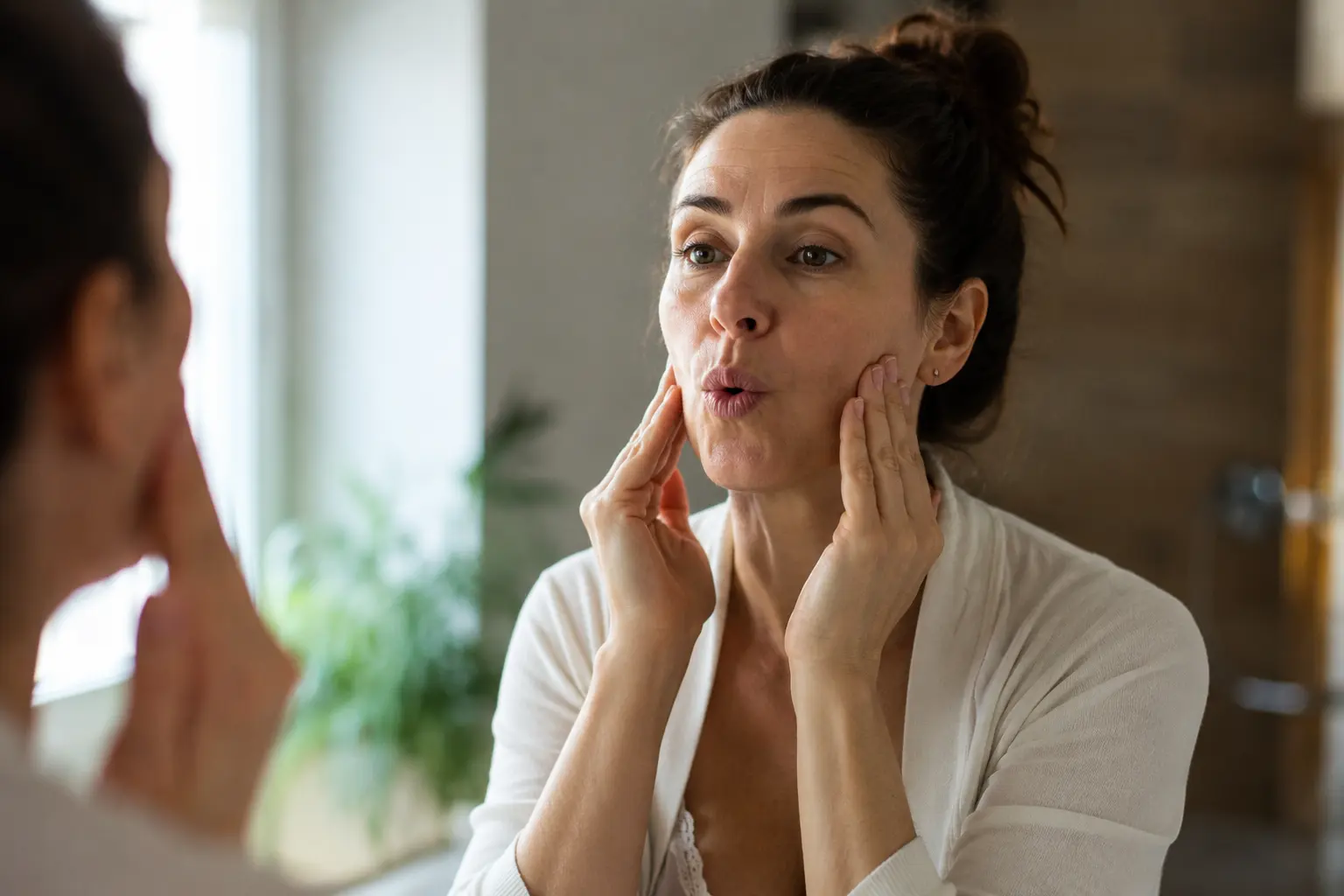
Your skin feels drier, fine lines won’t quit, and nothing you used to do seems to work anymore, so let’s cut through the confusion and build a skin health aging routine that actually fits your life.
Understanding skin changes
Your skin at 40 is fundamentally different from your skin at 25, and that’s not a flaw in you, it’s biology. Collagen production drops roughly 1 percent per year after 30, which means by 40 you’ve already lost about a decade’s worth of that structural protein that keeps skin plump and firm. Cell turnover slows down too, meaning dead skin cells stick around longer, making your complexion look dull and tired even when you’re well-rested. Elastin breaks down more easily, contributing to that loss of bounce and firmness you might notice in your jawline or cheeks. Hormonal shifts also play a role, especially if you’re approaching or in perimenopause, which can trigger unpredictable dryness, sensitivity, or even breakouts in new places. Understanding these shifts isn’t about accepting defeat, it’s about recognizing what’s actually happening so you can stop fighting your skin and start working with it instead.
- Increased dryness and thinning of the skin
- Hyperpigmentation and age spots become more prominent
- Loss of facial volume and firmness
Choosing the right products
Product shopping at 40 requires a different strategy than it did at 20. You’re no longer looking for that one miracle cream, you’re building a targeted toolkit. Retinoids are non-negotiable if fine lines concern you, they boost cell turnover and collagen production, though you need to introduce them slowly to avoid irritation. Hyaluronic acid is your hydration workhorse, it holds up to 1000 times its weight in water and plumps skin from within. Niacinamide strengthens your skin barrier and reduces inflammation, which matters more now because your skin is more reactive. Vitamin C brightens and protects against environmental damage, while peptides signal your skin to produce more collagen. The mistake most women make is buying too many products at once. Start with a gentle cleanser that doesn’t strip, a hydrating serum or essence, a good moisturizer for your specific needs, and daily SPF. Once those are working, you can add targeted treatments. Quality matters more than quantity at this stage.
📘 Fix your day in under 2 minuteschoose where to begin:
Daily skincare routine
Your routine doesn’t need to be complicated, but it does need to be consistent. Morning starts with a gentle cleanser, warm water only or a soft cream cleanser if your skin is dry. Pat dry, then apply a hydrating serum while your skin is still slightly damp, this helps it absorb better. Follow with moisturizer appropriate to your skin type, and finish with broad-spectrum SPF 30 or higher, non-negotiable even on cloudy days. At night, cleanse again to remove the day’s buildup, apply any treatment products like retinoid or vitamin C serum, then moisturize with a richer cream if needed. The key is showing up consistently, your skin responds better to a simple routine done every single day than to an elaborate routine done sporadically. Many women over 40 find that adding a hydrating mask once or twice weekly helps combat dryness, and a gentle exfoliant once weekly helps with dull skin, but these are additions, not replacements for your core routine.
Healthy lifestyle habits
What you do outside your bathroom matters as much as what you put on your face. Hydration is foundational, aim for eight glasses of water daily, your skin cells need it to function properly and plump up. Sleep is when your skin repairs itself, so those seven to nine hours aren’t a luxury, they’re maintenance. During sleep your body increases blood flow to skin and rebuilds collagen, which is why you look better after a good night’s rest. Stress triggers cortisol, which breaks down collagen and can worsen inflammation and breakouts, so whatever stress management works for you, prioritize it. Nutrition matters too, foods rich in antioxidants like berries, leafy greens, and fatty fish protect skin from oxidative damage and support collagen production. Limit sugar and processed foods, they accelerate aging through a process called glycation. Exercise increases blood flow to your skin, delivering oxygen and nutrients while flushing out toxins through sweat. You don’t need intense workouts, even 30 minutes of walking most days helps.
Professional support
At some point, you might hit a ceiling with at-home care, and that’s when professional treatments become valuable. A dermatologist can assess your specific concerns and recommend treatments tailored to your skin. Chemical peels accelerate cell turnover and improve texture and tone, they range from mild to intensive depending on your needs. Microdermabrasion physically exfoliates and stimulates collagen, it’s gentler than peels but requires multiple sessions for results. Laser treatments address pigmentation, texture, and fine lines by triggering collagen remodeling. Injectables like Botox relax muscles that create expression lines, while fillers restore volume loss. These aren’t necessary for everyone, but they’re options worth understanding. Many women find that combining one professional treatment with a solid at-home routine delivers better results than either alone. Start with a consultation to discuss your goals and budget, a good professional will be honest about what’s realistic and what might be overkill for your situation.
Understanding skin changes, choosing the right products, following a daily skincare routine, maintaining healthy lifestyle habits, and seeking professional support are key elements in simplifying your skin routine for women over 40.
Can I use the same skincare products in my 40s as I did in my 20s?
As your skin matures, its needs change. It’s advisable to switch to products that address aging concerns like hydration, collagen production, and UV protection.
How important is sunscreen in an anti-aging skincare routine?
Sunscreen is essential for preventing UV damage, which accelerates skin aging. Use a broad-spectrum SPF daily to shield your skin from harmful rays.
Others also read:
Disclaimer: This article is for informational purposes only and is not a substitute for professional medical advice. Always consult a healthcare professional for personal guidance.
This guide has been prepared and reviewed by the GlobalHealthBeacon editorial team and reflects current medical research as of 2026. It provides structured, evidence-based information to support informed health decisions.
