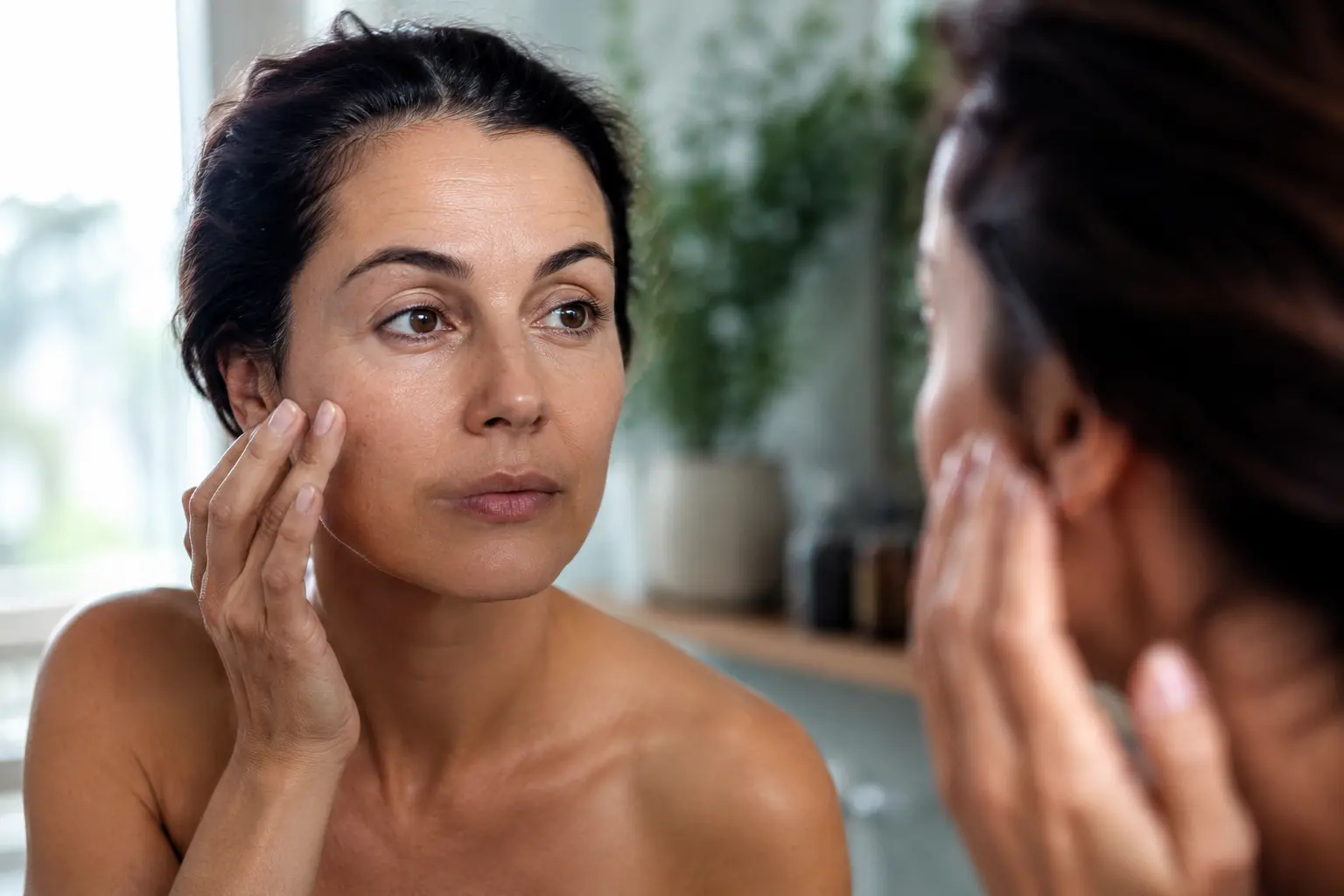
Your skin feels different now, doesn’t it? The mirror shows lines you don’t remember having, your complexion feels drier no matter how much moisturizer you use, and that firmness you took for granted is simply gone, but here’s the thing: skin longevity explained means understanding exactly what’s happening beneath the surface so you can actually do something about it.
Understanding skin aging
Your skin is changing in ways that are completely predictable and, honestly, manageable once you understand what’s happening. As you age, your body produces less collagen, the protein that keeps skin plump and resilient. Think of collagen like the scaffolding holding up a building; when it weakens, everything starts to settle and sag. At the same time, elastin fibers that give your skin its bounce become brittle and less effective. Your skin barrier also thins naturally, meaning it holds onto moisture less effectively and becomes more vulnerable to environmental damage. A 65-year-old woman might notice her skin feels paper-thin in certain areas, or a 70-year-old man might see age spots appearing where the sun damage from decades past finally shows up. These aren’t signs of failure; they’re signs you’ve lived. Understanding this process helps you stop fighting against nature and start working with it through smarter choices.
- Collagen levels diminish, leading to fine lines and wrinkles.
- Elastin fibers weaken, causing sagging and loss of firmness.
- Skin becomes thinner and more prone to damage.
Adapting your skincare routine
Your skincare routine from your 40s won’t cut it anymore, and that’s okay. You need to shift toward gentler cleansing because harsh soaps strip away the natural oils your skin desperately needs now. Use lukewarm water instead of hot, and consider a cream or oil-based cleanser rather than foaming formulas. Moisturizing becomes non-negotiable; apply it to damp skin immediately after cleansing to lock in hydration. Look for products containing peptides, which signal your skin to produce more collagen, and antioxidants like vitamin C and E that protect against further damage. Sun protection is critical even if you think your sun-damage days are behind you; UV rays continue to break down collagen and cause age spots. A 68-year-old who starts using a daily SPF 30 moisturizer will see clearer, more even skin tone within weeks. Don’t overload your routine with too many products; three to four well-chosen items work better than a medicine cabinet full of serums. A dermatologist can recommend specific products tailored to your skin type and concerns, whether that’s rosacea, sensitivity, or stubborn dryness.
📘 Fix your day in under 2 minuteschoose where to begin:
Nutrition for skin health
What you eat shows up on your face, and at this stage of life, that connection becomes even more obvious. Your skin needs fuel to repair itself and maintain its barrier function. Vitamin C supports collagen production and brightens dull skin; you’ll find it in citrus fruits, berries, and bell peppers. Vitamin A helps with cell turnover and reduces fine lines; carrots, sweet potatoes, and dark leafy greens are excellent sources. Omega-3 fatty acids from fish, walnuts, and flaxseeds reduce inflammation and keep your skin supple. Vitamin E protects against oxidative stress; nuts, seeds, and avocados provide plenty. Hydration is equally important; drinking adequate water helps your skin maintain elasticity and flush out toxins. A 72-year-old who switched from sugary drinks to water and added salmon to her diet twice weekly noticed her skin looked plumper and less irritated within a month. Collagen-rich foods like bone broth may also support skin structure from the inside out. Think of nutrition as preventative medicine; you’re not just eating for energy, you’re eating to slow the aging process at a cellular level.
Lifestyle and habits impact
Your daily habits either accelerate or slow skin aging, and you have more control than you might think. Smoking is one of the fastest ways to destroy skin; it reduces blood flow, increases inflammation, and breaks down collagen rapidly. If you smoke, quitting is the single most impactful change you can make for your skin. Excessive sun exposure without protection causes cumulative damage; even if you’ve spent decades in the sun, protecting your skin now prevents further deterioration. Chronic stress elevates cortisol, which breaks down collagen and triggers inflammation; stress-relief activities like walking, meditation, or gardening directly benefit your skin. Quality sleep is when your body repairs itself; aim for 7 to 8 hours nightly because that’s when growth hormone peaks and skin regeneration happens. A 70-year-old who started a daily 30-minute walking routine and improved his sleep schedule saw his complexion brighten and fine lines soften within two months. Alcohol dehydrates skin and impairs healing, so moderate consumption helps. These aren’t sacrifices; they’re investments in how you look and feel every single day.
Seeking professional advice
Your dermatologist is your partner in maintaining skin health, not just someone you visit when something goes wrong. Regular skin checks allow your doctor to monitor changes, catch skin conditions early, and adjust your routine as needed. If you notice new moles, changes in existing spots, persistent rashes, or skin that doesn’t heal normally, schedule an appointment promptly. A dermatologist can recommend professional treatments like gentle chemical peels or laser therapy if you want to address deeper lines or uneven texture. They can also rule out conditions like rosacea or seborrheic keratosis that might require specific treatment. Many seniors benefit from having a skin care plan written out by a professional; it removes guesswork and ensures you’re using products that actually work together. Your doctor can also adjust recommendations based on any medications you’re taking, since some drugs affect skin health. Think of this as preventative care, the same way you’d see your primary care doctor for a physical; your skin deserves that same attention and expertise.
Skin aging involves decreased collagen, elasticity, and skin thinning. Adapt your skincare routine, focus on nutrition, healthy habits, and seek professional guidance for optimal skin health.
How does aging affect skin longevity?
Aging reduces collagen, elastin, and skin thickness, leading to wrinkles and sagging. Understanding these changes can help adjust your skincare regimen for better skin health.
What role does lifestyle play in skin aging?
Lifestyle factors like sun exposure, smoking, and stress can accelerate skin aging. Adopting healthy habits such as a balanced diet, exercise, and proper skincare can promote skin longevity.
Others also read:
Disclaimer: This article is for informational purposes only and is not a substitute for professional medical advice. Always consult a healthcare professional for personal guidance.
This guide has been prepared and reviewed by the GlobalHealthBeacon editorial team and reflects current medical research as of 2026. It provides structured, evidence-based information to support informed health decisions.
