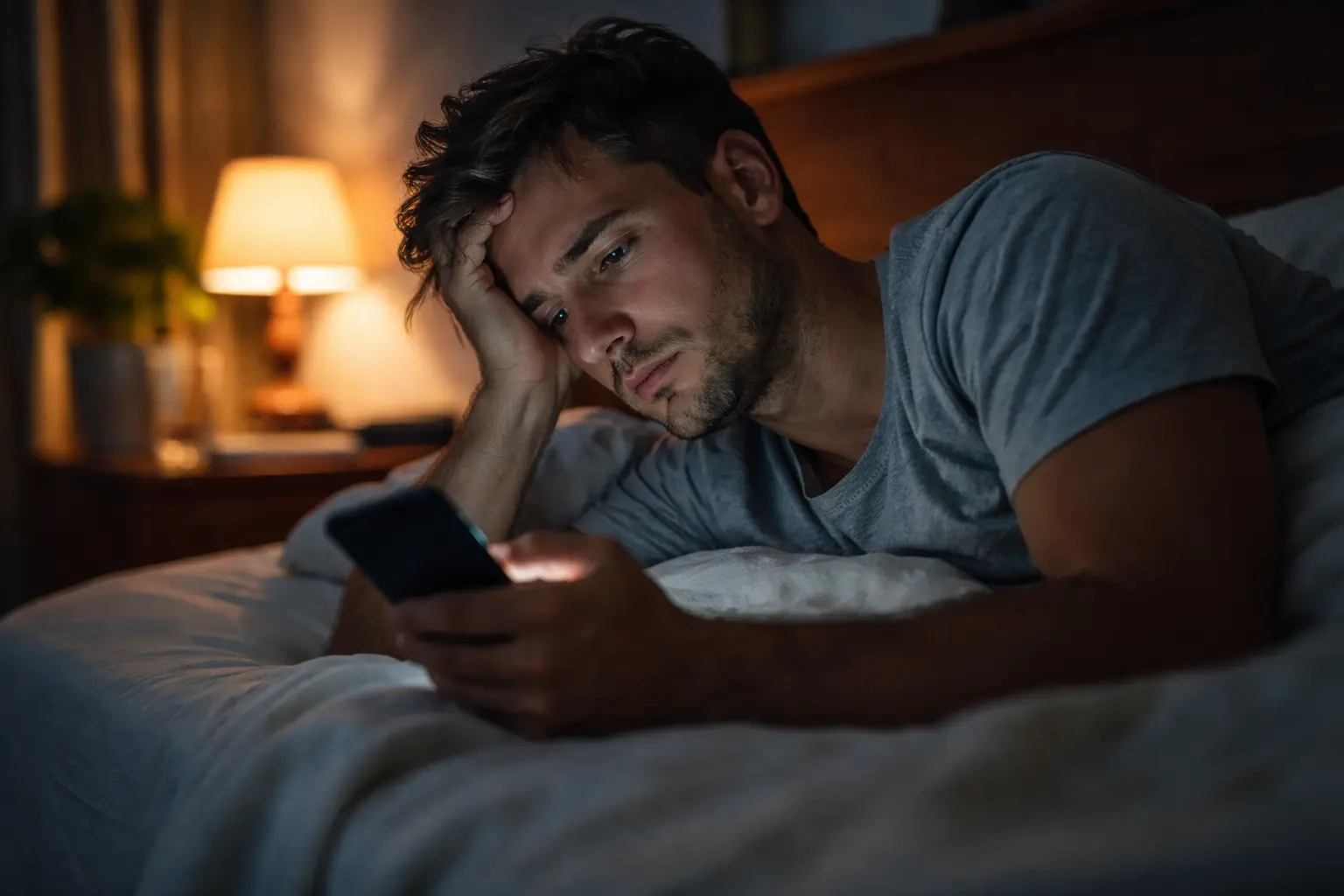
You’re waking up gasping for air, your partner won’t stop complaining about your snoring, and you’re exhausted no matter how many hours you spend in bed, and sleep apnea symptoms might be exactly what’s stealing your rest and your health.
Understanding sleep apnea symptoms
Recognizing sleep apnea symptoms early can be the difference between catching this condition now and dealing with serious health complications down the road. The tricky part is that many young adults dismiss these signs as just being tired or stressed. Picture this: you fall asleep around 11 PM, and throughout the night, your airway collapses repeatedly. Each time it happens, your brain jolts you awake just enough to gasp for air, but you don’t fully wake up and remember it. You might experience 30, 50, or even hundreds of these interruptions per night. By morning, you feel like you haven’t slept at all, even though you were in bed for eight hours. Common sleep apnea symptoms include loud and chronic snoring that disturbs your sleep partner, gasping or choking sounds during sleep, intermittent pauses in breathing that last 10 seconds or longer, excessive daytime fatigue that makes focusing at work nearly impossible, morning headaches that feel like a hangover, and difficulty concentrating or remembering things. Some young adults also report mood changes, irritability, or even depression linked to poor sleep quality.
- Loud and chronic snoring
- Gasping or choking during sleep
- Intermittent pauses in breathing
Risk factors for sleep apnea
Understanding your personal risk factors helps you take control before sleep apnea symptoms develop or worsen. While sleep apnea is often associated with older adults, young adults can absolutely develop this condition, and certain factors make it more likely. Excess weight is one of the biggest contributors because extra tissue in the throat narrows your airway. A large neck circumference (typically over 17 inches for men and 16 inches for women) physically restricts airflow. Male gender carries higher risk, though women shouldn’t assume they’re safe. Being over 40 increases likelihood, but young adults in their 20s and 30s with other risk factors absolutely can have sleep apnea. Family history matters too; if your parents or siblings have sleep apnea, your risk climbs significantly. Other contributors include smoking, which inflames airways, alcohol consumption before bed, which relaxes throat muscles, nasal congestion or structural issues like a deviated septum, and sleeping on your back. The encouraging news is that many of these factors respond to lifestyle changes. Weight loss of even 10 percent can reduce sleep apnea symptoms dramatically. Quitting smoking, limiting alcohol, and sleeping on your side create measurable improvements.
📘 Fix your day in under 2 minuteschoose where to begin:
Seeking medical evaluation
If you suspect you have sleep apnea symptoms, scheduling a medical evaluation is your most important next step. Don’t wait or hope it goes away on its own. Start by visiting your primary care doctor and describing your symptoms in detail. Mention the snoring, the gasping, the daytime exhaustion, and how long this has been happening. Your doctor will ask about your sleep habits, medical history, and risk factors. They might perform a physical exam, checking your throat and neck for structural issues. Based on this conversation, they’ll likely refer you to a sleep specialist, who is trained specifically in sleep disorders. The sleep specialist will probably recommend a sleep study, which sounds intimidating but is actually straightforward. You can often do a home sleep apnea test, where you wear a small portable device overnight that monitors your breathing, oxygen levels, and heart rate. Alternatively, you might have an in-lab sleep study where you sleep in a comfortable room while technicians monitor multiple body systems. The results give your doctor concrete data about how many times per hour your breathing stops (called the apnea-hypopnea index or AHI). This number determines the severity of your condition and guides treatment decisions. Getting evaluated typically takes two to four weeks from initial appointment to diagnosis.
Treatment options for sleep apnea
Once diagnosed, you have multiple treatment pathways, and the right choice depends on your specific situation and severity. Lifestyle changes should be your foundation regardless of other treatments. Weight loss through diet and exercise produces remarkable results for many young adults. Aim for gradual, sustainable weight loss rather than crash dieting. Avoiding alcohol at least three hours before bed prevents throat muscle relaxation. Sleeping on your side instead of your back keeps your airway more open; try a body pillow or positional device to maintain side sleeping. Quitting smoking improves airway inflammation within weeks. For mild to moderate sleep apnea, these changes alone sometimes resolve symptoms. If lifestyle modifications aren’t enough, CPAP therapy is the gold standard treatment. CPAP machines deliver pressurized air through a mask, keeping your airway open throughout the night. Modern machines are quieter and more comfortable than older models, with various mask styles to find what works for you. Oral appliances are another option; these custom-fitted devices reposition your lower jaw to open your airway. Some young adults prefer this to CPAP because it’s less obtrusive. For severe cases or when other treatments fail, surgery might be considered. Procedures can remove excess tissue, reposition jaw structures, or address nasal obstruction. Your sleep specialist will discuss which approach fits your severity level, lifestyle, and preferences.
Improving sleep quality
Beyond medical treatment, establishing solid sleep hygiene practices amplifies your results and helps you feel better faster. Your sleep environment matters more than you might think. Keep your bedroom cool (around 65 to 68 degrees Fahrenheit), dark, and quiet. Invest in a comfortable mattress and pillows that support good sleep posture. Remove screens from your bedroom or use blue light filters if you must have them nearby. Maintain a consistent sleep schedule by going to bed and waking up at the same time every day, even on weekends. This trains your body’s internal clock and improves sleep quality significantly. Limit caffeine after 2 PM since it can interfere with falling asleep. Avoid large meals, intense exercise, and stressful activities within three hours of bedtime. Instead, develop a wind-down routine: try reading, gentle stretching, meditation, or deep breathing exercises. Some young adults find that a warm bath or shower helps them relax. If racing thoughts keep you awake, try journaling before bed to clear your mind. Consider white noise machines or earplugs if environmental sounds disturb you. These practices work synergistically with your medical treatment, creating an environment where your body can actually rest and recover properly.
Managing sleep apnea symptoms requires a multi-layered approach: recognize the warning signs early, understand your personal risk factors, seek professional medical evaluation promptly, explore treatment options that fit your life, and establish sleep hygiene practices that support better rest. Young adults who take action now prevent serious long-term health consequences and reclaim their energy and focus.
Can sleep apnea symptoms improve with lifestyle changes alone?
Lifestyle changes like weight loss, side sleeping, avoiding alcohol, and quitting smoking can significantly reduce or even resolve mild sleep apnea symptoms. However, moderate to severe cases typically require additional treatment such as CPAP therapy or oral appliances. Your sleep specialist will help determine whether lifestyle changes alone are sufficient based on your AHI score and symptom severity.
Is snoring always a sign of sleep apnea?
Not all snorers have sleep apnea, but chronic loud snoring combined with gasping, pauses in breathing, or daytime fatigue is a strong indicator. Some people snore without having breathing interruptions. A sleep study is the only way to know for certain whether your snoring reflects sleep apnea or another condition.
Others also read:
Disclaimer: This article is for informational purposes only and is not a substitute for professional medical advice. Always consult a healthcare professional for personal guidance.
This guide has been prepared and reviewed by the GlobalHealthBeacon editorial team and reflects current medical research as of 2026. It provides structured, evidence-based information to support informed health decisions.
