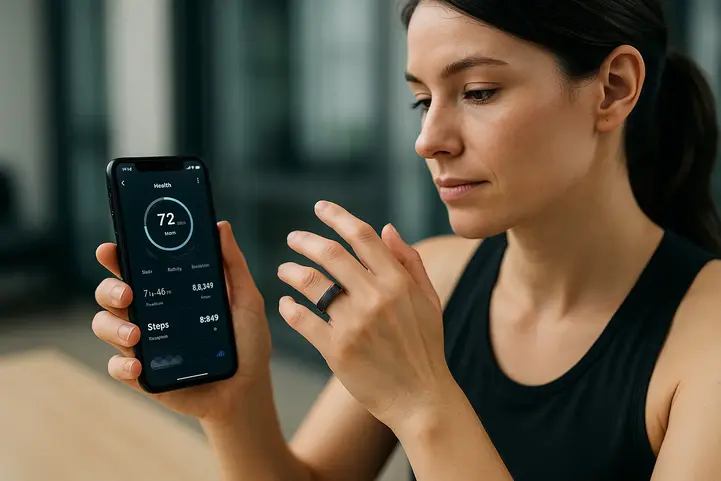
You’re tired of wondering if that heart rate reading on your wrist is actually real or just a guess, and you need straight answers about smart rings PPG accuracy so you can finally trust what you’re seeing on your screen.
Understanding smart rings PPG technology
Smart rings with PPG (photoplethysmography) technology work by using tiny light sensors to measure how blood flows through your skin. Think of it like this: when your heart beats, blood rushes through your vessels, and that movement changes how light reflects back to the sensor. The ring emits infrared light into your skin, and as blood pulses through, the light absorption changes in a measurable pattern. Your ring captures these light changes hundreds of times per second, then uses algorithms to convert that data into meaningful health metrics like heart rate and blood oxygen levels. For seniors especially, this continuous monitoring can catch patterns you might otherwise miss. Regular calibration and ensuring the ring sits snugly on your finger are essential because loose rings or dirty sensors give unreliable readings. The technology has improved significantly over the past few years, making modern smart rings far more dependable than earlier versions.
- PPG sensors in smart rings emit light into the skin to measure changes in blood volume.
- The data collected by smart rings can help users monitor their heart health and overall wellness.
- Regular calibration and proper fit are essential for accurate readings from smart rings.
Choosing the right smart ring for accuracy
When you’re shopping for a smart ring, you need to look beyond the marketing hype and focus on what actually matters for your health monitoring. Start by checking the brand’s track record: companies like Oura, Samsung, and others have been tested by independent researchers, and their accuracy ratings are publicly available. Look at the sensor quality specifically, because not all PPG sensors are created equal. Some rings use single sensors while others use multiple sensors for better readings. Battery life matters too because a ring that dies after two days won’t give you the continuous data you need to spot trends. Read actual user reviews from people in your age group, not just the five-star testimonials on the company website. Pay attention to comments about comfort during sleep, since many seniors wear rings at night for sleep tracking. Consider whether the ring syncs easily with your smartphone and whether the app interface is simple enough for you to navigate without frustration. A good smart ring should feel like it disappears on your finger, not like you’re wearing a piece of jewelry.
📘 Fix your day in under 2 minuteschoose where to begin:
Ensuring accuracy in smart ring readings
Getting accurate readings from your smart ring requires attention to several practical details that many people overlook. First, the fit matters enormously: your ring should be snug enough that it doesn’t slide around, but not so tight that it cuts off circulation or feels uncomfortable. If you’re between sizes, choose the larger size because a slightly loose ring is better than one that restricts blood flow. Keep the sensors clean by gently wiping them with a soft, dry cloth once a week, since skin oils and dirt accumulate and interfere with light readings. Maintain consistent skin contact by avoiding gaps between the ring and your skin. This means removing the ring if you apply thick moisturizers or sunscreen. Update your device firmware regularly because manufacturers constantly improve the algorithms that interpret sensor data. Pay attention to placement too: the ring works best on your index or middle finger where blood vessels are closer to the surface. Avoid wearing it on your pinky or thumb where readings tend to be less reliable. If you notice sudden spikes or drops in your data, check the ring’s position first before assuming something is medically wrong.
Interpreting smart ring data correctly
Understanding what your smart ring data actually means is just as important as getting accurate readings in the first place. Your normal resting heart rate depends on your age and fitness level, but for most seniors, a resting rate between 60 and 100 beats per minute is considered normal. However, if your personal baseline is usually 65 and suddenly it’s consistently 85, that’s worth noting even if 85 is technically in the normal range. Blood oxygen levels should typically stay above 95 percent, and anything below 92 percent warrants a conversation with your doctor. Don’t panic over single outlier readings, because one odd data point usually means the ring shifted on your finger or you moved during measurement. Instead, look for patterns: if your heart rate is elevated for several days in a row, or if your sleep quality has dropped consistently, those trends tell a real story. Keep a simple log of unusual readings along with what was happening that day, because context matters. If you were stressed, exercising, or sick, that explains the numbers. Share your data trends with your healthcare provider during regular checkups rather than trying to interpret complex patterns on your own. Your doctor can help you understand whether changes in your data reflect normal aging or something that needs attention.
Making informed health decisions with smart rings
A smart ring is a tool for awareness, not a replacement for medical judgment, and the best way to use it is to let the data guide conversations with your doctor. When you notice your resting heart rate climbing over several weeks, that’s information you bring to your next appointment. If your sleep data shows you’re only getting four hours of quality sleep when you thought you were sleeping eight, that’s something worth exploring with a healthcare provider because poor sleep affects everything from blood pressure to immune function. Use your ring to motivate positive changes: if you see that your heart rate variability improves after you start taking evening walks, that visual proof can keep you committed to the habit. Track how your metrics respond to lifestyle adjustments like reducing caffeine, managing stress, or improving your sleep routine. The data becomes most powerful when you use it to notice what actually works for your body. Some seniors find that seeing their activity levels quantified motivates them to move more. Others use sleep data to adjust their evening routines. The key is treating your smart ring as a personal health coach that gives you feedback, not as a medical device that diagnoses conditions. Always verify concerning readings with your doctor before making any changes to medications or health routines.
Smart rings with PPG technology provide valuable insights into health metrics like heart rate and blood oxygen levels. By understanding the technology, choosing the right device, and interpreting data accurately, seniors can make informed decisions about their health.
How do smart rings measure heart rate?
Smart rings use PPG sensors to measure heart rate by analyzing changes in blood volume in the skin. The sensor emits light that is absorbed by blood vessels, allowing the device to calculate heart rate based on the pulsatile nature of blood.
Are smart rings accurate in monitoring health metrics?
Smart rings can provide accurate readings for heart rate and blood oxygen levels when properly calibrated and worn correctly. While they offer valuable insights into health trends, it’s important to use smart ring data in conjunction with professional medical advice.
Others also read:
Disclaimer: This article is for informational purposes only and is not a substitute for professional medical advice. Always consult a healthcare professional for personal guidance.
This guide has been prepared and reviewed by the GlobalHealthBeacon editorial team and reflects current medical research as of 2026. It provides structured, evidence-based information to support informed health decisions.
