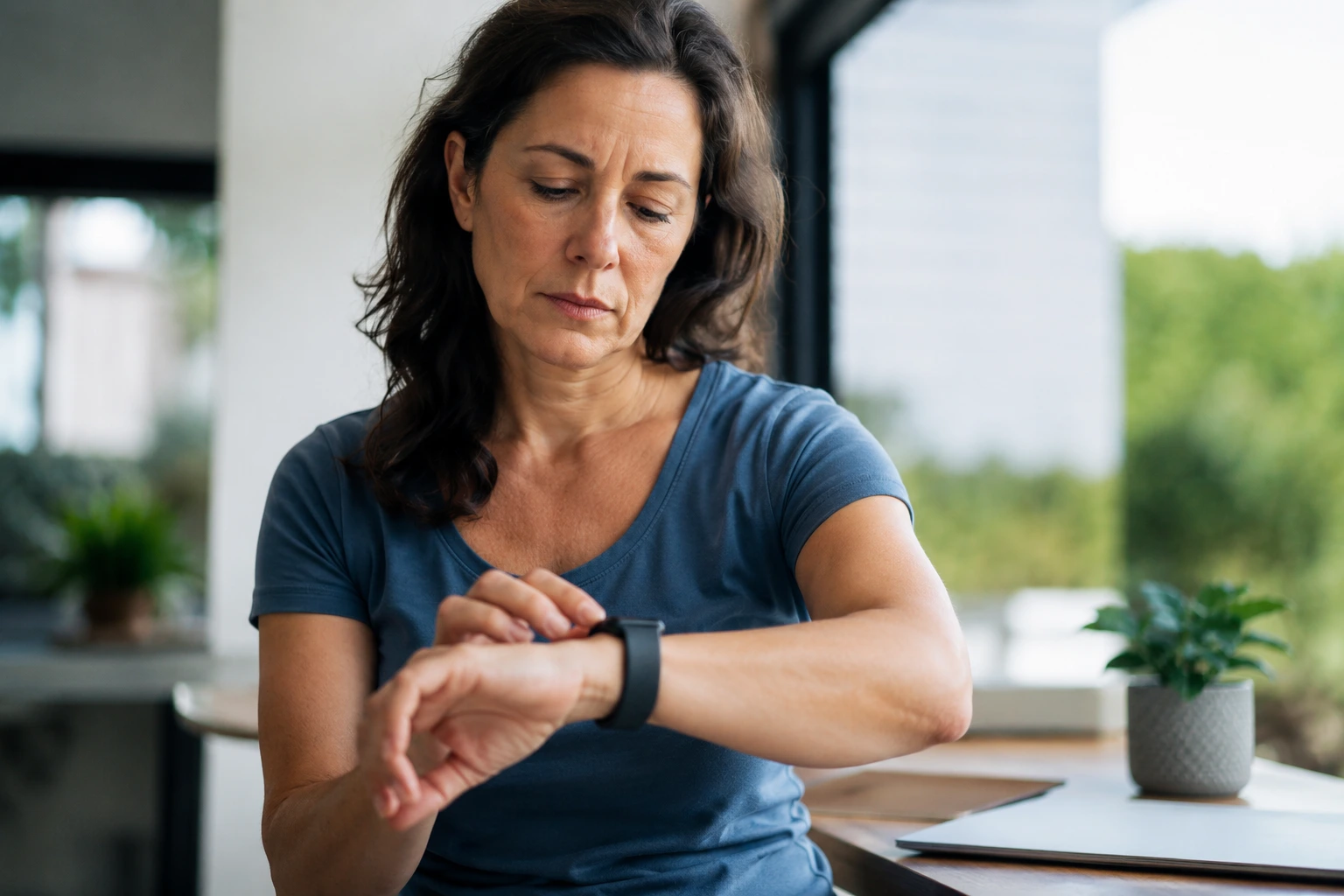
You’re scrolling through your day when your wrist buzzes with a warning about your heart rate spiking, and suddenly you’re wondering if something’s actually wrong or if your smartwatch is just being paranoid, but here’s the thing: smartwatch health alerts are built on real science, and understanding how they work might just change how you think about your health.
How smartwatches monitor health
Your smartwatch is essentially a miniature health lab strapped to your wrist. Inside that slim device sits a collection of sophisticated sensors working together to capture data about your body. The optical heart rate sensor uses LED lights to detect blood flow through your wrist, measuring how many times your heart beats per minute. An accelerometer tracks your movement and motion, distinguishing between walking, running, and sitting still. Some models include a gyroscope to measure rotation and orientation, while others have GPS to map your location and distance traveled. Temperature sensors monitor your skin temperature, which can indicate fever or other physiological changes. All these sensors continuously collect data points throughout your day, creating a detailed picture of your physical activity, rest patterns, and vital signs. This information forms the foundation for the alerts your device sends you.
Understanding health patterns
Think of your smartwatch as a personal health detective that learns your normal baseline over time. When you first start wearing your device, it spends weeks observing your typical heart rate during rest, exercise, and sleep. It notes how your activity levels fluctuate on weekdays versus weekends. It learns your sleeping patterns, stress responses, and how your body reacts to different activities. Once this baseline is established, the smartwatch can recognize when something deviates from your personal norm. For example, if your resting heart rate is typically 60 beats per minute but suddenly jumps to 90 without exercise, that’s a meaningful signal. Or if you usually sleep seven hours but suddenly start sleeping only four, the device notices the pattern shift. These deviations don’t necessarily mean something is wrong, but they signal that something has changed in your body or behavior. The smartwatch uses this comparative analysis to determine whether an alert is warranted, making the alerts more personalized and relevant to your individual health profile.
The role of algorithms in health alerts
Behind every alert your smartwatch sends is a complex algorithm processing thousands of data points in real time. These algorithms are trained on massive datasets of health information to recognize specific patterns associated with various conditions. When your smartwatch detects an irregular heartbeat pattern, it’s running pattern recognition software that compares your current rhythm against known arrhythmia signatures. If you fall suddenly, an accelerometer algorithm detects the rapid change in motion and altitude, triggering a fall detection alert within seconds. Machine learning models continuously improve these algorithms by analyzing outcomes, learning which patterns actually correlate with health events and which are false alarms. The algorithms also consider context, understanding that a spike in heart rate during a workout is normal, but the same spike while sitting at your desk might warrant attention. They filter out noise and minor fluctuations while amplifying genuine signals. This layered approach reduces false positives while maintaining sensitivity to real health changes, though no algorithm is perfect and limitations always exist.
- Wear your smartwatch consistently for at least two to three weeks to establish your personal baseline, as algorithms need adequate data to distinguish normal from abnormal for your specific body.
- Regularly update your smartwatch software and companion app, as manufacturers continuously refine algorithms based on new research and user feedback to improve accuracy.
- Learn what different alert types mean for your device, such as distinguishing between informational notifications and urgent alerts that require immediate attention or medical consultation.
- Keep your smartwatch snug but comfortable on your wrist, as loose placement reduces sensor accuracy and can trigger false alerts or miss genuine signals.
- Understand your personal health context by noting what activities, stress levels, or sleep patterns typically affect your metrics, helping you interpret alerts more intelligently.
🔬 Science-backed benefits in 2 minuteschoose where to begin:
Benefits of smartwatch health alerts
Smartwatch health alerts function as an early warning system for your body, potentially catching health issues before they become emergencies. Young adults often ignore subtle health signals because they feel invincible, but a smartwatch provides objective data that can’t be dismissed. Someone might notice their resting heart rate has been elevated for three days straight and decide to see a doctor, discovering an underlying infection before it worsens. Another person receives a fall detection alert that actually saved their life when they collapsed alone at home. Athletes use smartwatch data to recognize overtraining patterns and adjust their routines before injury occurs. The psychological benefit matters too, knowing your health is being monitored creates a sense of security and encourages proactive health awareness. Smartwatches empower users to take ownership of their health by providing continuous feedback and motivation. They transform abstract health concepts into concrete, visible metrics that make wellness feel tangible and achievable rather than overwhelming.
Limitations and considerations
Despite their sophistication, smartwatches have real limitations that users must understand. Optical heart rate sensors struggle with darker skin tones due to light absorption differences, potentially producing inaccurate readings for some users. Movement artifacts can cause false readings during intense exercise or when the watch shifts on your wrist. Smartwatches cannot diagnose conditions, only flag patterns that might warrant medical attention. A high heart rate alert doesn’t tell you whether you’re experiencing anxiety, caffeine effects, illness, or a serious cardiac issue. Environmental factors like cold temperatures can affect sensor accuracy. Most importantly, smartwatches are screening tools, not diagnostic devices. They should never replace professional medical evaluation. Someone receiving a concerning alert should consult a healthcare provider rather than self-diagnosing based on smartwatch data. Additionally, over-reliance on these devices can create health anxiety, where users obsess over minor fluctuations and interpret normal variations as problems. Understanding these limitations helps you use smartwatch alerts as helpful information rather than definitive medical truth.
Future of smartwatch health technology
Smartwatch technology is advancing rapidly, with manufacturers investing heavily in new sensor capabilities and analytical sophistication. Emerging devices are incorporating blood glucose monitoring without finger pricks, blood pressure measurement directly from the wrist, and even early detection of respiratory infections through breathing pattern analysis. Artificial intelligence is becoming more personalized, learning individual variations in your health rather than applying one-size-fits-all algorithms. Future smartwatches may detect early signs of conditions like atrial fibrillation or sleep apnea with greater accuracy than current models. Researchers are exploring non-invasive ways to measure hydration levels, oxygen saturation, and stress hormones. Integration with electronic health records could allow your smartwatch data to automatically inform your doctor about trends between appointments. Privacy and data security will become increasingly important as these devices collect more sensitive health information. The trajectory suggests smartwatches will evolve from activity trackers into genuine health monitoring devices that complement professional medical care, though they’ll likely remain tools for awareness rather than replacements for clinical expertise.
Smartwatch health alerts operate through a combination of advanced sensors, personalized baseline learning, and sophisticated algorithms that recognize deviations from your normal health patterns. These devices can provide valuable early warnings and encourage proactive health awareness, particularly for young adults who might otherwise ignore subtle health signals. However, smartwatches have real limitations in accuracy and diagnostic capability, and their alerts should always be interpreted in context with professional medical advice rather than as definitive diagnoses. The technology continues evolving rapidly, promising more accurate monitoring and personalized insights in the future, but understanding both benefits and limitations helps you use these tools wisely.
Are smartwatch health alerts always accurate?
Smartwatch health alerts provide valuable screening information but aren’t always accurate. Factors like sensor placement, skin tone, movement during measurement, and environmental conditions affect accuracy. Think of them as helpful indicators rather than definitive measurements. A concerning alert warrants professional medical evaluation to confirm what your smartwatch detected, especially since algorithms can produce false positives or miss subtle issues.
Can smartwatch health alerts prevent emergencies?
Smartwatch health alerts can help detect potential issues early, potentially preventing emergencies by prompting timely medical intervention. Someone noticing an irregular heartbeat pattern through their smartwatch might seek evaluation and discover a treatable condition before it becomes critical. However, smartwatches aren’t emergency prevention devices on their own. They work best when users respond appropriately to alerts by consulting healthcare providers rather than ignoring warnings or self-treating based on smartwatch data alone.
Others also read:
Disclaimer: This article is for informational purposes only and is not a substitute for professional medical advice. Always consult a healthcare professional for personal guidance.
This article has been prepared and reviewed by the GlobalHealthBeacon editorial team and is based on current medical research and published scientific literature available in 2026. It provides structured, evidence-based information to support informed health decisions.
