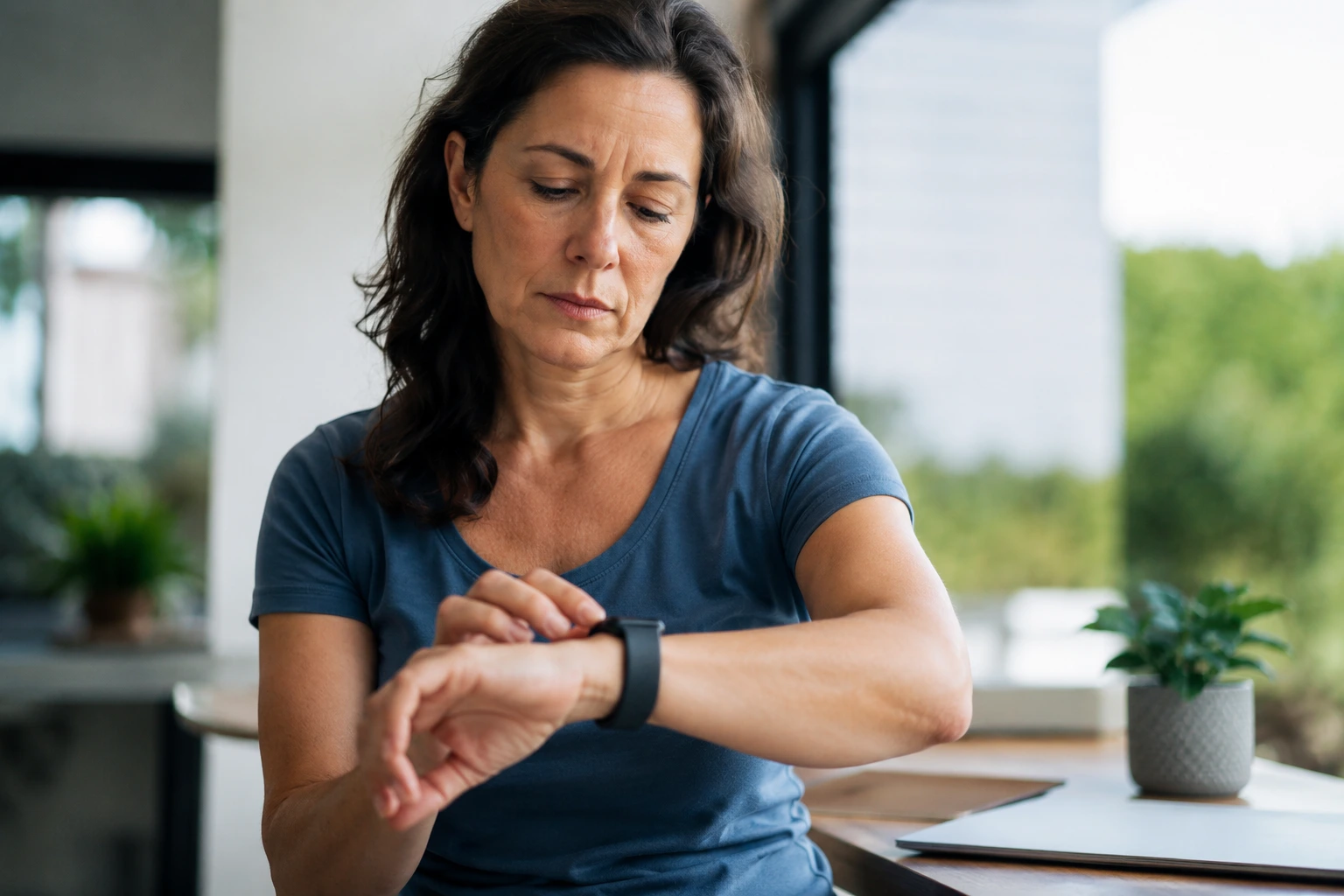
Your smartwatch buzzes with another alert, and you freeze wondering if this one actually means something or if you’re just drowning in false alarms that make you feel more anxious than informed about your health.
Understanding smartwatch health alerts
Smartwatch health alerts operate through a network of miniaturized sensors embedded in the device, each serving a specific purpose in continuous health monitoring. The heart rate monitor uses photoplethysmography, a technology that detects blood flow changes through light absorption, while accelerometers measure movement patterns and intensity. Gyroscopes track rotational motion, and some advanced models include electrocardiogram sensors that capture electrical signals from your heart. These sensors work together to build a comprehensive picture of your physiological state throughout the day. For example, if you are a woman experiencing perimenopause, your smartwatch might detect elevated resting heart rate patterns that correlate with hormonal fluctuations, providing data that helps you recognize cycles you might otherwise miss. The device continuously compares incoming data against baseline measurements established during initial setup, flagging deviations that fall outside your normal range. This personalized approach means the same heart rate elevation that triggers an alert for one person might be completely normal for another, making the technology genuinely tailored to individual physiology rather than applying universal thresholds.
How smartwatch alerts keep you informed
The alert mechanism functions through algorithmic analysis that evaluates your biometric data in real time, comparing current readings against established personal baselines and historical patterns. When your smartwatch detects an irregular heartbeat, it does not simply flag any deviation but rather analyzes the specific pattern, duration, and context of the irregularity. Consider Sarah, a 52-year-old woman who received an alert about atrial fibrillation episodes occurring primarily during high-stress work meetings. This contextual information proved invaluable because it helped her recognize the connection between stress and cardiac symptoms, enabling her to discuss targeted stress management strategies with her cardiologist rather than assuming she had a progressive heart condition. The alert system also learns from your behavior over time, adjusting sensitivity thresholds as your fitness improves or as seasonal changes affect your baseline metrics. Some smartwatches now incorporate machine learning that distinguishes between normal exercise-induced heart rate elevation and potentially concerning arrhythmias, reducing false alarms that erode user trust. The notification itself serves as a gentle prompt to pause, check in with your body, and decide whether the alert warrants immediate attention or simply warrants logging for discussion with your healthcare provider at your next appointment.
Benefits of smartwatch health alerts
Smartwatch alerts offer several evidence-based advantages for health awareness and early intervention. Early detection capabilities allow you to identify potential health changes before they progress to symptomatic stages, which is particularly valuable for conditions like atrial fibrillation that often present without obvious symptoms. Personalized monitoring means the device learns your unique patterns, so alerts become increasingly relevant and less likely to be dismissed as false positives. Real-time awareness shifts your relationship with your health from passive to active, transforming you from someone who waits for symptoms to someone who actively observes and understands your body’s signals. Women particularly benefit from tracking how hormonal cycles influence metrics like heart rate variability, sleep quality, and activity tolerance. One woman discovered through consistent smartwatch data that her energy crashes and mood changes correlated precisely with specific points in her menstrual cycle, allowing her to plan demanding work projects around her natural energy peaks. The data also creates a longitudinal health record that you can share with healthcare providers, offering them objective information about your daily patterns rather than relying solely on what you remember during a brief office visit. This documentation becomes especially powerful when discussing symptoms that feel vague or intermittent, as the data provides concrete evidence of patterns your doctor can analyze.
- Establish a baseline by wearing your smartwatch consistently for at least two weeks before taking alerts seriously, allowing the device to learn your normal patterns and reduce initial false alarms.
- Review your smartwatch alerts weekly rather than reacting to each notification immediately, looking for patterns or clusters that might indicate genuine health changes worth discussing with your healthcare provider.
- Keep a simple log of significant alerts alongside notes about what you were doing, how you felt, and any life circumstances that might explain the reading, creating context that transforms raw data into meaningful health information.
- Schedule a conversation with your healthcare provider specifically about your smartwatch data, bringing screenshots or reports of concerning patterns rather than individual alerts, which helps them assess whether the data reflects real health changes.
- Adjust alert sensitivity settings based on your lifestyle and what you learn about your body, turning off alerts that consistently prove irrelevant while keeping those that provide genuine value to your health awareness.
🔬 Science-backed benefits in 2 minuteschoose where to begin:
The science behind smartwatch health alerts
Smartwatch alert algorithms rely on signal processing and statistical analysis to distinguish meaningful health changes from normal physiological variation. The technology uses multiple data streams simultaneously, recognizing that a single elevated heart rate reading means little without context, but a pattern of elevated readings combined with reduced heart rate variability and sleep disruption suggests something worth investigating. Research published in medical journals demonstrates that smartwatch-detected irregular rhythms show reasonable correlation with clinical arrhythmias, though sensitivity and specificity vary depending on the specific device and algorithm used. The science becomes more nuanced when considering how these devices handle individual variation. A woman with naturally high heart rate variability due to athletic training might receive fewer alerts than a sedentary woman with the same absolute heart rate readings, because the algorithm recognizes that variability as normal for that individual. Some advanced models now incorporate artificial intelligence trained on thousands of hours of cardiac data, learning to recognize patterns that human observers might miss. However, the science also reveals important limitations: smartwatch sensors cannot match the precision of clinical-grade equipment, and algorithms sometimes struggle with movement artifacts that create false readings during exercise or daily activities. Understanding these scientific foundations helps you interpret alerts with appropriate skepticism while still taking them seriously as potential signals worth investigating.
Accuracy and reliability of smartwatch alerts
Smartwatch accuracy varies considerably depending on the specific device, the metric being measured, and individual factors like skin tone, tattoos, and movement patterns. Heart rate measurement generally shows good accuracy during rest but becomes less reliable during intense exercise when movement artifacts interfere with sensor readings. Irregular rhythm detection, which many women find most valuable, shows sensitivity ranging from 70 to 90 percent depending on the device and the type of arrhythmia being detected, meaning some genuine irregularities go undetected while some false positives occur. The critical insight is that smartwatch alerts function as screening tools rather than diagnostic instruments. When your device alerts you to a potential arrhythmia, it is signaling that something warrants professional evaluation, not confirming that you have a heart condition. This distinction matters enormously because it shapes how you respond. A woman who receives an atrial fibrillation alert and immediately assumes she has a serious heart problem experiences unnecessary anxiety, while a woman who views the alert as a prompt to schedule an electrocardiogram with her doctor takes appropriate action. Reliability also depends on consistent wear and proper device fit, as loose smartwatches produce unreliable readings. Understanding these accuracy parameters helps you calibrate your trust in the device, valuing its role as a monitoring tool while recognizing that professional medical evaluation remains essential for any concerning findings.
Future of smartwatch health alerts
Emerging technologies promise to enhance smartwatch alert capabilities significantly in coming years. Advanced biosensors under development will measure additional biomarkers including blood glucose, blood pressure, and hydration status, expanding the range of health signals these devices can monitor. Machine learning algorithms trained on increasingly large datasets will improve pattern recognition, reducing false alarms while catching genuine health changes earlier. Researchers are exploring how smartwatches might detect early signs of infection through subtle changes in heart rate variability and skin temperature, potentially identifying illness before obvious symptoms appear. For women specifically, future smartwatches may incorporate more sophisticated reproductive health tracking, detecting ovulation through multiple physiological markers and predicting menstrual cycle timing with greater accuracy. Integration with electronic health records means your smartwatch data could automatically flow to your healthcare provider, enabling them to monitor your health between office visits and intervene earlier when concerning trends emerge. Artificial intelligence systems trained specifically on female physiology may improve accuracy for women, addressing current limitations where many algorithms were developed using predominantly male datasets. However, these advances also raise important questions about data privacy, algorithmic bias, and the psychological impact of constant health monitoring. The future of smartwatch alerts depends not only on technological capability but also on thoughtful implementation that enhances health without creating unnecessary anxiety or over-medicalization of normal physiological variation.
Smartwatch health alerts leverage advanced sensor technology and algorithmic analysis to monitor your vital signs continuously and notify you of irregularities, offering a personalized approach to health awareness that can complement traditional medical care while requiring professional interpretation for meaningful clinical decision-making.
Can smartwatch alerts replace regular health check-ups?
Smartwatch alerts function as a supplementary monitoring tool rather than a replacement for professional medical care. They provide continuous data between office visits and can alert you to potential health changes worth discussing with your doctor, but they cannot replace the comprehensive physical examination, diagnostic testing, and clinical judgment that healthcare providers offer. Think of your smartwatch as a health observer that keeps watch on your daily patterns, while your doctor provides the expert interpretation and treatment planning that only comes from medical training and direct evaluation.
Are smartwatch alerts suitable for all ages?
Smartwatch alerts can provide valuable health insights across different ages, though the relevance and interpretation varies. Younger women might find menstrual cycle tracking and fitness monitoring most useful, while midlife women often benefit from detecting hormonal changes and arrhythmias, and older women may prioritize fall detection and irregular rhythm monitoring. However, older adults and women with existing health conditions should discuss smartwatch use with their healthcare provider to ensure the alerts align with their specific health needs and won’t create unnecessary anxiety or lead to inappropriate self-directed changes in medication or activity.
Others also read:
Disclaimer: This article is for informational purposes only and is not a substitute for professional medical advice. Always consult a healthcare professional for personal guidance.
This article has been prepared and reviewed by the GlobalHealthBeacon editorial team and is based on current medical research and published scientific literature available in 2026. It provides structured, evidence-based information to support informed health decisions.
