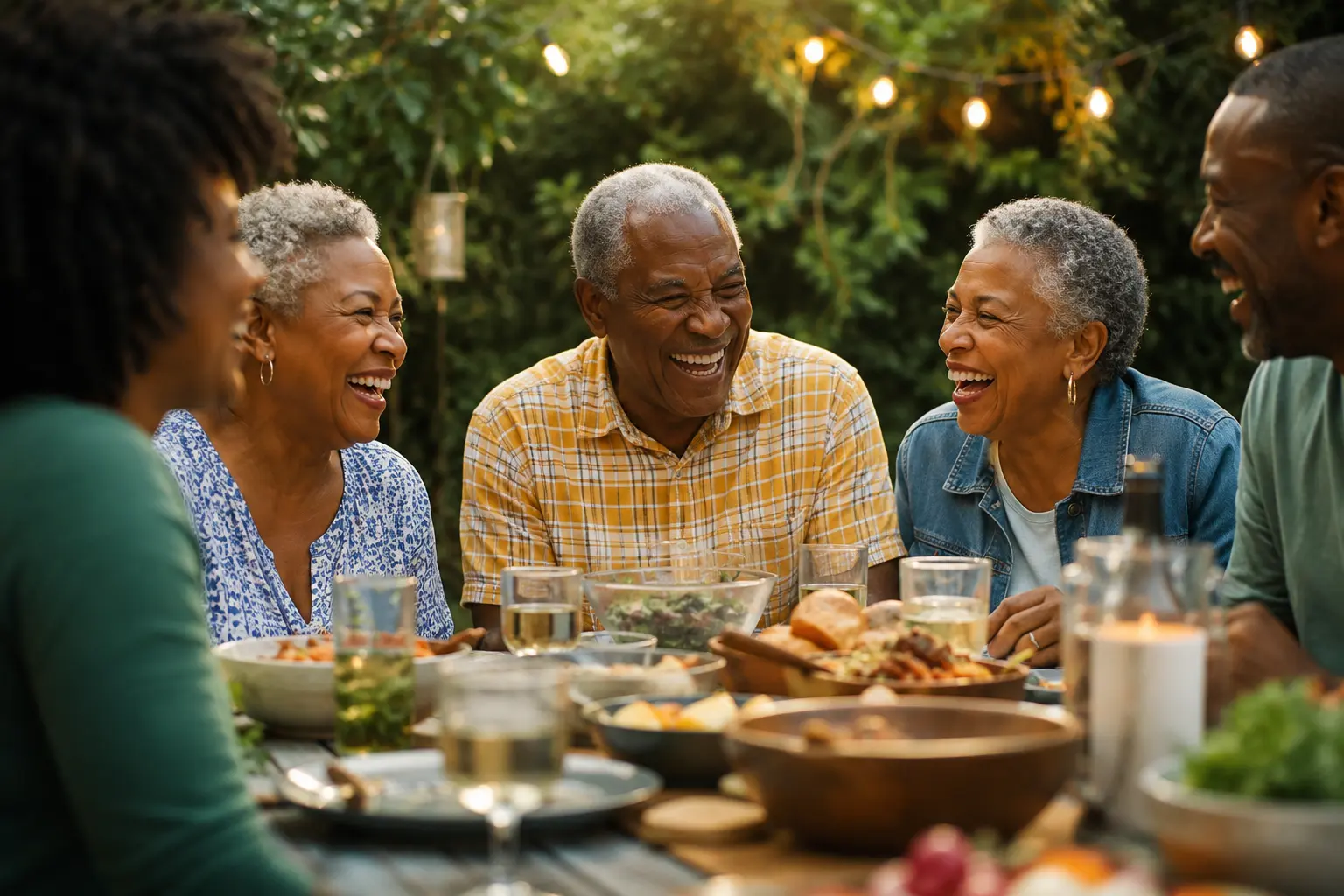
You feel it in your bones: isolation is slowly draining your energy, your mood, your sense of purpose, and research now proves that social connection and longevity are inseparably linked, meaning the relationships you nurture today could literally add years to your life.
The science behind social connection
The relationship between social bonds and health outcomes has become one of the most compelling areas of modern health research. When scientists examine women who maintain strong social ties, they consistently find measurable differences in how their bodies function at a cellular level. The mechanisms are fascinating: when you engage in meaningful conversation or spend time with people who matter to you, your nervous system shifts into a parasympathetic state, which is your body’s natural relaxation response. This triggers a cascade of biological changes. Stress hormones like cortisol decrease, your heart rate stabilizes, and your immune system strengthens. Women with robust social networks show lower inflammation markers in their blood work, better cardiovascular function, and more stable blood pressure readings. Think of it this way: every meaningful interaction is like a dose of medicine that your body recognizes and responds to immediately. The loneliness epidemic affecting many women today creates the opposite effect, keeping the body in a constant state of alert, which accelerates aging at the cellular level.
Social connection and physical health
The path from having close relationships to better physical health is surprisingly direct. Consider Sarah, a 58-year-old woman who joined a weekly book club after her divorce. Within months, her doctor noticed her blood pressure had dropped significantly without any medication changes. Why? Because women embedded in social networks naturally adopt healthier behaviors. When you have friends you see regularly, you are more likely to go for walks together, share home-cooked meals instead of eating alone, and maintain consistent sleep schedules because you have reasons to take care of yourself. Social support also acts as a buffer against the wear and tear of stress. When a woman faces a health crisis, financial worry, or family conflict, having people to talk to and lean on literally reduces the physical toll these stressors take on her body. Research shows that women with strong social connections recover faster from surgery, manage chronic pain more effectively, and have better outcomes when dealing with serious illness. The protective effect is not imaginary; it shows up in medical records, lab results, and longevity data year after year.
The role of social support
Social support operates on three distinct levels, each contributing uniquely to health protection. Emotional support is the foundation: when you have people who listen without judgment, validate your feelings, and remind you that you are not alone in your struggles, your nervous system receives a powerful signal that you are safe. This reduces anxiety and depression significantly. Practical support handles the real-world demands that can overwhelm you. Whether it is help with grocery shopping when you are recovering from illness, a friend driving you to medical appointments, or someone checking in on you during a difficult period, these concrete acts of care reduce stress and allow your body to focus on healing. Informational support connects you to knowledge and resources. Women who are part of active social networks learn about health screenings, new treatments, wellness strategies, and preventive care options through conversations with friends and community members. This informal knowledge-sharing often leads to better health decisions and earlier detection of potential problems. Together, these three forms of support create a comprehensive safety net that protects your physical and mental health in ways that isolation simply cannot replicate.
- Nurture existing relationships by scheduling regular check-ins, whether weekly coffee dates, monthly dinners, or even brief phone calls that show you value the connection.
- Seek opportunities to meet new people by attending classes, workshops, or events aligned with your interests, recognizing that meaningful friendships often develop through shared activities.
- Join community groups, clubs, or organizations such as book clubs, fitness classes, volunteer groups, or faith communities that provide both social connection and a sense of shared purpose.
🔬 Science-backed benefits in 2 minuteschoose where to begin:
The psychological impact of social relationships
Your mental health and your social connections are not separate systems; they are deeply intertwined. Women who maintain strong relationships experience measurably lower rates of anxiety and depression compared to socially isolated peers. The mechanism is straightforward: when you feel genuinely connected to others, your brain releases neurotransmitters like oxytocin and serotonin, which create feelings of calm, contentment, and belonging. These are not fleeting emotions; they reshape your baseline mental state over time. Consider how different you feel after a meaningful conversation with a close friend versus spending an evening alone with your worries. That difference compounds. Women in strong social networks report higher self-esteem, greater resilience when facing setbacks, and a stronger sense of purpose. They are less likely to ruminate on negative thoughts and more likely to view challenges as temporary obstacles rather than permanent failures. The sense of being valued and needed by others creates psychological armor against depression and anxiety. This is why isolation is so dangerous for mental health; it removes the very mechanisms that keep your mind stable and hopeful.
Longevity and social engagement
The data on social connection and longevity is striking and consistent across decades of research. Women with strong social ties live significantly longer than their isolated counterparts, with some studies suggesting the difference amounts to years of added life. This is not correlation; the biological mechanisms are clear and measurable. When you participate actively in relationships and community, you experience lower chronic stress, better immune function, healthier cardiovascular markers, and reduced inflammation. Your body simply ages more slowly. Beyond the physical mechanisms, social engagement gives life meaning and purpose, which research shows is independently protective for longevity. Women who feel needed, who contribute to their communities, and who have reasons to get out of bed each morning live longer than those who feel their lives lack purpose. A woman who volunteers regularly, maintains close friendships, and participates in group activities is not just happier; she is literally extending her lifespan. The protective effect is strongest in women over 50, making midlife and beyond the ideal time to invest intentionally in your social connections.
Building strong social connections
Creating a robust social life requires intention, but not perfection. Quality always matters more than quantity; one genuine friendship where you feel truly understood is more protective than a dozen superficial connections. Start by auditing your current relationships. Which people make you feel energized and valued? Invest more time there. Which relationships feel draining or obligatory? It is okay to create distance. Then, expand deliberately. If you work from home or have limited social contact, you must actively create opportunities. Join a class, volunteer for a cause you care about, attend community events, or reconnect with old friends. The key is consistency; showing up regularly builds trust and deepens bonds. Be vulnerable enough to let people know you value them. Send a text saying you have been thinking of someone. Invite people over for a simple meal rather than waiting for the perfect moment. Ask for help when you need it, which paradoxically strengthens relationships because it allows others to feel needed. Building social connection is not a luxury or a nice-to-have; it is foundational health maintenance, as important as exercise or nutrition.
Social connections play a vital role in protecting women’s health and longevity by influencing physical, mental, and emotional well-being. By fostering strong relationships, women can experience improved health outcomes and potentially extend their lifespan.
How do social relationships impact women’s physical health?
Social relationships positively influence women’s physical health by promoting healthy behaviors, reducing stress hormones like cortisol, strengthening immune function, and providing emotional support that buffers against the physical toll of stress and illness.
What steps can women take to enhance their social connections?
Women can nurture existing relationships through regular contact, seek new social opportunities by joining clubs or classes, volunteer in their communities, and invest quality time in friendships that feel genuine and mutually supportive.
Others also read:
Disclaimer: This article is for informational purposes only and is not a substitute for professional medical advice. Always consult a healthcare professional for personal guidance.
This article has been prepared and reviewed by the GlobalHealthBeacon editorial team and is based on current medical research and published scientific literature available in 2026. It provides structured, evidence-based information to support informed health decisions.
