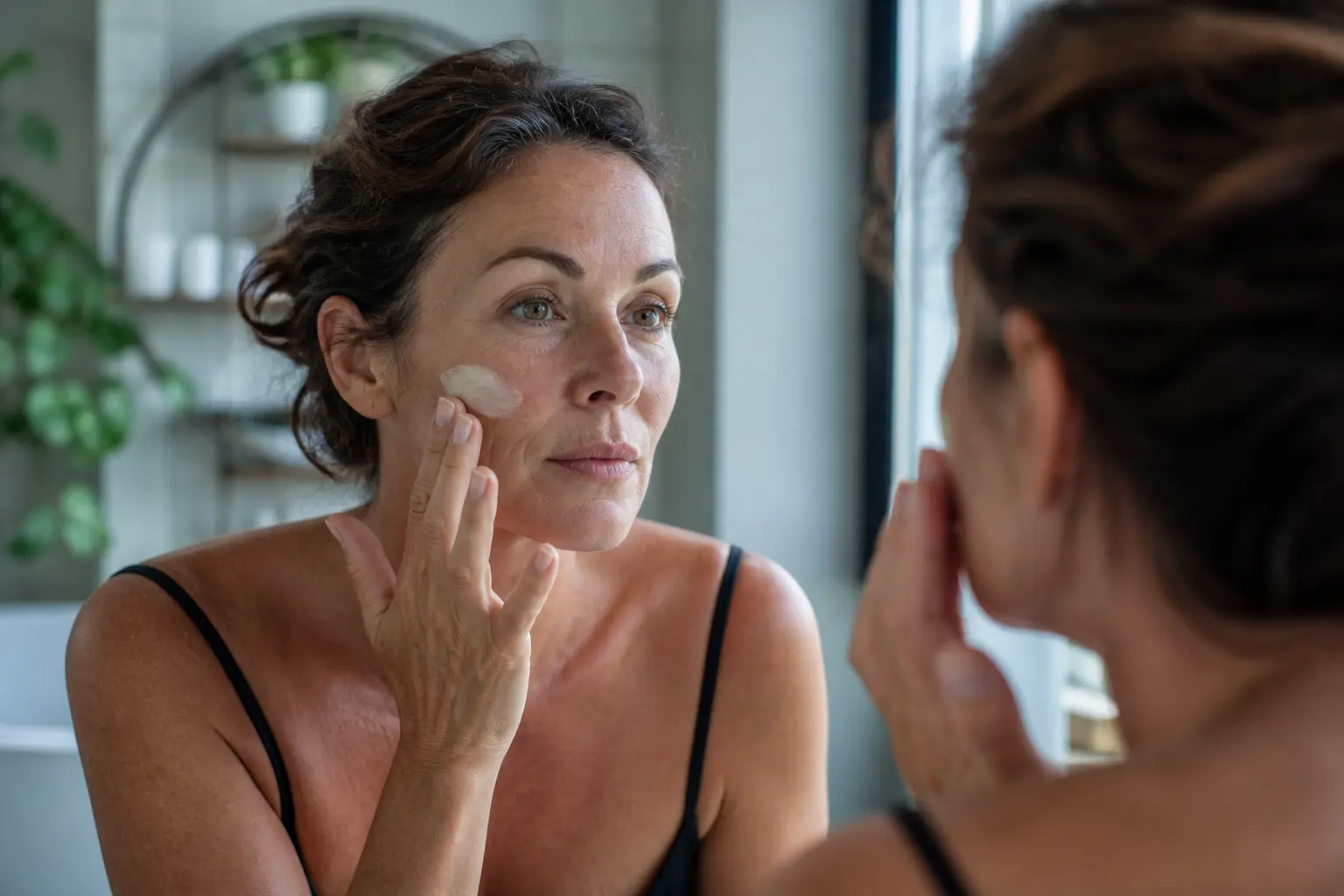
You’ve spent decades in the sun without thinking twice, and now you’re watching your skin pay the price with spots, wrinkles, and that leathery texture you never expected to see in the mirror, but here’s what science says about spf anti aging benefits and whether it’s finally time to take sun protection seriously.
The basics of SPF and aging
SPF, or Sun Protection Factor, functions as a shield between your skin and ultraviolet radiation that bombards us daily. Think of it this way: UV rays are like tiny arrows constantly piercing your skin, triggering a cascade of damage at the cellular level. When UV radiation penetrates the skin, it generates free radicals, unstable molecules that attack collagen and elastin, the proteins responsible for keeping skin firm and elastic. Over time, this damage accumulates. A person who spends 30 years without protection experiences vastly different skin aging than someone who applied sunscreen consistently. The mechanism is straightforward but profound: UV exposure accelerates the breakdown of collagen, leading to visible sagging, creasing, and that papery texture many seniors notice. Understanding this process helps explain why dermatologists emphasize sun protection not just for vanity, but for skin health itself.
How SPF slows down aging
When you apply sunscreen, you create a physical or chemical barrier that intercepts UV radiation before it reaches living skin cells. This prevention is crucial because once DNA damage occurs inside skin cells, the harm is essentially permanent. SPF works by either reflecting UV rays away from the skin (mineral sunscreens with zinc oxide or titanium dioxide) or absorbing them and converting them to heat (chemical sunscreens). By blocking these rays, sunscreen prevents photoaging, the premature aging caused specifically by sun exposure. Consider a 65-year-old who wore sunscreen religiously versus one who did not: the difference in skin texture, pigmentation, and elasticity is often striking. Research shows that consistent sunscreen use reduces oxidative stress in skin cells, meaning fewer free radicals are generated to damage cellular structures. This isn’t about stopping time, but rather slowing the clock significantly. Regular application protects against DNA mutations that can lead to skin cancer, while simultaneously preserving the appearance and integrity of healthy skin.
The role of SPF in age reversal
While SPF cannot reverse damage already done, it prevents new damage from accumulating, which effectively halts further visible aging. First, sunscreen helps maintain the firmness and elasticity of skin by protecting collagen and elastin fibers from UV degradation. Second, consistent use reduces the appearance of fine lines and wrinkles because UV damage is a primary driver of these creases. Third, sunscreen prevents age spots and hyperpigmentation by blocking the UV rays that trigger melanin overproduction in patches of skin. Imagine two siblings, one who started wearing SPF at 40 and one who started at 60. The earlier adopter will likely show fewer new spots and less progression of existing wrinkles over the next decade. The steps below outline how to maximize these protective benefits in your daily routine, turning sunscreen from an occasional beach product into a cornerstone of skin maintenance.
- Apply SPF 30 or higher daily, even on cloudy days, because UV rays penetrate clouds and reflect off surfaces like water, concrete, and snow.
- Reapply sunscreen every 2 hours when outdoors, or immediately after swimming or sweating, to maintain continuous protection.
- Choose a broad-spectrum SPF to protect against both UVA and UVB rays, as both contribute to aging and skin damage.
🔬 Science-backed benefits in 2 minuteschoose where to begin:
Other anti-aging strategies
Sunscreen is powerful, but it works best as part of a comprehensive approach to skin health. A balanced diet rich in antioxidants, vitamins C and E, and omega-3 fatty acids supports skin from the inside by fighting free radicals and maintaining cell structure. Proper hydration keeps skin plump and resilient, reducing the appearance of fine lines. Regular physical activity improves circulation, delivering oxygen and nutrients to skin cells more efficiently. A consistent skincare routine that includes gentle cleansing and moisturizing removes environmental damage and supports the skin barrier. Many seniors find that combining these habits with daily sunscreen creates a synergistic effect, where each strategy reinforces the others. For example, a person who uses SPF, drinks adequate water, eats antioxidant-rich foods, and exercises regularly will likely see better skin outcomes than someone relying on sunscreen alone. Think of it as building layers of protection and nourishment rather than depending on a single solution.
Understanding UV radiation
The sun emits three types of ultraviolet radiation: UVA, UVB, and UVC. UVC rays are absorbed by the Earth’s atmosphere and rarely reach the surface, so they are not a concern for skin damage. UVB rays are the primary cause of sunburns and are strongest during midday hours, particularly between 10 a.m. and 4 p.m. UVA rays penetrate deeper into the skin and are present consistently throughout the day, even on cloudy days. Both UVA and UVB contribute to premature aging, but in different ways. UVB causes direct DNA damage and sunburns, while UVA penetrates deeper, damaging collagen and elastin in the dermis layer. This is why broad-spectrum sunscreen, which blocks both, is essential. Understanding this distinction helps explain why sun protection matters year-round and why a cloudy day offers no real excuse to skip sunscreen. The cumulative effect of daily UV exposure over decades is what drives the visible aging that many seniors experience.
In conclusion
SPF plays a critical role in slowing skin aging by preventing the UV damage that drives wrinkles, spots, and loss of elasticity. It is not a fountain of youth, but rather a practical tool that halts the accelerated aging caused by sun exposure. When combined with a healthy lifestyle, proper hydration, good nutrition, and a consistent skincare routine, sunscreen becomes part of a sustainable approach to maintaining skin health and appearance. The evidence is clear: people who protect their skin from UV damage show significantly less visible aging over time than those who do not. For seniors, starting sun protection now can still prevent further damage and preserve the skin you have. The key is consistency, using broad-spectrum SPF daily, and reapplying as needed. Your skin has been through a lot over the decades, but it is never too late to give it the protection it deserves.
SPF acts as a protective shield against UV radiation, reducing the risk of DNA damage and premature aging. Regular use of sunscreen, combined with a healthy lifestyle, can help maintain youthful skin appearance.
Can SPF totally stop aging?
SPF can significantly slow down aging by protecting the skin from UV damage, but it cannot completely stop the natural aging process.
Is higher SPF more effective for anti-aging?
While higher SPF offers better protection against UV rays, SPF 30 is sufficient for daily use to prevent aging effectively.
Others also read:
Disclaimer: This article is for informational purposes only and is not a substitute for professional medical advice. Always consult a healthcare professional for personal guidance.
This article has been prepared and reviewed by the GlobalHealthBeacon editorial team and is based on current medical research and published scientific literature available in 2026. It provides structured, evidence-based information to support informed health decisions.
