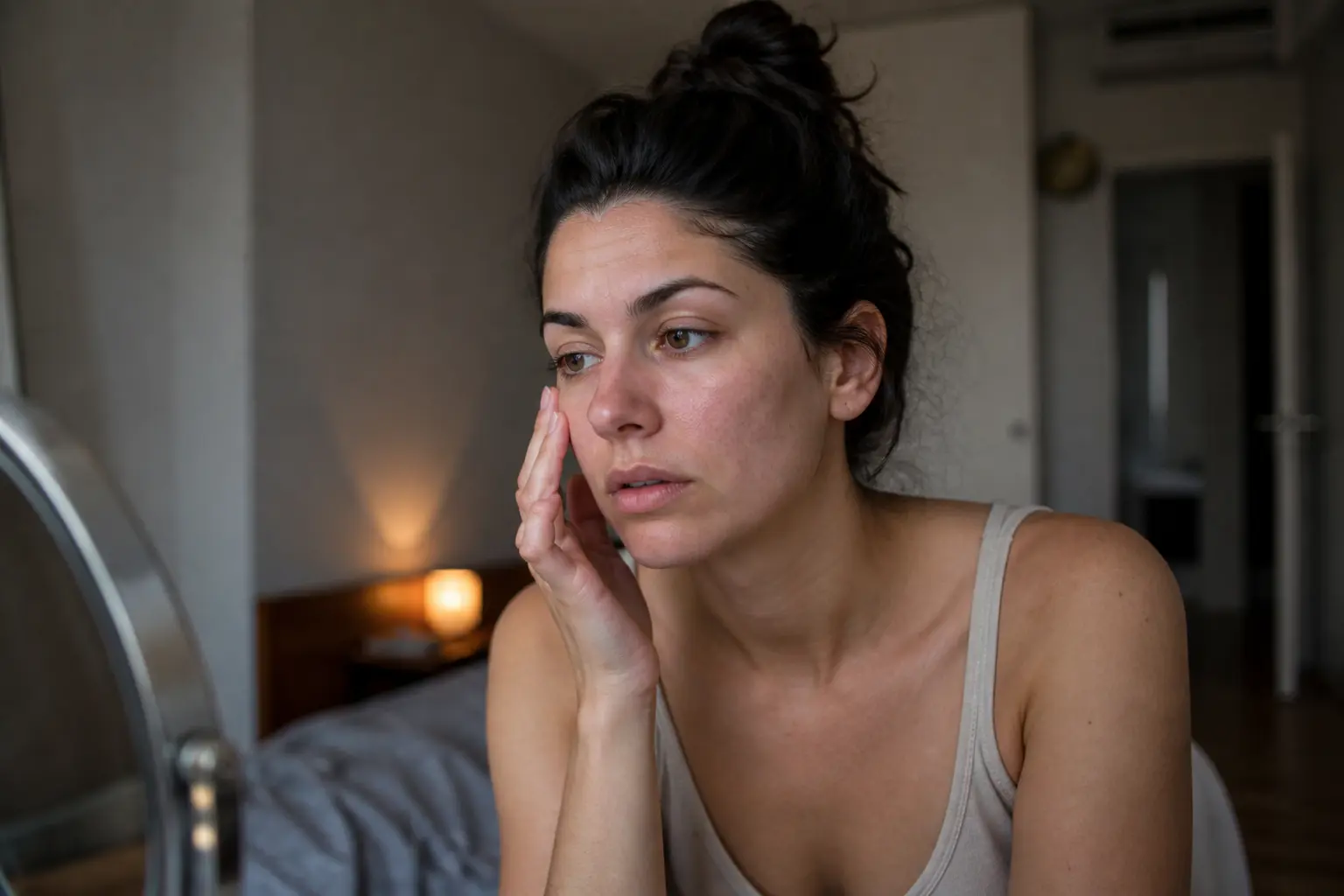
You wake up, glance in the mirror, and barely recognize yourself—puffy under the eyes, a fresh breakout blooming across your chin, fine lines that weren’t there last month—and it hits you that stress cortisol skin effects might be the invisible force aging your face faster than time itself.
Understanding cortisol: the stress hormone’s influence on skin
Cortisol is your body’s natural alarm system, but when it stays elevated day after day, it becomes your skin’s worst enemy. Imagine cortisol as a wrecking ball inside your cells. It disrupts collagen production, which is the scaffolding that keeps your skin plump and youthful. Women often describe noticing the shift suddenly: a colleague mentions you look tired, or you catch your reflection and see fine lines where smoothness used to be. Research consistently shows that chronic stress directly correlates with accelerated skin aging, weakened barrier function, and inflammatory responses. One woman shared how her skin deteriorated during a stressful job transition, with breakouts appearing in clusters and her complexion turning dull within weeks. The mechanism is straightforward but sobering: elevated cortisol triggers inflammation, increases oil production, impairs the skin’s repair cycle, and compromises the protective barrier that keeps moisture in and irritants out.
- Increased cortisol levels can trigger oil production, causing breakouts and acne flare-ups.
- Chronic stress can impair the skin’s ability to repair itself, resulting in a dull, lackluster complexion.
- Elevated cortisol compromises the skin’s barrier function, leading to sensitivity and redness.
Strategies to combat cortisol-induced skin effects
Managing stress cortisol skin effects requires a two-pronged approach: calming your nervous system and protecting your skin from the inside out. Start with movement. Exercise isn’t just about fitness; it’s a cortisol reset button. A 30-minute walk, yoga session, or even dancing to your favorite playlist can lower cortisol significantly within hours. Meditation and deep breathing work similarly, signaling to your body that the threat has passed. Then there’s sleep, the underrated superpower. During deep sleep, your skin enters repair mode, producing collagen and healing damage from the day. Aim for seven to nine hours consistently. For your skincare routine, focus on barrier-supporting ingredients like ceramides, niacinamide, and hyaluronic acid. Antioxidants like vitamin C and green tea extract combat the oxidative stress that cortisol creates. One woman found that combining a 15-minute daily meditation practice with a simplified skincare routine of cleanser, antioxidant serum, and moisturizer transformed her skin within six weeks. The key is consistency and patience, not complexity.
💬 Ready to feel better in 2 minutes?choose where to begin:
Lifestyle changes for healthy, glowing skin
Real change happens when you weave stress relief into the fabric of your daily life, not as an afterthought but as a priority. Start your morning with intention: five minutes of deep breathing before checking your phone can set a calmer tone for hours. Yoga, even gentle stretching, activates your parasympathetic nervous system, the opposite of your stress response. Spending time in nature, whether a park walk or sitting under trees, has measurable effects on cortisol levels. Hydration matters more than most realize; dehydration amplifies stress responses and makes skin look tired. Eat foods rich in omega-3s, antioxidants, and B vitamins: fatty fish, berries, leafy greens, nuts. Limit caffeine and alcohol, which spike cortisol and dehydrate skin. One woman restructured her evenings to include a 20-minute nature walk after work and swapped her afternoon coffee for herbal tea, noticing her skin clarity improved alongside her mood. Small, sustainable changes compound over weeks and months into visible transformation.
Embracing self-care to nurture your skin and soul
Self-care isn’t indulgent; it’s essential maintenance for your mental and physical health. Think of it as permission to pause. A skincare ritual can become meditative: the warmth of water, the texture of a good cleanser, the ritual of applying serum and moisturizer with intention. A warm bath with Epsom salts or essential oils signals relaxation to your nervous system. Connecting with loved ones, laughing, having meaningful conversations all lower cortisol naturally. Some women find journaling therapeutic, others find it through creative hobbies, time with pets, or simply sitting in silence. The specifics matter less than the intention: you’re telling yourself that your wellbeing deserves attention. One woman created a weekly self-care Sunday that included a face mask, herbal tea, journaling, and time with friends, and she noticed not just skin improvement but a fundamental shift in how she handled stress throughout the week. When you care for your mental and emotional needs, your skin reflects that inner peace outward.
Understanding how cortisol impacts your skin is key to addressing signs of premature aging and skin damage. By managing stress levels through holistic practices and adopting a skincare routine that supports skin health, you can restore your skin’s natural radiance and vitality.
Can cortisol cause acne breakouts?
Yes, elevated cortisol levels can stimulate oil production in the skin, leading to an increased risk of acne breakouts. Managing stress levels and maintaining a consistent skincare routine can help prevent cortisol-induced breakouts.
How can I reduce cortisol levels naturally?
Engaging in relaxation techniques such as yoga, meditation, deep breathing exercises, and regular physical activity can help lower cortisol levels naturally. Prioritizing sleep, maintaining a healthy diet, and practicing mindfulness are effective ways to manage stress and cortisol levels.
Others also read:
Disclaimer: This article is for informational purposes only and is not a substitute for professional medical advice. Always consult a healthcare professional for personal guidance.
This article presents an experience-based perspective and has been reviewed by the GlobalHealthBeacon editorial team in 2026. It provides structured, evidence-based information to support informed health decisions.
